

Most shampoo bar complaints trace back to missing use instructions rather than the formula, so "how to use shampoo bar" is the first question your pack insert should answer. This guide sets out the correct use steps and shows where each one touches your formulation, packaging and insert decisions.
Why Instructions Decide Reviews
A shampoo bar is used by wetting the hair or your hands, rubbing the bar to build lather, massaging it in, rinsing, and letting the bar dry between uses. First-time users judge the product on that first wash. If they do it wrong, the review blames the product, and unclear instructions turn into returns and low ratings.
What a Bar Is
A shampoo bar is a solid cleansing product that contains little or no added water and is activated by the water the user brings to it. A liquid shampoo arrives pre-diluted and pours. A bar must be wetted, worked and then dried. That difference in handling is where most confusion starts.
Where Complaints Start
The usual causes are predictable. Hard water weakens lather. A bar left in a standing puddle turns soft and slimy. Users apply too little water. And some expect the thick foam of a liquid, then assume the bar is not working. None of these is a formula fault, yet all of them show up in reviews as one.
Phase One: First Wash
Goal: a first wash that produces lather, rinses clean and leaves hair manageable. Put these steps on the insert in this order.
- Wet the hair thoroughly, from roots to ends.
- Rub the bar between wet hands until a creamy lather forms, or glide it over the hair a few times.
- Add a little water and friction to build the lather.
- Massage the lather into the scalp with your fingertips.
- Rinse until the water runs clear and the hair no longer feels slippery.
- Follow with a conditioner or a rinse if the hair needs it.
Wet and Lather
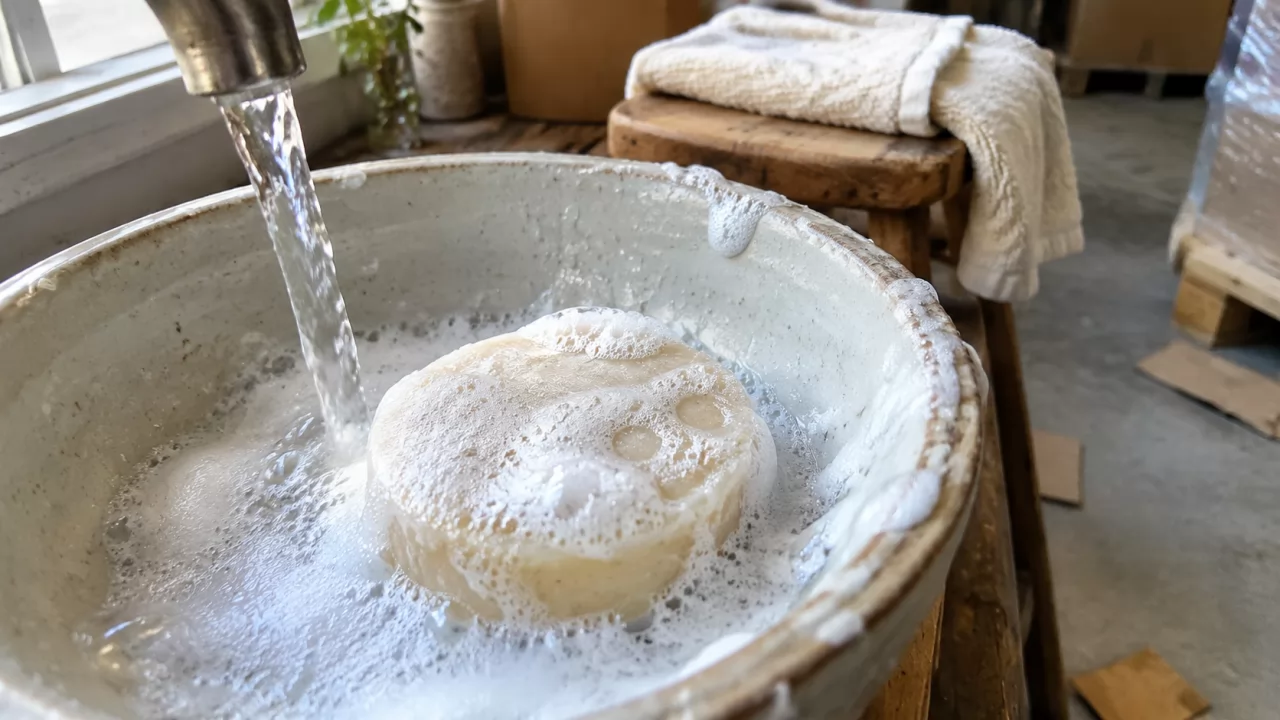
Water is the part users skip. A dry bar on dry hair gives patchy, weak foam. Tell users to wet the hair fully first, and to wet the bar too. Rubbing the bar between the hands usually spreads product more evenly than dragging it across the scalp.
Massage and Rinse
Rinse longer than feels necessary on the first wash. Leftover lather is the most common reason a new user reports a heavy or coated feel. Whether a conditioning step is needed depends on the person's hair, so the insert should offer it as an option rather than a rule.
Many people report a short adjustment period when they switch from liquid shampoo to a bar. Say so on the insert in plain words, without promising any result, so users do not give up after one wash.
Check: lather forms, the scalp rinses clean, and the hair feels manageable. If one of these fails, go to the troubleshooting section below.
Phase Two: Routine and Frequency
How often to use a shampoo bar depends on hair type, how quickly the scalp gets oily, activity level and the formula itself. Do not print a fixed number of washes per week. A range invites disputes and could be read as advice for everyone.
Better wording: wash on the same schedule you used with liquid shampoo, then adjust. Hair that feels heavy sooner may need a wash more often, and hair that feels dry may need a longer gap. A formula with a higher share of cleansing agents may suit a different rhythm than a gentler one, which is why the insert should be checked against the actual formula. Users also tend to ask whether the bar replaces every wash, so say whether it does.
Check: after reading the insert, a user can set a wash schedule and know how to change it.
Phase Three: Storage and Drying
A bar that stays wet breaks down faster, softens and can grow a film on the surface. Storage is not a side note. It decides how long the bar lasts and how it feels on the tenth wash.
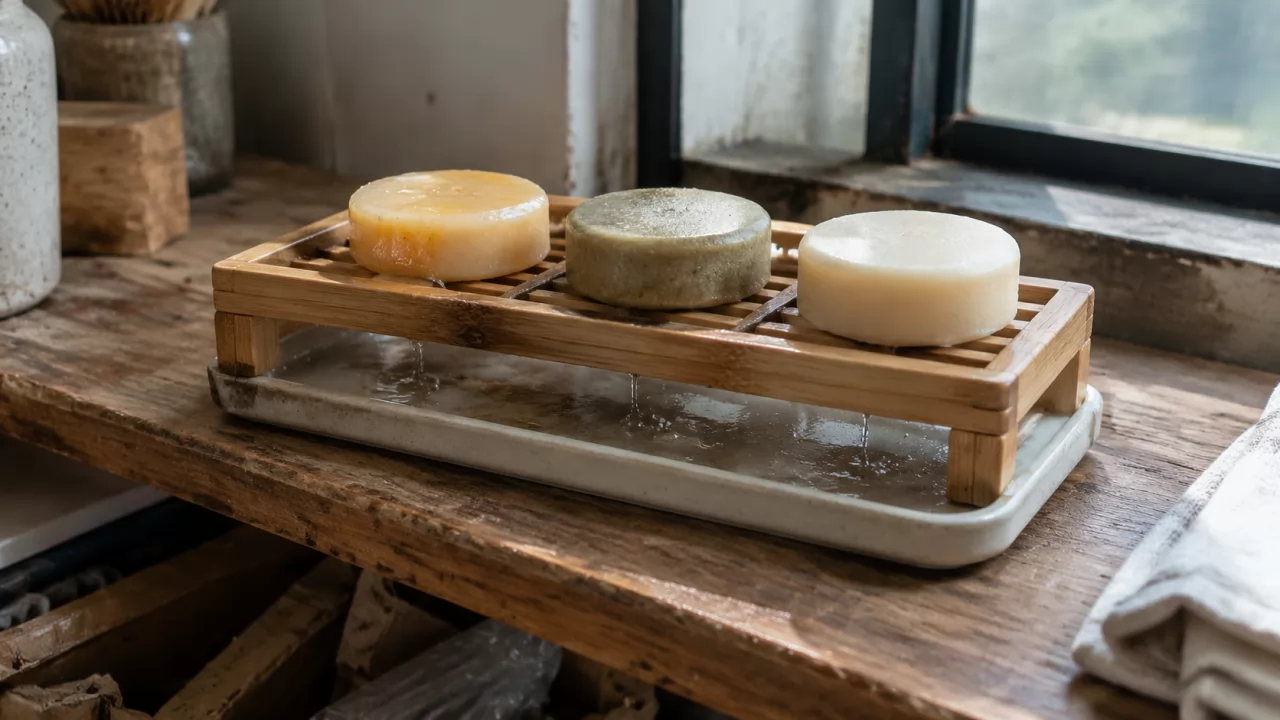
- Squeeze off excess water after each use.
- Place the bar on a draining dish or in a hanging net, not flat on a wet surface.
- Keep it out of the direct stream of the shower.
- Let it dry fully before the next wash.
- For travel, dry it first, then carry it in a ventilated case.
The table links each use stage to the action and to the consequence of skipping it.
| Use stage | What the user does | If skipped |
|---|---|---|
| After wash | Squeezes off excess water | Bar stays soft |
| Between uses | Rests bar on draining dish | Bar sits in a puddle |
| Drying | Lets bar dry fully | Surface turns slimy |
| Travel | Uses a ventilated case | Bar sweats, smells damp |
Most of these failures come from standing water, so a draining dish in the pack is a small cost that prevents many complaints.
Check: the bar is firm and dry before the next wash.

Shampoo Bar Not Lathering? Fixes and Myths
If a shampoo bar is not lathering, the cause is usually too little water, too little friction, hard water or a bar that has sat wet. Work through them in that order: wet the hair and bar more, rub longer between the hands, then consider softer water. If it still fails, the formula may behave differently in local water.
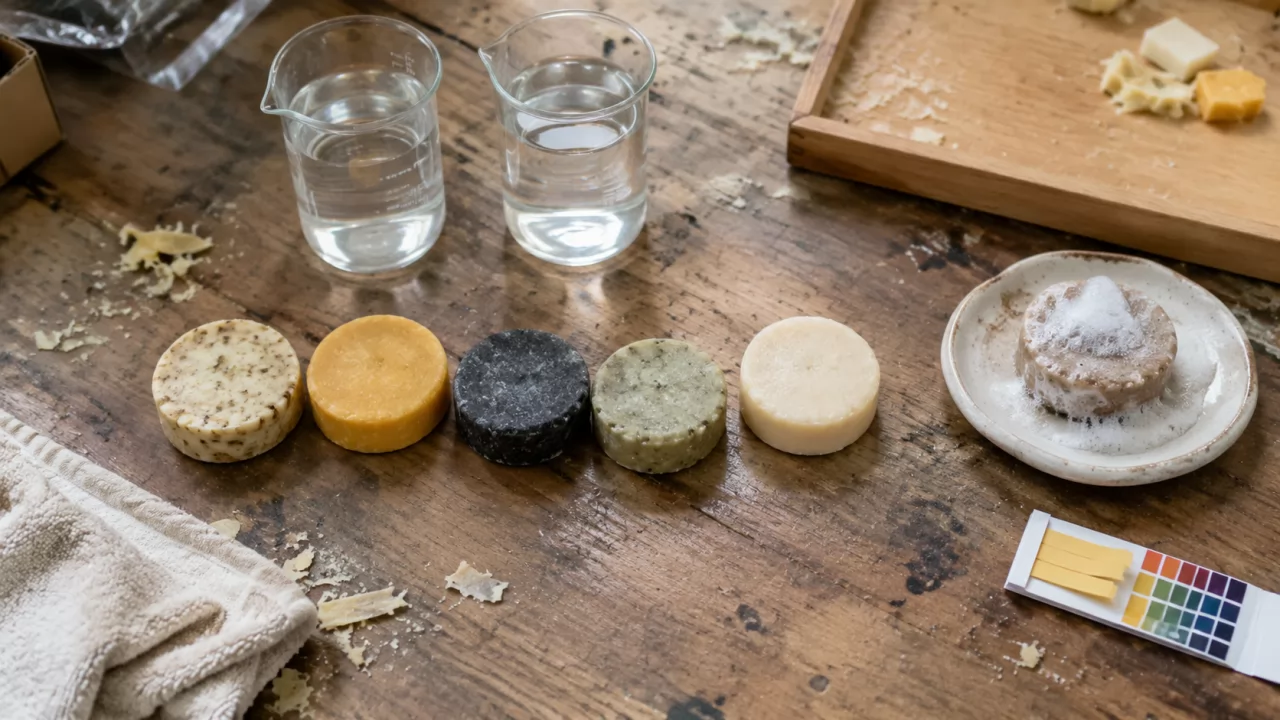
Three myths come up often. The first is "a shampoo bar is only a soap bar." The two are different products. A shampoo bar is formulated for hair and scalp cleansing, while a traditional soap bar is made for general skin cleansing, and their ingredients and pH can differ. The second is "no lather means no cleaning." Lather is a sign of foaming, not a measure of cleansing, and some formulas foam lightly. Still, users read foam as proof, so set expectations on the insert. The third is "it works the same for every hair type." It does not, and you should avoid implying that any bar suits everyone.
Formula, pH and water hardness all change how a bar lathers. Test a sample in the water of the market you plan to sell in before you approve the insert wording.
What Brands Should Specify
Several decisions shape the first wash before the user reads a word. The table lists them with the effect on use and the point to confirm with your supplier.
| Decision | Effect on first use | Confirm with supplier |
|---|---|---|
| Formula type | Lather and rinse feel | Behaviour in soft and hard water |
| Bar size and weight | Grip and wash count | Mould size and weight tolerance |
| Packaging | Drying and storage | Breathable pack or draining dish |
| Insert wording | Correct first wash | Match to the actual formula |
| Claims language | Label compliance | Rules for each sales market |
Insert wording and formula are the pair most often left to drift apart. Check them together.
Poleview makes shampoo bars with custom formulas, logo and package customisation, and an MOQ of 1000 pcs per color or style, and its free samples let you test lather before you place an order.
Keep insert copy free of medical wording, "hypoallergenic" and "chemical-free" unless you hold the evidence, and check labelling rules for each market where the bar will be sold.
FAQ
Can a shampoo bar be used on any hair type?
Not by default. Results vary with hair, scalp and water, so avoid wording that promises it suits everyone.
How long does a bar usually last?
It varies with bar weight, hair length, wash frequency and how well it dries between uses. A bar stored on a draining dish usually lasts longer than one left wet.
Can users travel with a shampoo bar?
Yes. Dry it first and carry it in a ventilated case. A sealed, damp container softens the bar and can leave an odour.
Do you need conditioner after a bar?
It depends on the hair. Some users add a conditioner or a rinse, others do not. Your insert should present it as optional, and it is fair to say you have not tested every hair type. Buyers should ask the supplier what it has actually tested for the specific formula.
Next Step
Request a free sample (you pay the freight), then send your logo and a draft of your insert. Our team will check the use instructions against the formula and flag any line that does not match how the bar behaves.


