
A review says "gone in two weeks," and the same bar looked fine in your lab. The working rule: judge how long a bar of soap lasts by how it is used and stored, not by grams alone. Lifespan drives reviews, repeat orders and returns, so it belongs in the spec.
Use life and shelf life are two separate questions. Water exposure usually matters most, followed by hardness, cure time and dish design. State lifespan only as a hedged range backed by your own trial.
How Long Does a Bar of Soap Last in Practice?
A bar used daily by one person usually lasts several weeks, not days and not months. Four things set the figure: bar weight, formula hardness, water exposure and use pattern. Shelf life in the pack is a different question from use life.
Use life is what the reviewer feels: how fast the bar shrinks once it is wet. Shelf life is how long an unopened bar stays acceptable in scent, colour and texture. Brands often blur the two, then print a claim that only fits one of them.
Weight Sets the Starting Mass, Not the Rate of Loss
The usual belief is simple: more grams, more showers. A 150 g bar does start with more material than a 100 g bar. But weight only sets the starting point. The rate of loss depends on hardness, water contact and handling.
Use pattern matters as much. A hand bar at a basin is wetted many times a day for a few seconds, so it rarely dries fully. A body bar in a shower gets one long soak and one long drying gap. A facial bar is usually smaller and handled lightly. So how long a bar lasts in daily use can differ sharply between three homes with the same bar. Any shower count you print would be a guess, because water temperature, lathering habits and the number of users all change it.
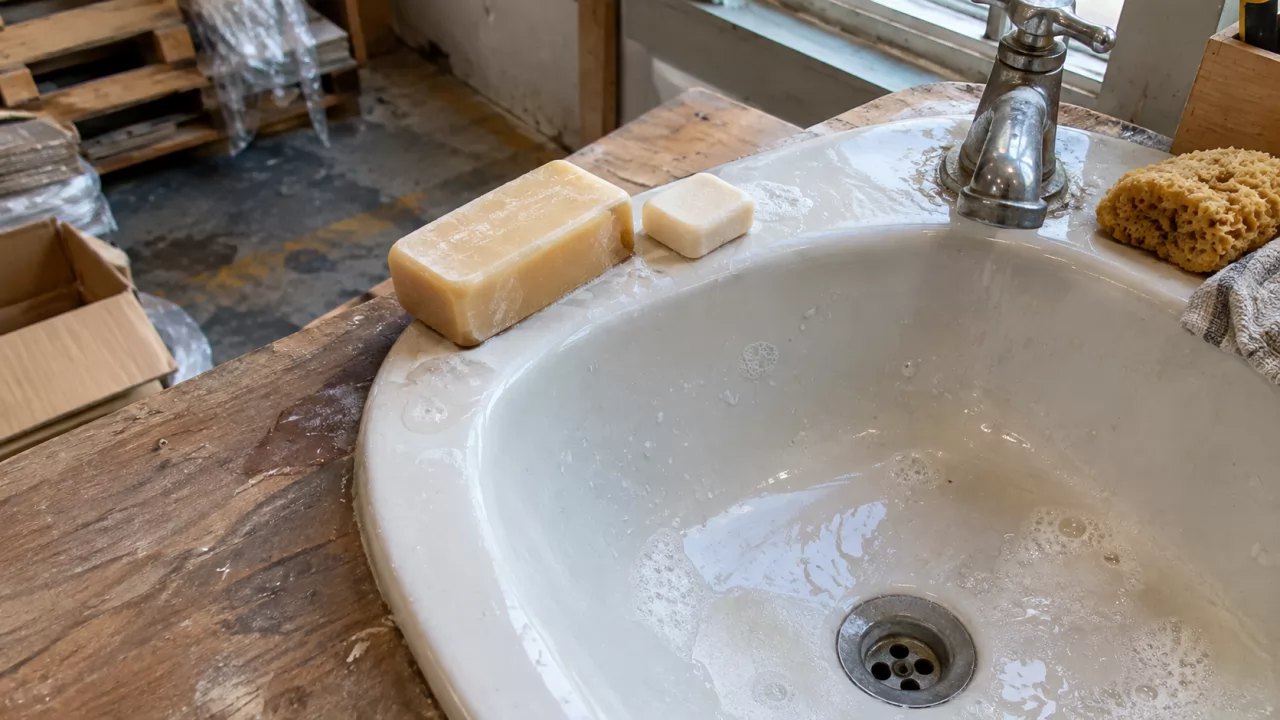
A common mistake is comparing two bars by weight on the spec sheet and calling the heavier one better value. What works instead is giving each candidate the same use for the same period, then weighing what is left.
Why Hardness and Cure Time Change the Rate of Loss
A harder bar usually wears more slowly, because less of it dissolves at each wet contact. Hardness comes from the oil blend and the soap-making method. Blends with more saturated fats tend to give a firmer bar, while softer, more conditioning blends tend to dissolve faster. Cold process soap is made by mixing oils with lye and letting the reaction finish in the mould. The bar then loses water over several weeks of cure and firms up. A bar cut and packed too early is softer and wears faster, even with the same formula.
Why Handmade Bars Behave Differently from Milled Bars
Milled soap is shredded and pressed under pressure, which usually gives a dense, uniform bar with low water content. Handmade bars vary more with recipe and cure. A well-cured handmade bar can wear as slowly as a milled one, and a poorly cured one will not. The result depends on the maker's recipe and how much cure time the schedule allows.
Soap Sits in Water, and That Is Where It Goes
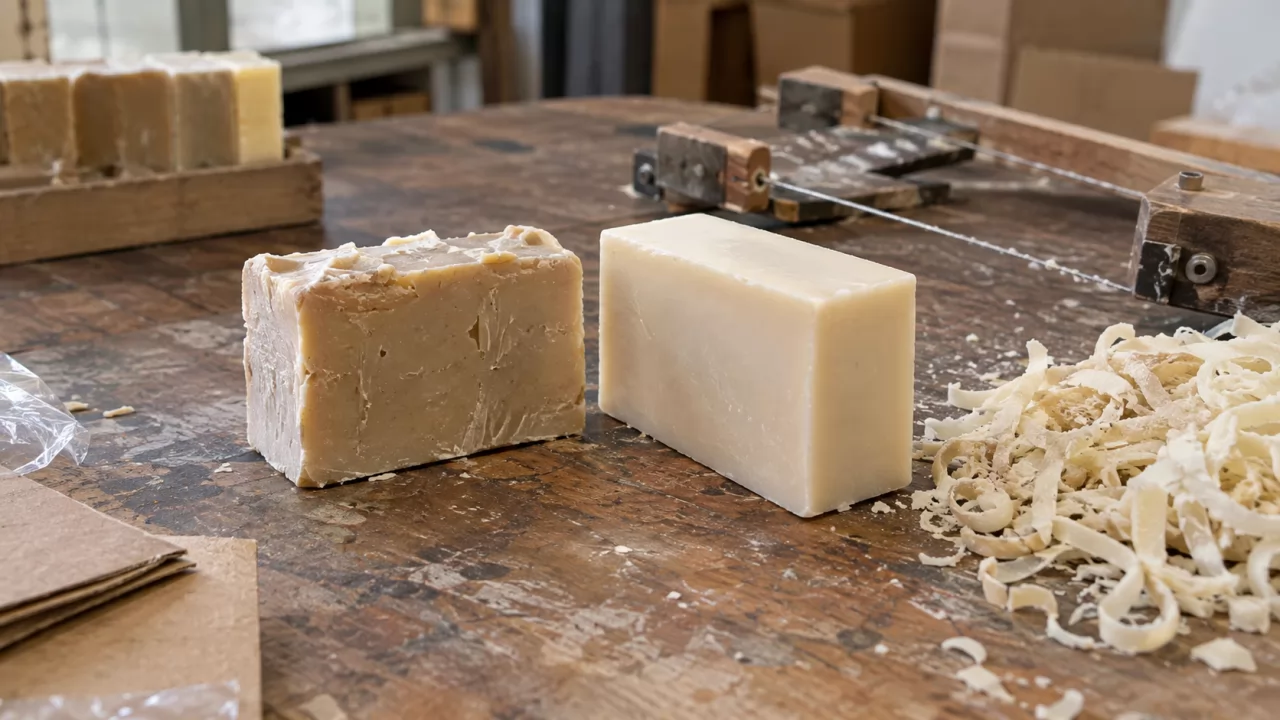
The belief is that the formula alone decides lifespan. A bar left in a pool of water says otherwise. Soap is water-soluble, so the underside of a wet bar turns soft and slimy and sheds material every time it is picked up. Standing water is often a larger factor than small differences between formulas.
Soap drying time is the lever. A bar that dries between uses stays firm, and one that never dries keeps dissolving. Dish design controls much of this. A flat, closed dish traps water. A dish with ridges, slots or a raised rack lets water drain and air reach the underside. Wood and natural-fibre dishes absorb water, so they also need to drain. Bar soap storage between uses matters for the same reason. You control some of this through the insert in the box and the accessories you pair with the bar, such as a draining dish.
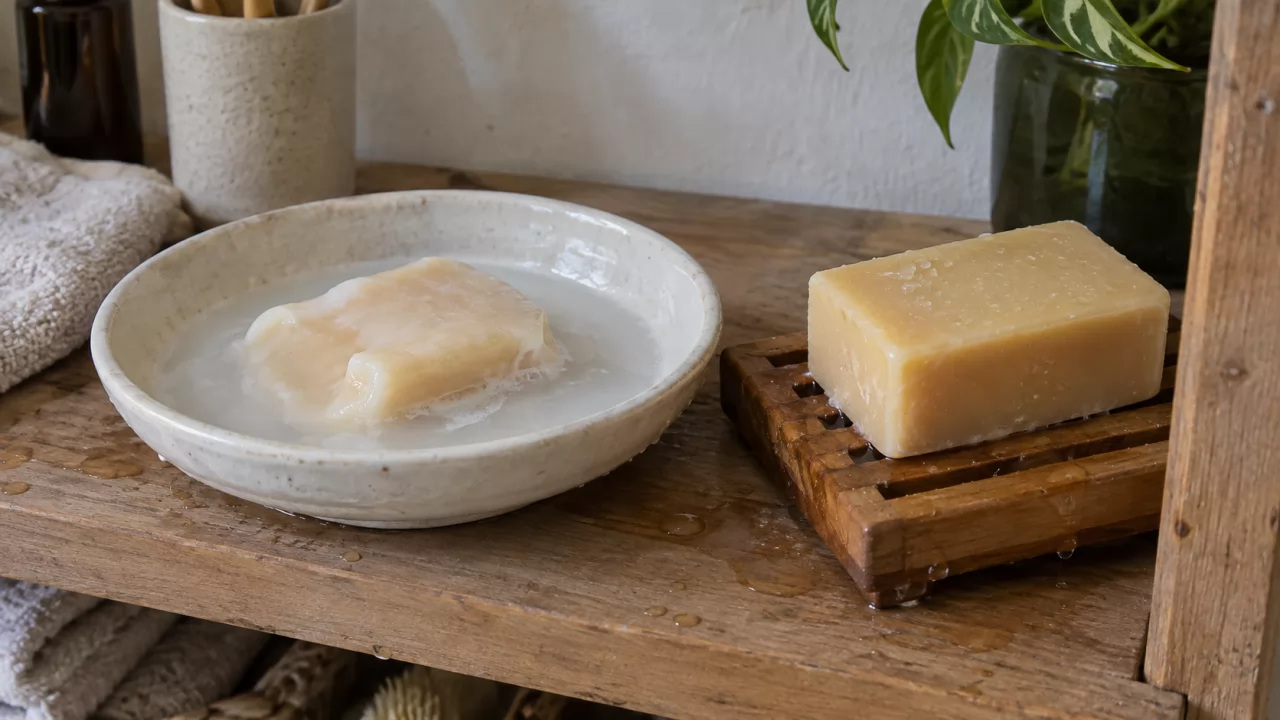
A common mistake is shipping a bar with no care guidance, then reading a "melted" review as a formula fault. A care line on the insert, and a drainable dish in a gift set, often removes the complaint.
How to Make a Bar of Soap Last Longer: Lines You Can Print on the Pack
These are plain, factual lines for the end customer:
- Keep the bar dry between uses.
- Rest it on a draining dish or rack, not flat on a wet surface.
- Keep it out of the direct spray in the shower.
- Cut a large bar into two pieces and use one at a time.
- Let a wet bar dry before closing it in a travel case.
Each line works against the same cause: water that sits on the bar.
Does an Unused Bar Stay the Same?
No. An unused bar can change slowly in the pack, depending on formula and storage. It may lose water and shrink, shift in scent or colour, or show surface sweating or spots. The speed varies by recipe and by where the bar is kept.
Soap shelf life depends partly on the ingredients. Oils that oxidise more easily, and natural additives such as botanical powders, plant extracts or essential oils, can shift scent and colour sooner. Heat, light, humidity and sealed versus loose wrapping all play a part. Stability testing means holding samples under set conditions and checking them at intervals. Ask your manufacturer for the stability and compliance data behind any shelf-life statement before you print one. Labelling rules also differ by market, so check them for the market you sell into.
Agree Lifespan Factors Before the First Production Run
Five items belong in the spec, and each changes how long the bar lasts: bar weight and size, formula and hardness, cure time before packing, wrap or box type, and a test use before launch. Ask for samples in the final size and use them in real conditions: one in a shower, one at a basin, one on a damp dish. Weigh each at the start and the end. Lead time should include cure, because a schedule that squeezes cure out ships softer bars. Poleview offers custom formulas and free samples, with freight paid by the buyer, so you can test hardness and size before committing to a run at 1000 pcs per colour or style.
Use these rules to decide:
- If customers will shower with the bar, then ask for a harder, fully cured formula and pair it with a draining dish.
- If the bar is for hands at a basin, then choose a smaller size and expect faster wear.
- If the formula has botanical powders or essential oils, then ask for stability data before fixing a shelf-life line.
- If you sell gift sets, then include a dish that drains.
- If the schedule is tight, then cut time elsewhere, not from the cure.
The trial results then give you the range you can print.
Matching Bar Format to the Channel
Retail bars sit on shelves for weeks, so a wrap or paper band that limits air and dust helps. Spas and salons usually want smaller guest bars, often wrapped one by one, since each is used only a few times. Amazon-style e-commerce adds transit: cartons pass through warehouses with varying heat and humidity, which can soften or sweat a bar. Sealed wrap and cartons that hold bars firmly, so corners do not chip, matter more there.
Questions About Bar Lifespan
How many showers does a bar of soap last?
There is no reliable count. Size, water exposure, number of users and storage all change it.
How long does handmade soap last once opened?
It depends on recipe and cure. A well-cured, harder handmade bar kept dry between uses usually wears for weeks of daily use. Scent or colour can still change over time, so check the manufacturer's stability data before setting a shelf-life statement.
Does a harder bar always last longer?
Usually, but not always. A hard bar left in standing water still dissolves, and a very hard bar can lather differently. Judge by a trial, not by hardness alone.
Can I print a lifespan claim on the pack without testing it?
No. If you cannot back it with trial results, leave it off. A hedged range in weeks, supported by your own use trial, is the safer route. Claim rules differ by market, so check yours first.
Test Before You Set the Spec
Request a sample in the bar size and formula you plan to sell, and use it for a few weeks in real conditions before you fix the spec. Our team can help check what the trial shows.