
A Netherlands-based indie skincare brand spent eighteen months boxed in by a domestic co-packer that demanded 5,000 units per SKU and quoted €4.20 per finished bar. Switching to a Chinese OEM factory, they launched a 12-SKU cold-process line at a 1,000-bar MOQ per variant, cut landed cost by roughly 40%, and still cleared EU safety assessment before their first retail window.
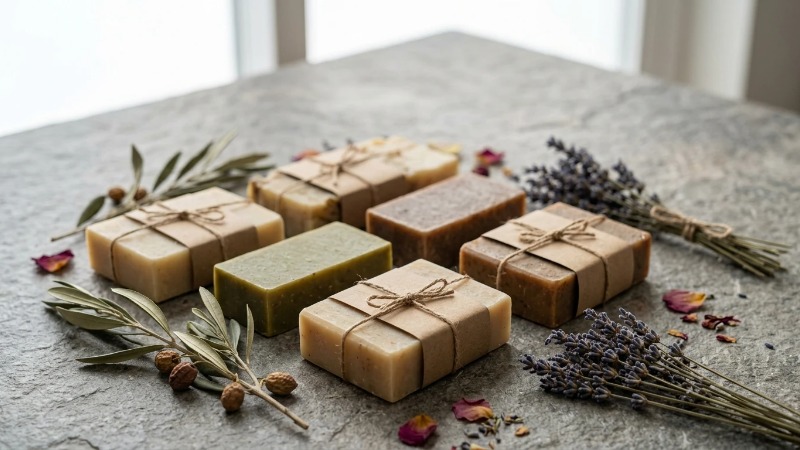
That kind of shift — from margin-squeezed and MOQ-blocked to shelf-ready — is what this guide is built to help business buyers repeat. Below is how to source genuinely natural, low-synthetic handmade bar soap from China without gambling on compliance, product quality, or delivery timelines.
- "Chemical-free" is a marketing shorthand, not a formulation reality — demand no synthetic detergents, sulfates, parabens, or synthetic fragrance instead.
- Certifications de-risk export: ISO 22716, GMPC, SMETA, and FDA registration are the credentials that matter for EU, US, GCC, and SE Asia.
- Cold process suits premium natural lines because it retains oil actives and naturally occurring glycerin.
- MOQ and lead time need planning — cure time alone can add four to six weeks before shipping.
- Documentation is non-negotiable: COA, SDS, allergen declarations, and stability reports should be standard, not special requests.
What "Chemical-Free" and "Natural" Actually Mean in Bar Soap
There is a persistent gap between the language on a soap wrapper and the chemistry inside the bar. Closing that gap is the first job of any serious buyer, because a claim you cannot substantiate is a liability in every export market you care about.
Saponification 101: Why All Soap Involves Chemistry
Every genuine bar of soap is the product of a chemical reaction: fats and oils reacting with an alkali — sodium hydroxide, commonly called lye. No lye, no soap. So "chemical-free soap" is scientifically impossible as a literal statement.
What responsible brands actually mean — and what you should specify — is the absence of synthetic additives. That means no synthetic detergents, no SLS or SLES, no parabens, no synthetic fragrance or dyes. Frame your brief around that standard and you protect both your compliance and your credibility.
Reading the INCI: What Belongs on a Clean Label
The INCI (International Nomenclature of Cosmetic Ingredients) deck is where marketing meets truth. Audit it line by line before you sign anything.
| INCI Term | What It Signals | Buyer Flag |
|---|---|---|
| Sodium Olivate / Cocoate | Saponified olive/coconut oil (true soap) | Good |
| Sodium Lauryl Sulfate | Synthetic surfactant | Avoid for "natural" claim |
| Parfum (synthetic) | Undisclosed fragrance blend | Ask for essential-oil alternative |
| Glycerin | Natural humectant byproduct | Good |
"Natural" vs "Organic" vs "Vegan" vs "Cruelty-Free"
These four claims overlap but are not interchangeable. Natural is largely self-declared and has no single legal definition in most markets. Organic typically requires third-party certification tied to ingredient sourcing standards.
Vegan means no animal-derived ingredients (relevant for tallow, lanolin, or milk soaps), while cruelty-free addresses testing practices. Only some of these carry enforceable certification; treat the rest as claims you must be able to defend with documentation.
Cold Process vs Hot Process vs Melt-and-Pour: Choosing Your Method
Your manufacturing method sets the ceiling on texture, customization, cost, and cure time. Decide this early — it cascades into everything downstream.
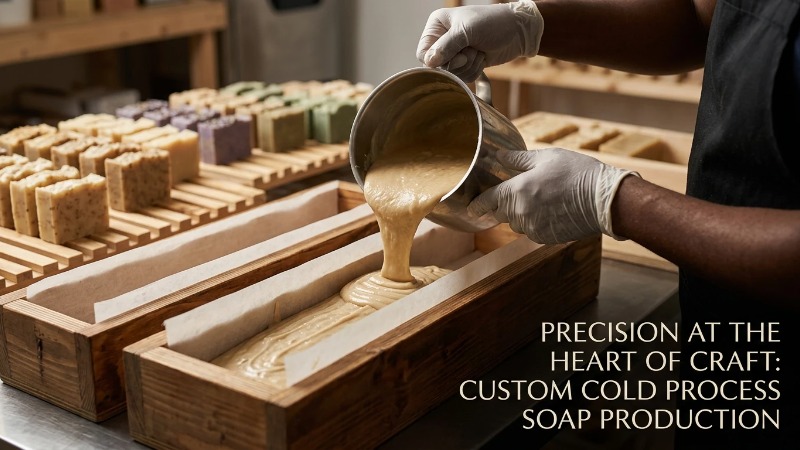
Method Comparison at a Glance
| Method | Cure Time | Customization Ceiling | Relative Cost/Bar | Best Use Case |
|---|---|---|---|---|
| Cold Process | 4–6 weeks | High | Medium–High | Premium natural lines |
| Hot Process | 1–2 weeks | Medium | Medium | Rustic artisanal bars |
| Melt-and-Pour | Minimal | Low–Medium | Low | Fast, decorative, gift lines |
Why Cold Process Dominates Premium Natural Lines
Cold process saponifies at low temperatures, which preserves the character of delicate oils and botanical additives. It also naturally retains glycerin — the humectant that gives quality bars their signature mildness.
For brands positioning on authenticity and clean formulation, cold process carries the artisanal story that consumers pay a premium for. The trade-off is patience: the cure window is real and cannot be safely skipped.
Matching Formulation to Skin Type and Claim
Personal care sits partly in Your-Money-or-Your-Life territory, so language discipline matters. Describe cosmetic benefits, not medical outcomes, and never imply your bar treats a condition.
Oil Profiles and Their Skin Benefits
Each base oil contributes measurable, cosmetic properties. Blending them is how formulators dial in the feel of a finished bar.
| Oil | Contributes | Cosmetic Note |
|---|---|---|
| Olive | Gentle, conditioning feel | Mild, low lather |
| Coconut | Hardness, big lather | Cleansing; high levels can feel stripping |
| Shea Butter | Creamy, moisturizing feel | Adds richness |
| Castor | Stable, bubbly lather | Used in small proportions |
Sensitive, Oily, Dry, and Mature Skin Considerations
For sensitive skin, favor fragrance-free or low-essential-oil formulas and simpler ingredient decks. Oilier skin types often prefer higher-cleansing blends, while dry and mature skin usually responds well to higher superfat and butter content.
Describe these as suitability preferences, not cures. The honest framing — "formulated for a gentle feel on sensitive skin" — keeps you compliant and trustworthy.
The Patch-Test and Safety-Disclaimer Standard
Responsible brands print usage guidance and a patch-test recommendation, especially for essential-oil bars. A capable factory supports this with stability testing and safety documentation rather than leaving you to improvise the claims yourself.
Certifications and Regulatory Compliance for Export Markets
For decision-makers, certifications are not badges — they are risk transfer. They prove that a facility operates to a recognized standard and that your product can legally enter its destination market.
The Certifications That Actually Matter
ISO 22716 defines Cosmetic Good Manufacturing Practice — the backbone standard for hygiene, traceability, and process control. GMPC aligns with the same GMP principles for cosmetics manufacturing.
SMETA is an ethical-audit framework covering labor and working conditions, increasingly demanded by Western retailers. FDA facility registration signals a manufacturer prepared for the US regulatory environment.
Region-by-Region Compliance Snapshot
| Market | Key Requirement | Notes |
|---|---|---|
| EU | CPNP notification, EU Cosmetic Regulation 1223/2009, Responsible Person | Safety Assessment required |
| USA | MoCRA facility registration, FDA labeling | Effective under modernized rules |
| GCC/Middle East | GSO standards / Halal considerations | Ingredient sourcing matters |
| SE Asia | ASEAN Cosmetic Directive notification | Country-specific portals |
The Modernization of Cosmetics Regulation Act (MoCRA), which began phasing in enforceable requirements from 2023 onward, means US-bound product now faces facility registration and product listing obligations that did not exist a few years ago. Build that into your launch timeline.
Documentation Buyers Should Request
Ask for a Certificate of Analysis (COA), Safety Data Sheet (SDS), allergen declarations, and both stability and challenge (preservative efficacy) test reports. A supplier that produces these on request is signaling operational maturity; one that stalls is telling you something too.
Private Label vs OEM vs ODM: Structuring the Partnership
The commercial model determines who owns what — recipe, mold, and artwork — and that ownership shapes your leverage for years.
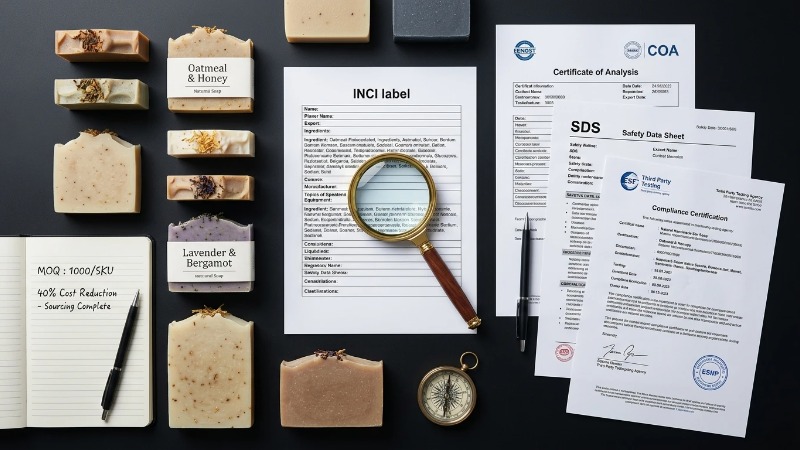
Definitions and Ownership of Formula and Design
Private label puts your brand on an existing, proven formula — fastest to market, lowest development cost, shared recipe. OEM manufactures to your specification, often with your owned formula and mold. ODM means the factory designs and develops, then licenses or sells you the finished concept.
Clarify in writing who owns the recipe, the physical mold, and the packaging artwork before production. Ambiguity here is the most common source of supplier disputes.
Free Design and Rapid Prototyping Workflows
A typical prototyping path moves from brief to formula sampling, then mold creation and packaging mockups, then a pre-production sample for final sign-off. Factories offering free design and fast prototyping compress this cycle, letting you test market-ready concepts before committing to bulk tooling.
Cost, MOQ, and Lead Time: What Bulk Sourcing from China Really Looks Like
This is where the dominant search intent turns transactional. Here is how the economics actually behave.
Cost Drivers Broken Down
Landed cost per bar is a stack: raw ingredients (premium botanical oils and essential oils move the needle most), mold and tooling, packaging, certification and testing, and freight. Ingredients and packaging typically dominate the variable cost, while tooling and certification are front-loaded fixed costs amortized across volume.
Because these vary widely by formula and order size, treat any single per-bar figure with caution and request a line-item quote instead.
MOQ and Lead-Time Expectations
| Stage | Typical Duration |
|---|---|
| Sampling & approval | 1–3 weeks |
| Bulk production | 2–4 weeks |
| Curing (cold process) | 4–6 weeks |
| QC & packaging | 1 week |
| Sea freight (to EU/US) | 4–6 weeks |
Flexible factories can offer MOQs in the low thousands — or lower for private label — per SKU. The single biggest scheduling variable is cure time, which cannot be compressed without compromising the bar.
Pros and Cons of Sourcing from a Chinese Handmade Soap Factory
| Advantages | Limitations |
|---|---|
| Large-scale capacity (six-figure daily output) and cure-space to match | Longer total lead time, including ocean freight |
| Competitive factory-direct pricing | Time-zone and language coordination require discipline |
| Deep formulation libraries and customization | Compliance diligence sits with the buyer |
| Mature certification portfolios (ISO 22716, GMPC, SMETA, FDA) | First-order vetting takes upfront effort |
Quality Assurance: How to Vet a Manufacturer Before You Commit
Vetting is where experienced buyers separate a reliable partner from an expensive mistake. Do it before the deposit, not after the shipment.
The Factory Audit Checklist
Confirm production-line count and real daily capacity, batch traceability systems, and defined QC gates at incoming material, in-process, and finished-goods stages. Ask about curing-room square footage — a factory that produces 100,000 bars a day but lacks cure space for cold process is a mismatch for premium lines.
Red Flags in Samples and Suppliers
Watch for uneven cure or soft spots, fragrance used to mask off-notes, vague or incomplete INCI decks, and any reluctance to share test reports. Each of these individually is a caution; together they are a decline.
Step-by-Step: From Concept to First Container
- Define the brief — brand positioning, target market, and the exact claims you intend to make.
- Shortlist and audit factories — verify certifications, capacity, and cure capability.
- Formulate and sample — approve a pre-production sample against your spec.
- Certify and register — complete CPNP, MoCRA, or ASEAN notifications for each destination.
- Approve bulk, run QC, schedule freight — sign off on golden samples, inspect, and book shipping.
Common Mistakes Brands Make When Sourcing Natural Soap
The recurring errors are predictable — which makes them avoidable. Chasing the lowest quote over verified compliance almost always costs more later, in reworks or customs holds.
Others include ignoring cure-time realities and promising retailers unrealistic dates, under-specifying packaging (which fails in humid transit), and skipping stability testing that would have caught a formula that discolors or sweats on the shelf.
Frequently Asked Questions
Is any bar soap truly "chemical-free"?
No. All genuine soap is created by a chemical reaction between oils and lye. The honest and defensible claim is "free from synthetic detergents, sulfates, parabens, and synthetic fragrance" — which is what most "chemical-free" marketing actually means.
What MOQ should I expect for private label natural soap?
It varies by factory and format, but flexible manufacturers can start in the low thousands of bars per SKU, with private-label lines often available at lower minimums than fully custom OEM formulas. Request a specific quote tied to your SKU count.
How long does cold-process soap need to cure before shipping?
Typically four to six weeks. Curing lets excess water evaporate and the bar harden, producing a longer-lasting product with milder feel. This window should be built into your production schedule and cannot be safely rushed.
Which certifications do I need to sell natural soap in the EU and US?
For the EU, you need CPNP notification, a compliant Safety Assessment under Regulation 1223/2009, and a designated Responsible Person. For the US, MoCRA requires facility registration and product listing plus compliant labeling. A manufacturer holding ISO 22716 supports both.
Can a Chinese factory match my existing formula or create a custom one?
Yes — established factories with in-house R&D can reverse-engineer to match an existing bar or develop a bespoke formula from your brief. Clarify formula and mold ownership in the contract before development begins.
Are natural and essential-oil soaps safe for sensitive skin?
Many are well tolerated, but essential oils and botanical extracts can be sensitizing for some individuals. Responsible brands recommend a patch test, disclose allergen ingredients, and avoid medical claims. For very reactive skin, fragrance-free formulations are the safer default.
Your Next Step: Sourcing a Reliable Manufacturing Partner
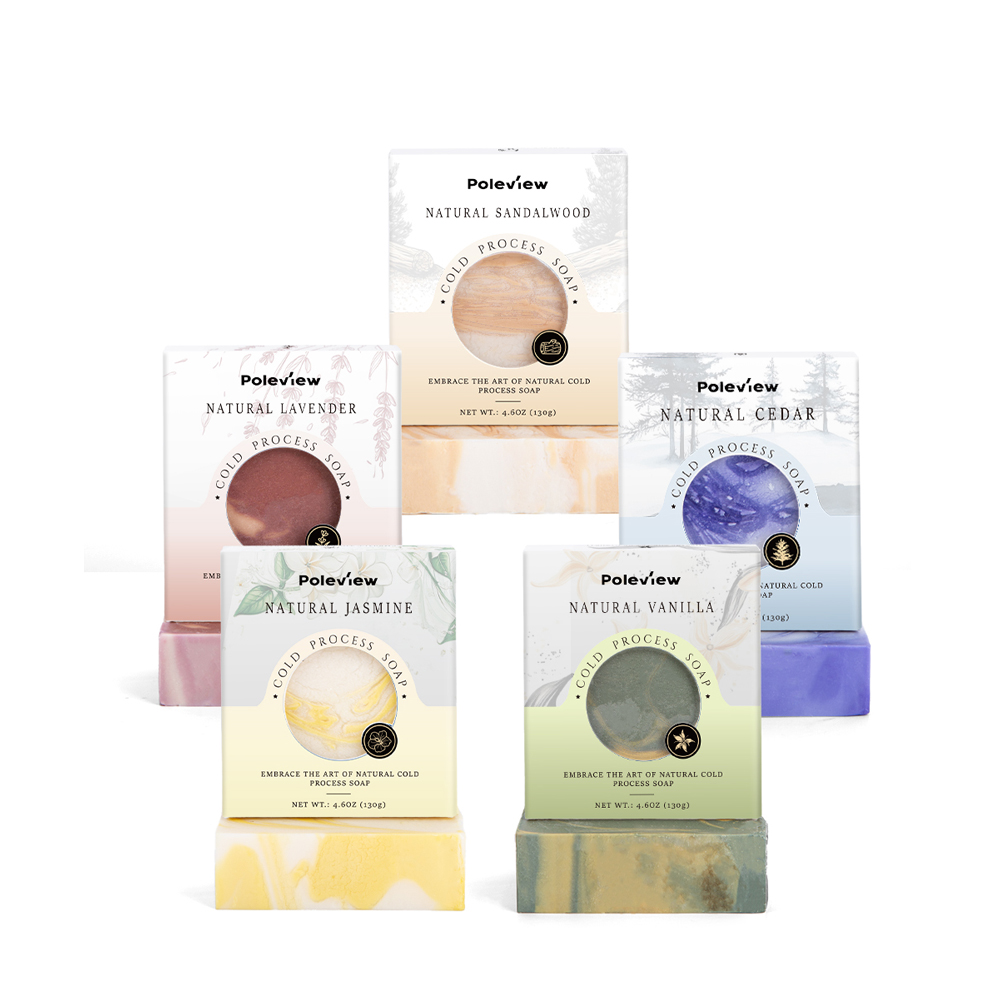
Sourcing genuinely natural handmade bar soap from China comes down to one decision: choosing a factory-direct partner that treats compliance, cure quality, and delivery as non-negotiable. Poleview Biotechnology Co., Ltd. operates a 30,000 m² handmade soap facility with the certification portfolio — ISO 22716, GMPC, SMETA, and FDA — that Western and Middle Eastern retailers expect.
With thousands of stable formulations, 100% natural and cruelty-free ingredients, free design and rapid prototyping, flexible MOQs, and on-time delivery, the team can turn a brand brief into a sampled, shelf-ready line. Share your brief today for a sample and a transparent, line-item quote — and put a compliant, custom natural bar in front of your buyers on schedule.