The global shift toward sustainable personal care products has created a lucrative opportunity for entrepreneurs and small business owners. Eco-friendly soap mesh bags—once a niche zero-waste accessory—have become a mainstream staple in retail, hospitality, and direct-to-consumer channels. This comprehensive guide delivers the data, sourcing strategies, and supplier insights you need to capitalize on this growing market.
The Rising Global Demand for Sustainable Bath Accessories
Consumer demand for zero-waste bathroom products has accelerated dramatically. The eco-friendly personal care accessories market is projected to reach $15.2 billion by 2028, driven by regulatory pressure on single-use plastics and shifting consumer values.
Soap mesh bags have emerged as a category leader within this space. Hotels, subscription box brands, and eco-conscious retailers now consider them essential inventory items rather than optional add-ons.
| Metric | 2023 | 2025 | 2028 (Projected) |
|---|---|---|---|
| Global Eco-Friendly Bath Accessories Market Size | $9.8 billion | $12.1 billion | $15.2 billion |
| CAGR | 8.7% (2023–2028) | ||
| Natural Fiber Soap Bag Segment Growth | $420 million | $610 million | $890 million |
| Top Demand Regions | North America, EU, Australia, Japan | ||
What Is an Eco-Friendly Soap Mesh Bag?
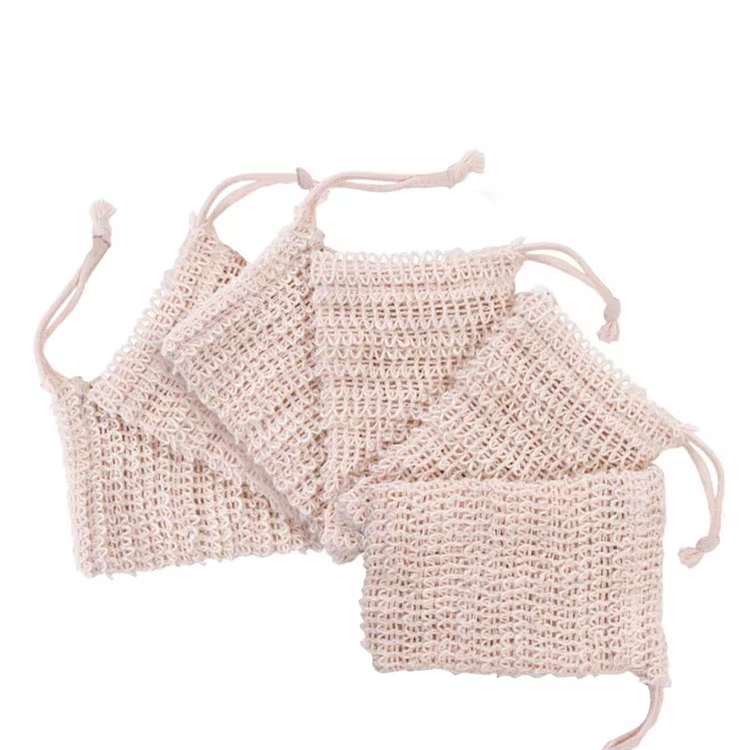
An eco-friendly soap mesh bag is a woven pouch made from natural or biodegradable fibers designed to holdbar soap. It serves three functions simultaneously: extending soap life by reducing waste, generating rich lather, and providing gentle-to-moderate skin exfoliation.
Common materials include natural sisal, ramie, organic cotton, jute, and hemp. These fibers are fully biodegradable, breaking down within 60–180 days in composting conditions—unlike plastic loofahs that persist in landfills for centuries.
Research indicates that soap mesh bags reduce soap waste by 20–30%, as they prevent bars from dissolving in standing water and allow complete use of small soap remnants. This functional benefit, combined with environmental credentials, makes them highly marketable to eco-conscious consumers.
Key Market Drivers for Bulk Biodegradable Soap Saver Pouches
Hospitality industry mandates: Major hotel chains have committed to eliminating single-use plastics by 2027. Biodegradable soap saver pouches paired with bar soap are replacing plastic-bottled amenities at scale.
Subscription box and DTC brand demand: The subscription box industry—valued at $38 billion in 2025—increasingly features natural bath accessories as high-perceived-value, low-cost inclusions.
Private-label retail opportunities: Retailers in the EU, North America, and Australia are expanding eco-friendly bath accessory sections. Entrepreneurs can enter these markets with custom-branded products at accessible MOQs from Chinese manufacturers.
Why Source Exfoliating Mesh Soap Holders Wholesale from China?
China dominates global natural fiber processing and bath accessory manufacturing. The country's infrastructure for sisal, ramie, and hemp production creates unmatched cost efficiency for bulk biodegradable soap saver pouch orders.
Unit economics favor Chinese sourcing significantly. A natural sisal soap bag that costs $0.35–$0.65 per unit from a sustainable soap net bag factory in China would cost $1.20–$2.50 from domestic US or EU manufacturers—a 60–75% cost advantage.
Established supply chains for raw materials mean shorter lead times and greater material consistency. Additionally, Chinese factories increasingly hold international certifications including OEKO-TEX Standard 100, GOTS, and ISO 14001.
China's Sustainable Soap Net Bag Factory Landscape
Guangdong Province leads in diversified bath accessory production, with particular strength in OEM/ODM capabilities and export-oriented manufacturing. Huizhou, a key city in Guangdong, hosts specialized manufacturers offering integrated soap and accessory production.
Zhejiang Province excels in cotton and blended fiber products, with strong logistics connections through Ningbo port. Shandong Province is a primary sisal and hemp processing hub with competitive raw material costs.
Factory capabilities typically include fiber weaving, precision stitching, custom sizing, natural dyeing, brand label attachment, and retail-ready packaging. MOQs range from 500 units for standard designs to 2,000–3,000 units for fully customized products, with lead times of 15–35 days depending on complexity.
Cost Comparison: China vs. Other Sourcing Regions
| Factor | China | India | Vietnam | Domestic (US/EU) |
|---|---|---|---|---|
| Unit Cost (1,000 pcs, sisal) | $0.38–$0.65 | $0.45–$0.80 | $0.50–$0.85 | $1.20–$2.50 |
| Typical MOQ | 500–2,000 | 1,000–5,000 | 2,000–5,000 | 100–500 |
| Lead Time | 15–35 days | 25–45 days | 20–40 days | 7–21 days |
| Customization Options | Extensive (size, color, logo, packaging) | Moderate | Moderate | Limited at low MOQ |
| Certifications Available | OEKO-TEX, GOTS, ISO 14001, SGS | GOTS, BIS | OEKO-TEX, ISO | Varies |
Types of Eco-Friendly Soap Mesh Bags Available for Wholesale
Understanding the full product range helps entrepreneurs select the right SKUs for their target market. Each material offers distinct performance characteristics and positioning opportunities.
Natural Sisal Soap Bag Supplier Options
Sisal fiber, derived from the Agave sisalana plant, delivers the most vigorous exfoliation amongnatural fiber options. Pure sisal weave bags feature a coarse, open-mesh texture that stimulates circulation and effectively removes dead skin cells. They dry quickly, resisting mold growth between uses.
Sisal-cotton blends offer a softer alternative for brands targeting sensitive-skin markets. The cotton interior provides gentle contact while the sisal exterior maintains exfoliating properties. This hybrid design expands your addressable market significantly.
Design variations include drawstring closure bags (most popular), envelope-style pouches with button closures, and flat pocket designs ideal for travel kits. A reliable natural sisal soap bag supplier will offer all three configurations with custom sizing from 9×14cm to 14×19cm.
Ramie and Hemp Mesh Soap Holders
Ramie fiber possesses natural antibacterial properties and dries faster than any other natural fiber used in bath accessories. These characteristics make ramie mesh soap holders ideal for humid bathroom environments where mold prevention is critical.
Hemp soap bags command premium positioning due to the fiber's association with sustainable agriculture. Hemp requires no pesticides, uses minimal water, and produces exceptionally strong, long-lasting fibers. Products made from hemp can be marketed at 30–50% higher price points than sisal equivalents.
Biodegradation timelines vary by material: sisal decomposes in 60–90 days, ramie in 90–120 days, and hemp in 80–120 days under standard composting conditions. All three outperform synthetic alternatives by orders of magnitude.
Cotton and Jute Soap Saver Pouches
Organic cotton soap bags provide the gentlest exfoliation, making them suitable for facial use and children's products. GOTS-certified organic cotton options enable brands to make verified sustainability claims—a critical differentiator in regulated markets like the EU.
Jute bags deliver a rustic, artisanal aesthetic that resonates with handmade soap brands and farmers' market vendors. The natural golden-brown color requires no dyeing, reducing production costs and chemical usage.
Blended material innovations—such as sisal-ramie and cotton-jute combinations—allow manufacturers to optimize performance characteristics for specific use cases. These blends represent a growing segment of exfoliating mesh soap holder wholesale orders.
Product Specification Table
| Material | Exfoliation Level | Dry Time | Biodegradable | Best For |
|---|---|---|---|---|
| Sisal | High | Fast | Yes (60–90 days) | Spa/hotel amenities |
| Ramie | Medium-High | Very Fast | Yes (90–120 days) | Premium retail |
| Cotton | Gentle | Moderate | Yes (90–150 days) | Sensitive skin/children |
| Jute | Medium | Moderate | Yes (80–120 days) | Artisanal brands |
| Hemp | Medium-High | Fast | Yes (80–120 days) | Eco-luxury positioning |
How to Choose the Right Wholesale Supplier for Eco-Friendly Bath Accessories Bulk Orders from China
Selecting the right manufacturing partner is the single most consequential decision in your sourcing journey. A poorly vetted supplier can result in inconsistent quality, missed deadlines, and brand-damaging product failures.
Red flags include reluctance to provide factory audit reports, inability to share reference clients, inconsistent sample quality, and pressure to skip third-party inspections. Prioritize suppliers who demonstrate transparency at every stage of engagement.
Supplier Qualification Checklist
Production capacity and scalability: Confirm the factory can handle your initial order AND scale 3–5x as your business grows without quality degradation.
Raw material sourcing transparency: Request documentation showing fiber origin, farming practices, and material certifications.
Environmental compliance: Verify ISO 14001 environmental management certification and wastewater treatment protocols.
Sample quality and consistency: Order multiple sample batches over time to assess production consistency before committing to bulk orders.
Communication responsiveness: Evaluate English proficiency, response times, and willingness to accommodate revision requests. Reliable suppliers typically respond within 24 hours on business days.
OEM and ODM Capabilities — Custom Branding Your Soap Mesh Bags
OEM (Original Equipment Manufacturing) allows you to apply your brand identity to existing product designs. ODM (Original Design Manufacturing) goes further—the factory develops entirely new designs based on your specifications. Both models are widely available from established Chinese manufacturers.
Common customization options include: custom sizing (any dimension from 8×12cm to 18×25cm), natural fiber dyeing in brand-specific colors, woven or printed logo labels, embossed drawstrings, hang tags, and retail-ready packaging with custom artwork.
The typical design-to-production workflow spans 25–45 days: concept discussion (3–5 days), sample development (7–12 days), sample approval and revision (5–10 days), and production run (10–18 days). Experienced suppliers compress this timeline for repeat orders.
Spotlight — Poleview Biotechnology Co., Ltd.
Poleview Biotechnology Co., Ltd. is a professional private-label soap manufacturer headquartered in Huizhou, Guangdong Province, China. The company specializes in OEM and ODM soap production,
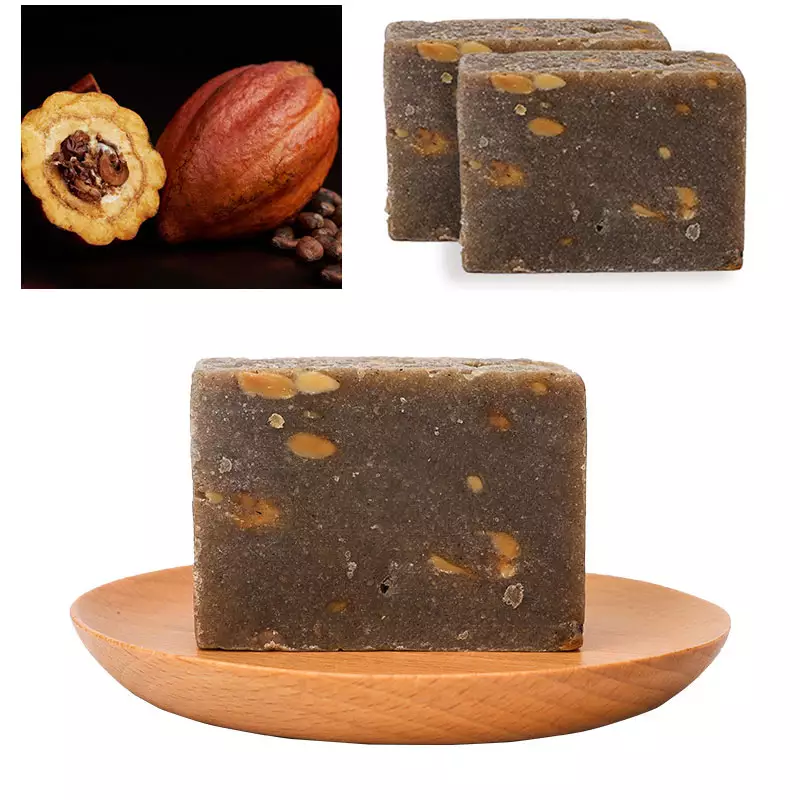
offering integrated solutions that pair custom-formulated bar soaps with matching eco-friendly accessories—including natural fiber soap mesh bags. Their vertically integrated production model allows buyers to source both the soap and the accompanying mesh pouch from a single facility, streamlining logistics and reducing per-unit landed costs.
Poleview's manufacturing facility spans over 8,000 square meters and operates under ISO 22716 (Good Manufacturing Practice for Cosmetics) and ISO 14001 environmental management standards. Their soap mesh bag division processes sisal, ramie, and organic cotton sourced from verified domestic farms, with full traceability documentation available upon request.
Key advantages of working with Poleview include:
Bundled product development: Design a cohesive branded set—artisan soap bar plus coordinated mesh bag—under one purchase order, eliminating the complexity of managing multiple suppliers.
Low MOQ flexibility: Starting quantities as low as 500 units for soap mesh bags when ordered alongside soap production runs, making them accessible to emerging DTC brands and subscription box curators.
In-house testing lab: Material strength testing, colorfastness evaluation, and biodegradation verification are conducted on-site, ensuring each batch meets export market requirements before shipping.
Retail-ready packaging: From kraft paper sleeves with soy-ink printing to compostable cellophane wraps, Poleview handles packaging design and production internally.
Their export history covers North America, Western Europe, Australia, and Japan—markets with stringent safety and environmental labeling standards. Buyers benefit from Poleview's existing compliance infrastructure rather than building it from scratch with an untested factory.
Negotiation Strategies for Bulk Biodegradable Soap Saver Pouch Orders
Effective negotiation with Chinese manufacturers extends well beyond unit price. Experienced buyers focus on total cost of ownership—encompassing tooling fees, sample charges, packaging costs, payment terms, and defect resolution policies.
Volume-tiered pricing: Request a pricing matrix covering at least three quantity brackets (e.g., 1,000 / 3,000 / 10,000 units). Most factories offer 8–15% discounts at the highest tier, and knowing these thresholds helps you plan inventory strategy around optimal cost breaks.
Payment structure: Standard terms are 30% deposit with 70% balance before shipment. For orders exceeding $10,000, negotiate 30/70 with balance payable upon receipt of pre-shipment inspection reports. Established buyers with repeat order history can sometimes secure 30/30/40 milestone-based structures.
Defect tolerance agreements: Formalize acceptable quality levels (AQL) in writing before production begins. For natural fiber products, an AQL of 2.5 for major defects and 4.0 for minor defects aligns with industry norms. Specify that lots failing inspection will be reworked at the factory's expense.
Shipping term optimization: FOB (Free on Board) gives you control over freight forwarding and often yields lower total logistics costs for orders above two cubic meters. For smaller initial orders, CIF (Cost, Insurance, and Freight) simplifies the process while you learn the shipping workflow.
Quality Control and Certification Requirements for Import Markets
Importing eco-friendly bath accessories into regulated markets demands attention to both product safety standards and environmental marketing claims. Non-compliance risks range from shipment seizure at customs to costly product recalls and legal liability.
Essential Certifications for Natural Fiber Soap Bags
| Certification | What It Verifies | Required For |
|---|---|---|
| OEKO-TEX Standard 100 | Absence of harmful substances in textiles | EU, US, Australia retail |
| GOTS (Global Organic Textile Standard) | Organic fiber content and processing standards | "Organic" marketing claims |
| ISO 14001 | Factory environmental management systems | B2B corporate procurement |
| SGS Testing Reports | Material composition, tensile strength, colorfastness | Amazon compliance, retail buyer due diligence |
| FDA Registration | Facility registration for products contacting skin | US market (recommended, not always mandatory) |
Pre-Shipment Inspection Protocols
Third-party inspection services—such as SGS, Bureau Veritas, or Intertek—provide independent verification that production batches meet your specifications. A standard pre-shipment inspection costs $250–$350 per man-day and covers visual defect assessment, dimensional accuracy, packaging integrity, and labeling correctness.
For natural fiber products specifically, inspections should verify:
Consistent mesh density and weave tightness across the batch
Drawstring functionality (minimum 50 open-close cycles without fraying)
Absence of chemical odors indicating improper fiber processing
Color consistency between units (natural fiber color variation within ΔE ≤ 2.0 is acceptable)
Correct label placement, spelling, and care instruction accuracy
Investing $300 in a pre-shipment inspection can prevent $5,000–$20,000 in losses from defective inventory. Consider it non-negotiable insurance for any order exceeding 2,000 units.
Logistics and Shipping Strategies for Soap Mesh Bag Imports
Soap mesh bags are lightweight, compressible products with favorable shipping economics. A standard 20-foot container can hold approximately 80,000–120,000 individual bags depending on packaging configuration, making full container loads (FCL) viable even for mid-sized businesses.
Shipping Mode Comparison
| Shipping Method | Transit Time (China to US West Coast) | Cost per CBM | Best For |
|---|---|---|---|
| Sea Freight (FCL) | 18–25 days | $45–$80 | Orders > 10 CBM |
| Sea Freight (LCL) | 25–35 days | $85–$140 | Orders 1–10 CBM |
| Air Freight | 5–8 days | $350–$600 | Urgent restocks, samples |
| Rail (China–Europe) | 16–20 days | $60–$100 | EU-bound orders, cost-speed balance |
Because soap mesh bags are classified as textile products (HS code typically 6307.90), import duties vary by destination. US importers face duties of 7–12% depending on fiber composition, while EU importers encounter 6.5–12% rates. Factor these costs into your landed cost calculations alongside freight, insurance, and customs brokerage fees.
Packaging Optimization for Transit
Vacuum compression of mesh bags before carton packing can reduce shipping volume by 40–60%, dramatically lowering freight costs for air and LCL shipments. Request that your supplier pack bags flat in poly-free kraft paper bundles, with silica gel packets to prevent moisture damage during ocean transit.
Inner packaging should separate color variants and sizes clearly, with carton markings indicating SKU, quantity, and lot number. This receiving-dock-friendly approach saves hours of labor when inventory arrives at your warehouse or 3PL facility.
Pricing Strategy and Profit Margins for Resellers
Understanding the full margin stack helps entrepreneurs set competitive prices while maintaining healthy profitability. The economics of eco-friendly soap mesh bags are particularly attractive due to the gap between perceived value and actual cost of goods.
Margin Analysis: Sisal Soap Mesh Bag (Standard Drawstring Design)
| Cost Component | Per Unit (USD) |
|---|---|
| Factory price (FOB, 3,000 units) | $0.48 |
| Ocean freight + insurance (allocated) | $0.06 |
| Import duty (US, 8%) | $0.04 |
| Customs brokerage (allocated) | $0.02 |
| 3PL receiving + storage (monthly) | $0.05 |
| Total Landed Cost | $0.65 |
| Wholesale price (to retailers) | $2.50–$3.50 |
| Suggested retail price | $5.99–$8.99 |
| Wholesale Gross Margin | 74–81% |
These margins widen further when selling direct-to-consumer through e-commerce channels, where retail prices of $6.99–$12.99 per bag are standard for branded, attractively packaged products. Multi-packs (3-pack or 5-pack bundles) command $14.99–$24.99 and increase average order value while reducing per-unit fulfillment costs.
Marketing and Positioning Strategies for Eco-Friendly Soap Accessories
Successfully selling soap mesh bags requires positioning that transcends the product's simplicity. Consumers aren't buying a mesh pouch—they're buying a commitment to sustainability, a spa-like experience, and a solution to soap waste.
Channel-Specific Positioning
Amazon and e-commerce marketplaces: Lead with functional benefits—"extends soap life by 30%" and "replaces plastic loofahs"—supported by lifestyle imagery showing the product in upscale bathroom settings. Keyword-optimized listings targeting "zero waste bathroom accessories" and "natural exfoliating soap saver" capture high-intent search traffic.
Wholesale to boutique retailers: Emphasize margin opportunity and shelf appeal. Provide retailers with branded display units, educational shelf-talkers explaining environmental benefits, and competitive wholesale pricing that enables keystone markup or better.
Hospitality and corporate gifting: Position mesh bags as part of a curated amenity kit or employee wellness package. Custom branding with hotel logos or corporate identities adds perceived value far beyond production cost. Present case studies showing guest satisfaction improvements and plastic waste reduction metrics.
Subscription box partnerships: Pitch soap mesh bags as a high-perceived-value inclusion at minimal cost to the curator. A $0.65 landed-cost item that subscribers perceive as worth $6–$8 delivers exceptional value-to-cost ratio for box brands managing tight per-box budgets.
Building a Sustainable Brand Narrative
Transparency drives purchase decisions in the eco-friendly space. Document your supply chain story—from the sisal farms to the factory floor to the customer's bathroom. Share fiber sourcing details, factory working conditions, carbon footprint data for shipping, and end-of-life composting instructions.
Brands that publish annual sustainability reports, even simple one-page documents, build measurably higher customer loyalty and command price premiums of 15–25% over competitors making vague "eco-friendly" claims without substantiation.
Common Pitfalls and How to Avoid Them
First-time importers frequently encounter avoidable problems that erode margins and delay market entry. Learning from others' mistakes accelerates your path to profitability.
Skipping sample evaluation: Never place a bulk order based solely on product photos or a single sample. Order 10–20 samples across multiple production dates to assess consistency. Test them personally—wash with them daily for two weeks to evaluate durability, lather generation, and drying performance.
Ignoring fiber shrinkage: Natural fibers shrink 3–8% after first water exposure. Confirm that your supplier pre-washes or accounts for shrinkage in stated dimensions. A bag marketed as 14×19cm should measure that size after wetting, not before.
Underestimating customs complexity: Textile imports face fiber-content-specific duty rates. Misclassifying a sisal-cotton blend under the wrong HS code can trigger audits, penalties, and shipment delays. Engage a licensed customs broker familiar with textile classifications.
Overlooking labeling requirements: The US requires fiber content and country of origin on textile products (per the Textile Fiber Products Identification Act). The EU mandates similar disclosures under Regulation 1007/2011. Non-compliant labels mean your inventory cannot legally be sold until relabeled—an expensive, time-consuming correction.
Single-supplier dependency: Qualify at least two factories before scaling. Supply chain disruptions—from raw material shortages to factory relocations—can halt your business if you lack alternatives.
Scaling Your Eco-Friendly Soap Mesh Bag Business
Once initial orders validate market demand, systematic scaling unlocks compounding returns. The lightweight, non-perishable nature of soap mesh bags makes them ideal for inventory-led growth strategies.
Phase 1 (Months 1–3): Launch with 2–3 core SKUs—a sisal drawstring bag, a cotton gentle-exfoliation bag, and a hemp premium option. Test pricing, channels, and messaging with a 1,000–3,000 unit initial order. Gather customer reviews and refine product specifications based on feedback.
Phase 2 (Months 4–8): Expand to 5–7 SKUs including multi-packs, gift sets (soap + bag bundles), and seasonal color variants. Increase order quantities to 5,000–10,000 units to access better pricing tiers. Establish wholesale relationships with 10–20 retail accounts.
Phase 3 (Months 9–18): Introduce private-label partnerships with larger retailers or hotel chains. Develop exclusive designs unavailable elsewhere. Order volumes of 20,000–50,000 units per quarter enable maximum supplier leverage and lowest per-unit costs. Consider warehousing in multiple regions to reduce delivery times for international customers.
Throughout all phases, maintain rigorous quality control, nurture supplier relationships with consistent communication and fair payment practices, and reinvest a portion of margins into brand-building content that differentiates your products in an increasingly competitive market.