Search interest in brightening cleansers has climbed steadily, and beauty retailers report that "how long until it works?" is now one of the most common pre-purchase questions shoppers ask. That impatience is understandable — you buy a bar, use it for a few days, and start scanning the mirror for a difference. So let's answer the question honestly, without the hype.
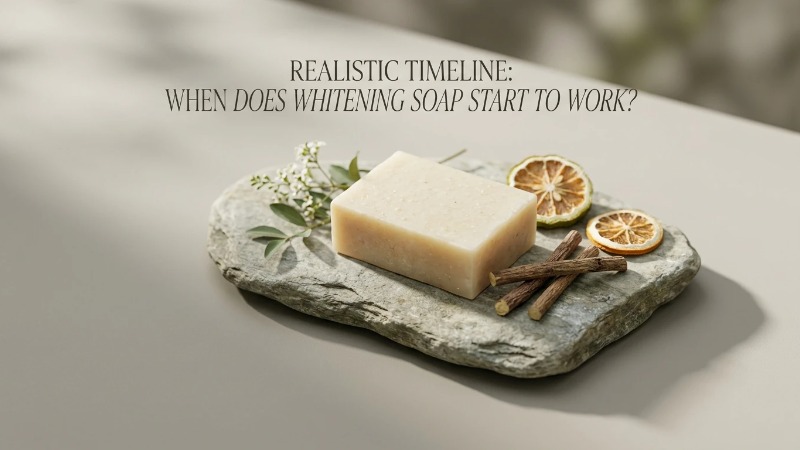
By the end of this guide, you'll know what a realistic whitening soap timeline looks like, which factors speed it up or slow it down, and how to track your own progress safely. One important framing first: "whitening" in skincare means brightening and evening your skin tone — not changing your natural complexion. Keep that expectation in mind and everything below makes more sense.
Quick Answer: The General Whitening Soap Results Timeline
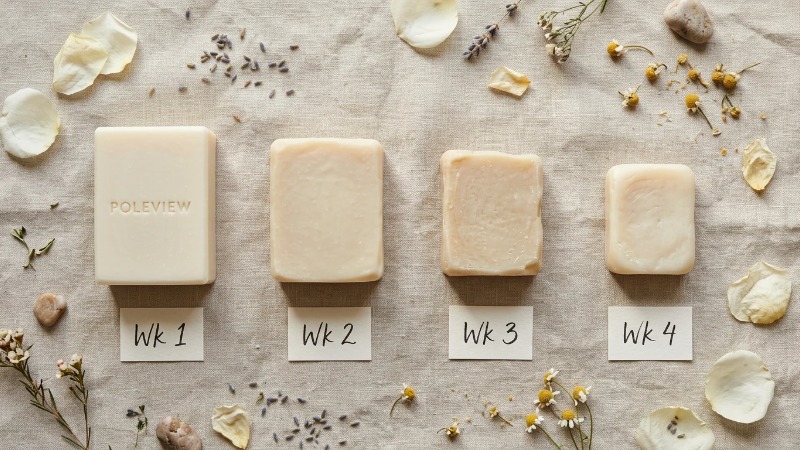
Most users see the first hints of brighter, more even-looking skin around 4 to 6 weeks of daily use, with more noticeable results by 8 to 12 weeks. Because soap is rinsed off rather than left on, it tends to work more gradually than a leave-on serum. Individual outcomes vary, and none of this is a medical or guaranteed result.
Sample Timeline Table
| Time Period | What to Realistically Expect |
|---|---|
| Week 1–2 | Cleaner, smoother-feeling skin; minimal visible change in tone |
| Week 3–4 | Slightly more even tone; skin may look a bit brighter |
| Week 6–8 | Noticeable fading of dull patches for many users |
| Week 8–12+ | Fuller, more even results with consistent daily use |
Caveat: these are general patterns, not promises. Your genetics, skin condition, and habits all shift the timeline.
What "Whitening Soap" Actually Does
The word "whitening" gets thrown around loosely, so it helps to separate three ideas. Brightening means improving radiance and reducing dullness. Lightening refers to gently fading dark spots or evening tone. Bleaching — dramatically altering natural skin color — is not what a well-formulated, safe soap is designed to do, and products promising it should raise a red flag.
A whitening soap combines gentle cleansing with active ingredients that support a more even appearance. But those actives only have a short window of contact with your skin before you rinse them off. That's the key difference between soap and a leave-on serum or cream: less contact time generally means more gradual, cumulative results.
Real change is also tied to your skin's natural renewal cycle. As surface cells shed and fresh ones surface, pigment concentrated in older cells gradually appears less prominent — which is why patience beats daily mirror-checking.
Common Active Ingredients (and What They Target)
| Ingredient (INCI-style) | Typical Function | General Onset (Qualitative) |
|---|---|---|
| Niacinamide | Supports even tone, reduces look of dullness | Gradual, several weeks |
| Kojic Acid | Targets the look of dark spots and uneven tone | Gradual, multi-week |
| Licorice extract / Glabridin | Helps soothe and brighten appearance | Slow and cumulative |
| Vitamin C derivatives | Antioxidant support, radiance | Gradual with consistency |
| Turmeric | Traditionally used for glow and tone | Slow, supportive |
| Activated charcoal | Deep cleansing, clearer-feeling skin | Feels immediate; tone change is slower |
Note the pattern: almost everything works gradually. Any ingredient claiming instant color change should be treated with caution.
Why Skin Cell Turnover Sets the Pace
Your skin renews itself on a cycle that dermatology sources commonly estimate at around 28 days for younger adults, lengthening to 40 days or more with age. New cells form in the deeper layers, migrate to the surface, and eventually shed.
This biology is the honest reason results aren't instant. For the effects of any brightening product to become visible, you essentially need at least one full turnover cycle — often more. That's precisely why a 4-week checkpoint is realistic, and why judging a product after three days tells you almost nothing.
Key Factors That Affect Your Results Timeline
Two people can use the same soap and see very different timelines. Here's what accounts for the gap.
Skin Type and Baseline Concerns
Oily, dry, combination, and sensitive skin each respond differently. General dullness usually improves faster than deep-set hyperpigmentation. Long-standing dark spots — from acne scarring or years of sun exposure — take the longest and may never fully vanish from a rinse-off product alone.
Consistency and Usage Frequency
Daily, correct use produces steadier results than occasional lathering. Contact time matters too — a quick swipe rinses actives away before they can do much. Letting a gentle lather sit briefly (as directed) and rinsing thoroughly tends to help. Treating a full body area versus one small patch will also change how "obvious" your progress feels.
Ingredient Concentration and Formulation Quality
A soap is only as good as its formulation. Stable, well-manufactured products deliver consistent active levels bar after bar. This is where manufacturing standards matter: facilities certified to GMP and ISO 22716 follow controlled processes that keep formulations reliable — a meaningful trust signal when you can't see behind the label.
Sun Exposure and Aftercare
Sunlight is the single biggest saboteur of brightening progress. UV exposure stimulates pigment production and can undo weeks of effort. Daily broad-spectrum sunscreen is not optional if your goal is even tone — it's the difference between visible progress and running in place.
Lifestyle and Environment
Hydration, balanced nutrition, and sleep support overall skin health and can help your results along. But keep this in perspective: these are supporting factors, not miracle levers. No amount of water or sleep replaces consistent use plus sun protection.
How to Track Progress the Right Way
Daily mirror-checking is the enemy of perspective — changes this gradual are invisible day to day. A simple photo log gives you honest evidence.
Step-by-Step Progress Tracking
- Take a clear "before" photo in consistent, natural lighting.
- Write down your start date and how often you'll use the soap.
- Re-photograph every 2 weeks using the same angle, distance, and light.
- Do your real evaluations at the 6-week and 12-week marks.
- Compare honestly, then decide to continue, adjust, or stop.
Consistent lighting is critical — a different window or bulb can fake either progress or failure.
Patch Testing and Safety First (Read Before You Start)
Before regular use, do a patch test. Apply a small amount to a discreet area like the inner forearm, leave the lather on for the directed time, rinse, and wait 24–48 hours. If you see persistent redness, itching, burning, or swelling, discontinue use.
Some people should check with a dermatologist first — including those who are pregnant, have eczema or highly reactive skin, or are using prescription topical treatments. A clear, honest statement worth repeating: no soap treats medical skin conditions, and you should avoid any product containing unsafe or banned lightening agents such as mercury compounds or unregulated high-dose actives.
When in doubt, favor products with fully disclosed ingredient lists and recognized safety certifications over mystery formulas making dramatic promises.
Realistic Expectations vs. Marketing Myths
The gap between advertising and reality is where most disappointment comes from. Dramatic before-and-after images are frequently edited, differently lit, or the result of far more than soap alone.
Comparison: Realistic vs. Overhyped Claims
| Marketing Claim | Realistic Reality |
|---|---|
| "Visible results in 3 days" | Surface freshness only; genuine tone change takes weeks |
| "Permanent whitening" | Maintenance and sun protection are needed to sustain results |
| "Works the same for everyone" | Timeline varies widely by skin type and habits |
| "Changes your natural skin color" | Safe products even and brighten tone — they don't rewrite genetics |
Common Mistakes That Delay Results
- Skipping sunscreen. Fix: apply broad-spectrum SPF daily, every day.
- Inconsistent use. Fix: build it into a fixed morning or evening routine.
- Over-scrubbing. Fix: gentle lather beats aggressive rubbing, which irritates and can worsen pigmentation.
- Expecting overnight change. Fix: judge at 6 and 12 weeks, not day three.
- Layering too many strong actives at once. Fix: introduce products one at a time to avoid irritation.
How to Choose a Quality Whitening Soap
Look for a transparent, complete ingredient list you can actually read. Natural, vegetarian, and cruelty-free formulations appeal to many shoppers, and options that are gentle enough to patch test comfortably are a good sign.
Manufacturing matters as much as marketing. Soap produced in facilities certified to standards like GMPC, ISO 22716, and FDA-registered processes reflects consistent quality control and safer, more stable formulations. For brands sourcing product, working with certified manufacturers is one of the clearest trust factors available.
Key Takeaways
- Expect a realistic timeline of 4–12 weeks, with first hints around 4–6 weeks.
- Consistency plus daily sun protection are the decisive factors — skip either and progress stalls.
- "Whitening" means brightening and evening tone, not changing your natural complexion.
- Always patch test first, and consult a dermatologist for sensitive or medicated skin.
- Choose transparent, certified, quality formulations over dramatic instant-result claims.
Frequently Asked Questions (FAQ)
How long does whitening soap take to work on dark spots?
Dark spots are among the slowest concerns to respond. Many users need 8–12 weeks or longer of consistent use, paired with daily sunscreen, to see meaningful fading — and deep, old pigmentation may not fully clear from soap alone.
Can I use whitening soap every day?
Most gentle, well-formulated soaps are designed for daily use, but follow the product directions and monitor your skin. If you notice dryness or irritation, reduce frequency and moisturize afterward.
Why do I see redness or dryness after starting?
Mild dryness can happen as skin adjusts, especially with cleansing bars. Persistent redness, burning, or itching, however, signals irritation — stop use, and consult a professional if symptoms continue.
Do natural whitening soaps work slower than chemical ones?
Not necessarily. Onset depends more on the specific active, its concentration, and formulation quality than on whether ingredients are labeled "natural." Both work gradually, since results are tied to your skin renewal cycle.
Will results disappear if I stop using it?
Brightening effects can fade over time without maintenance, and sun exposure especially can bring back uneven tone. Sustained results usually require continued care and consistent sun protection.
Is whitening soap safe for the face?
Many are formulated to be facial-friendly, but facial skin is more delicate, so patch test first and choose gentle, transparent formulations. Avoid harsh scrubbing and always pair with sunscreen. When in doubt, ask a dermatologist.
Conclusion & Next Step
The honest bottom line: give a quality whitening soap 4 to 12 weeks, use it consistently, protect your skin from the sun, and measure progress with photos rather than daily glances. Healthy expectations — even, brighter tone rather than a changed complexion — lead to satisfaction instead of disappointment.
For brands and retailers seeking reliable, natural, certified whitening soap made to your specifications, Poleview Biotechnology Co., Ltd. offers free design, fast prototyping, flexible minimum order quantities, and on-time delivery from GMP- and ISO 22716-certified production lines. Contact our team today to discuss your custom natural soap formulation.