If you've ever mixed a batch of soap and pulled out bars that felt harsh on the skin, or stayed soft and greasy for weeks, odds are your lye math was off. Getting the lye calculation right is the single most important step in making soap that's safe, gentle, and sellable.
This guide walks you through the math, the safety, and the tools, step by step. Whether you're testing recipes at your kitchen table or dreaming of a full product line, you'll come away knowing exactly how to calculate lye for soap making with confidence.
Why Getting Your Lye Calculation Right Actually Matters
Lye is what turns oils into soap. Use too much and you're left with harsh, skin-burning bars no customer will buy twice. Use too little and your soap stays soft, oily, and won't hold up on a shelf.
Accuracy here is both a safety issue and a quality issue. For anyone building a soap brand, a reliable calculation is the foundation everything else rests on.
The Cost of a Bad Batch for Small Businesses
A single miscalculation wastes ingredients, time, and sometimes an entire product launch. Premium oils like shea butter and sweet almond aren't cheap, and a ruined batch eats straight into your margins.
There's also the trust factor. One harsh bar that irritates a customer's skin can undo months of brand building through a single bad review.
Consistency gets harder as you scale, too. What works for a 1kg test batch takes far more precision at 100 bars, which is why many growing brands eventually partner with a manufacturer to keep quality steady.
Lye Basics: What You're Actually Working With
Before touching a calculator, it helps to understand what lye is and why it behaves the way it does. Don't worry, no chemistry degree required.
Sodium Hydroxide vs. Potassium Hydroxide
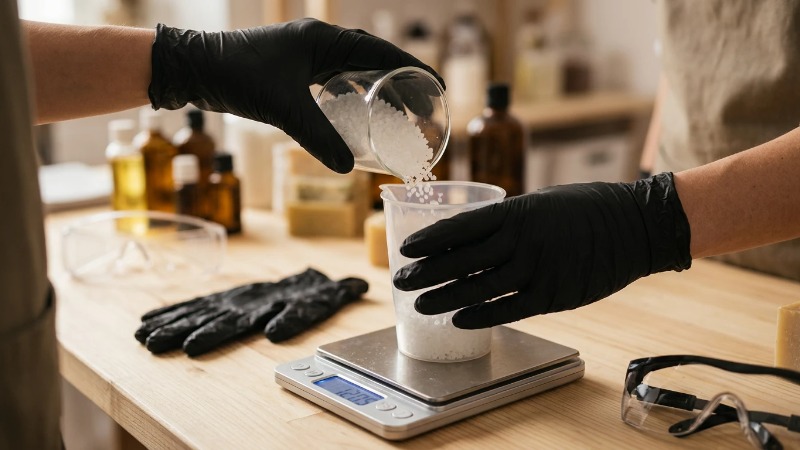
There are two types of lye, and they're not interchangeable. Sodium hydroxide (NaOH) makes solid bar soap, while potassium hydroxide (KOH) makes liquid and soft soaps.
This matters because each type requires a different amount to saponify the same oil. Using the wrong SAP value for your lye type will throw your whole recipe off, so always confirm which one your recipe calls for.
What Saponification Really Means
Saponification is simply the reaction between oils and lye that produces soap and glycerin. Mix them in the right proportions and the lye is fully consumed, leaving no caustic material in the finished bar.
Every oil reacts a little differently. That's the key reason each oil needs its own specific amount of lye, which brings us to the numbers behind the math.
The Key Numbers Behind Every Lye Calculation
Four variables drive every lye calculation. Once you understand these, the actual math becomes straightforward:
- SAP value — how much lye a specific oil needs
- Lye-to-oil ratio — the balance between your oils and lye
- Superfat percentage — your built-in safety margin
- Water-to-lye ratio — how much water carries the lye
Understanding the Saponification Value Chart
A saponification chart lists the SAP value for each oil, representing exactly how much lye that oil requires to fully turn into soap. To read it, find your oil, then pick the column that matches your lye type, either NaOH or KOH.
You'll multiply your oil's weight by this number later. A trusted saponification value chart is a soap maker's most-used reference tool.
Sample Saponification Value Chart (Common Soap Oils)
| Oil / Fat | NaOH SAP Value | KOH SAP Value |
|---|---|---|
| Olive Oil | 0.134 | 0.190 |
| Coconut Oil | 0.183 | 0.257 |
| Palm Oil | 0.141 | 0.199 |
| Shea Butter | 0.128 | 0.179 |
| Castor Oil | 0.128 | 0.180 |
| Sweet Almond Oil | 0.136 | 0.192 |
Note: SAP values vary slightly between sources because oils differ by supplier and region. Always cross-check against a reputable database before committing to a recipe.
Superfat Percentage: Building in a Safety Margin
Superfatting means leaving a small amount of oil unsaponified on purpose. This extra oil makes your bars gentler and more moisturizing, and it acts as insurance against tiny measurement errors.
For beginners, a superfat percentage of 5% to 8% is a comfortable range. It keeps bars mild without making them soft or prone to going rancid.
Water-to-Lye Ratio: Why It Isn't About Chemistry
Here's something that surprises new makers: water isn't part of the saponification reaction. It's just a delivery vehicle that dissolves the lye so it can mix evenly with your oils.
The water amount doesn't change how much lye you need, but it does affect how your batch behaves. More water means slower trace and a longer cure time, while less water speeds both up.
Step-by-Step: Calculating Lye by Hand
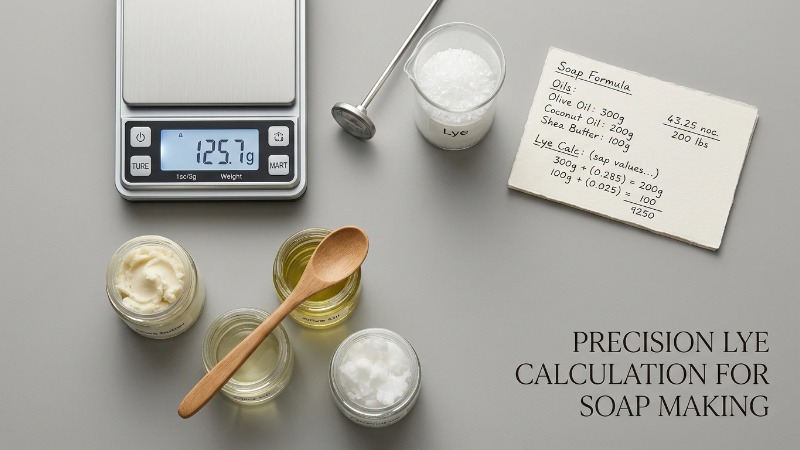
Now for the fun part. Let's walk through a real calculation together so you can see how the numbers connect. We'll build a simple 1,000g oil recipe as we go.
Step 1: Choose Your Oils and Weigh Them
Always measure oils by weight, never by volume. A cup of coconut oil and a cup of olive oil weigh different amounts, and volume measurements introduce errors that ruin batches.
Invest in a digital scale accurate to at least one gram. For our example, we'll use 500g olive oil, 300g coconut oil, and 200g shea butter.
Step 2: Multiply Each Oil by Its SAP Value
Take each oil's weight and multiply it by its NaOH SAP value from the chart. This tells you how much lye that specific oil needs.
For example, 500g of olive oil × 0.134 = 67.0g of lye. Repeat this for every oil in your recipe.
Step 3: Add Up Your Total Lye Amount
Once you've calculated the lye needed for each oil, add them all together. This sum is your total NaOH requirement before any adjustments.
In our example, the three oils add up to 147.5g of lye. That's the amount that would fully saponify every drop of oil with nothing left over.
Step 4: Apply Your Superfat Discount
To superfat, you reduce your total lye by your chosen percentage. Multiply the total by (100 minus your superfat percent), then divide by 100.
Using a 5% superfat on our 147.5g total: 147.5 × 0.95 = 140.1g of lye. That small reduction leaves 5% of your oils unsaponified for gentler bars.
Step 5: Calculate Your Water Amount
A common beginner-friendly water-to-lye ratio is 2:1, meaning twice as much water as lye. Just multiply your final lye amount by two.
With 140.1g of lye, you'd use about 280g of water. As you gain experience, you can adjust this ratio to control trace and cure times.
Worked Example: A Simple 1,000g Oil Recipe
| Oil | Weight (g) | NaOH SAP | Lye Needed (g) |
|---|---|---|---|
| Olive Oil | 500 | 0.134 | 67.0 |
| Coconut Oil | 300 | 0.183 | 54.9 |
| Shea Butter | 200 | 0.128 | 25.6 |
| Total | 1,000 | — | 147.5 |
After applying a 5% superfat, the lye drops from 147.5g to 140.1g. Using a 2:1 water-to-lye ratio, you'd add roughly 280g of water. That's a complete, safe recipe worked out entirely by hand.
Using a Lye Calculator (The Faster Way)
Once you understand the manual math, an online lye calculator becomes your everyday workhorse. These tools do the arithmetic instantly and cut the chance of a slip that costs you a batch.
Understanding the math still matters, though. When a calculator spits out a number that looks off, you'll catch it, because you know what's happening under the hood.
How to Enter a Recipe Correctly
Start by selecting your lye type, NaOH for bars or KOH for liquid soap. Then enter each oil with its weight, set your superfat percentage, and choose your water setting.
A good sodium hydroxide soap calculator handles the SAP values automatically. Your job is just to feed it accurate inputs.
Common Mistakes That Throw Off Your Results
The most frequent errors are surprisingly simple. Mixing up units (grams versus ounces) can double or halve your lye. Selecting KOH values when you meant NaOH is another classic trap.
Forgetting to set your superfat is a big one too, since a 0% superfat leaves no safety margin at all. Double-check these three settings every single time.
Manual Math vs. Lye Calculator: Quick Comparison
| Factor | Manual Calculation | Lye Calculator |
|---|---|---|
| Speed | Slower | Fast |
| Error risk | Higher | Lower |
| Learning value | High | Moderate |
| Best for | Understanding basics | Daily production |
Lye Safety Every Maker Must Follow
Lye is caustic and deserves respect. These safety practices aren't optional, they're the difference between a smooth workflow and a trip to the emergency room.
Protective Gear and Workspace Setup
Always wear gloves and goggles, and work in a well-ventilated space. The fumes from freshly mixed lye can catch you off guard, so open a window or run a fan.
The golden rule: always add lye to water, never water to lye. Doing it backwards can cause a violent volcano-like eruption of caustic liquid.
Storing and Disposing of Lye Responsibly
Store lye in a sealed, clearly labeled container, well away from children, pets, and moisture. It absorbs water from the air, which degrades its potency over time.
For spills, neutralize with vinegar and clean up carefully while wearing gloves. Never pour large amounts of lye solution down household drains without diluting it heavily first.
Cold Process vs. Hot Process: Does the Lye Math Change?
Here's good news for beginners: the lye calculation is identical for both methods. Whether you make cold process soap or hot process, the SAP values, superfat, and totals stay exactly the same.
What differs is the handling. Hot process applies heat to speed up saponification, so bars are ready to use sooner. Cold process relies on time and needs a longer cure. The math never changes, only the technique does.
Scaling Up: From Kitchen Batches to a Real Product Line
Calculating lye for a 1kg test batch is one thing. Producing hundreds of bars week after week is another challenge entirely.
At scale, small inconsistencies multiply. Oil quality varies between suppliers, ambient temperature affects trace, and every batch must be identical for customers to trust your brand. You also face labeling regulations, safety compliance, and shelf-stability testing.
These demands can overwhelm a solo founder who'd rather focus on design and marketing. That's the moment many soap entrepreneurs start looking outward for help.
When It Makes Sense to Work With a Manufacturer
There often comes a point where in-house production caps your growth. You're spending more time weighing lye than building your business.
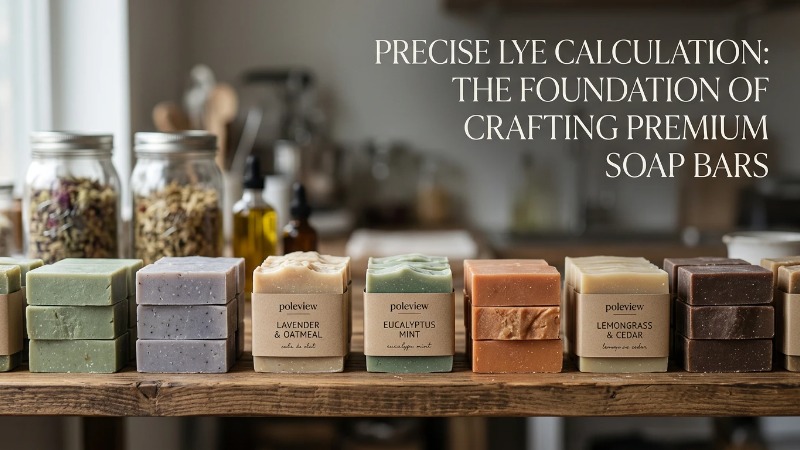
This is where a manufacturing partner changes the game. Poleview Biotechnology Co., Ltd. is a professional personal care products manufacturer specializing in OEM and ODM soap orders. As a trusted private label soap factory, Poleview delivers high product quality at competitive prices, so founders can focus on branding and sales instead of lye math.
Partnering with an experienced factory means consistent formulation, reliable sourcing, and compliance handled for you, letting your brand scale without sacrificing the quality your customers expect.
Frequently Asked Questions
What happens if I use too much lye in soap?
Too much lye leaves excess caustic material in the finished bar, making it harsh and potentially unsafe on skin. This is exactly why superfatting matters. Leaving a small percentage of oils unsaponified protects against measurement errors and gives you a gentler, safer bar.
Can I use the same lye amount for any oil?
No. Each oil has a different SAP value, meaning it needs a different amount of lye to saponify fully. Use coconut oil's lye amount for olive oil, for example, and you'll badly unbalance your recipe. Always look up each oil individually on a saponification chart.
Why do lye calculators give slightly different results?
Different calculators pull from different SAP value databases, and those values vary slightly because natural oils differ by source, region, and processing. These small differences are normal. As long as you use a reasonable superfat, they make no meaningful difference to the finished bar.
Do I need to calculate lye if I outsource production?
Not at all. When you partner with an OEM or ODM manufacturer like Poleview Biotechnology Co., Ltd., their team handles the formulation and lye entirely. You get consistent, high-quality soap without ever touching a scale or a calculator, which frees you to focus on growing your brand.
Is it safe to make soap at home without lye?
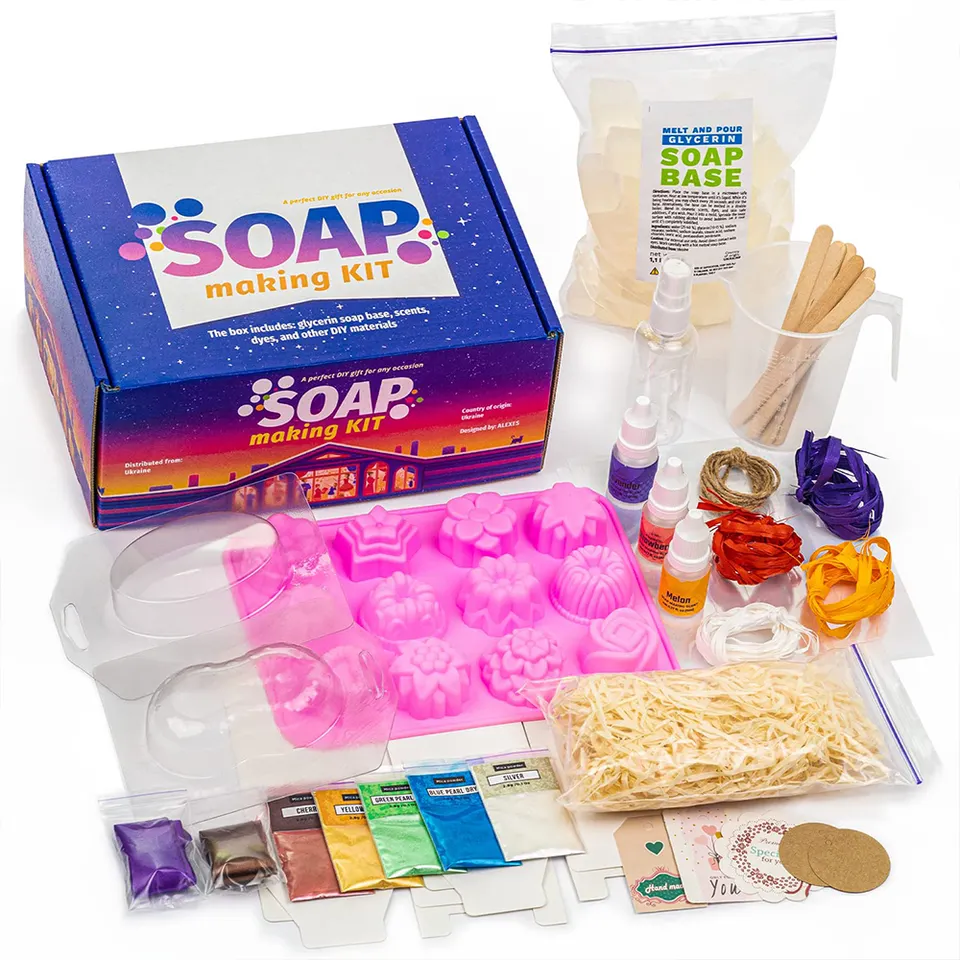
Melt-and-pour bases let you make soap without handling lye directly, which is why they're popular with beginners. But it's worth understanding that a manufacturer already made these bases through saponification. All true soap, everywhere, involves the reaction between oils and lye at some stage.
Ready to Turn Your Recipe Into a Real Product?
Master the fundamentals of cold process soap lye and saponification and you gain the confidence to create bars people love. Once you've nailed the basics, the next step is scaling without losing that quality.
That's where Poleview Biotechnology Co., Ltd. comes in. As a trusted private label soap factory offering full OEM and ODM services, we combine high product quality with competitive pricing to help entrepreneurs bring their soap brands to life.
Whether you're launching your first line or expanding an existing range, we'd love to talk. Contact Poleview Biotechnology Co., Ltd. today to discuss your OEM and ODM soap orders and private label manufacturing partnership. Let us handle the lye math, so you can focus on building a brand your customers keep coming back to.