Thousands of years ago, someone noticed that ashes mixed with animal fat produced a strange, slippery substance that cleaned skin and cloth. That accidental discovery was soap. For centuries afterward, it stayed a slow, hands-on craft: big kettles, wooden paddles, and a lot of patience.
Fast forward to today, and the picture looks wildly different. Modern plants turn out tens of thousands of bars every hour, running around the clock with barely a human hand touching the product. So what actually happens behind those factory doors? Let's walk through the whole journey, from raw oils to the wrapped bar sitting on your bathroom shelf.
The Basics: What Soap Really Is
Before we step onto the factory floor, it helps to know what soap actually is. Once you understand the core idea, every step in the process starts to make sense.

The Simple Science of Saponification
At its heart, soap comes from a single reaction. Take a fat or oil, add an alkali (commonly called lye), and the two react to form soap plus glycerin. That reaction has a fancy name: the saponification process.
Think of it like baking. The fat and the lye are your ingredients, and heat helps them combine into something completely new. The end result is a molecule that grabs onto grease on one end and water on the other, which is exactly why soap lifts dirt away when you rinse.
The best part? Once the reaction finishes, the harsh lye is gone. It gets fully consumed in the process, leaving behind a gentle cleanser. No leftover caustic chemicals sit in a properly made bar.
Soap vs. Detergent: A Quick Clarification
Here's a point that trips up a lot of people. Not every "soap" on the shelf is technically soap. Many beauty bars and body washes are actually detergents, built from synthetic cleansing agents rather than the fat-plus-alkali reaction.
True soap is made through saponification. Detergents are engineered in a lab to perform in specific ways, like lathering well in hard water. Neither is automatically better, but knowing the difference helps you read labels with a sharper eye.
Raw Materials for Soap Production
Every finished bar starts with a shopping list of ingredients. The raw materials for soap production fall into two buckets: the essentials that create the soap itself, and the extras that shape how it looks, smells, and feels.
The Core Ingredients (Fats, Oils, and Alkali)
The fats and oils are the foundation. Palm oil and coconut oil are extremely common because they produce a hard bar with rich lather. Olive oil creates a milder, gentler soap, while tallow (rendered animal fat) has been used for generations for its firm, long-lasting quality.
Then comes the alkali. For solid bar soap, factories use sodium hydroxide. For liquid soaps, they switch to potassium hydroxide, which produces a softer, more soluble result. This one swap is a big reason bars and liquids behave so differently.
Additives That Shape the Final Product
Once you have the base soap, additives turn a plain block into a finished product. Fragrance oils give it scent. Colorants and pigments create the look. Moisturizers like extra glycerin or shea butter make it gentler on skin, and preservatives help it last on the shelf.
These extras are usually a small fraction of the total recipe, but they're what makes one brand feel luxurious and another feel basic.
Common Raw Materials and Their Functions
| Raw Material | Type | Purpose in Soap |
|---|---|---|
| Palm / Coconut Oil | Fat source | Hardness and lather |
| Sodium Hydroxide | Alkali | Triggers saponification |
| Glycerin | Byproduct/additive | Moisturizing |
| Fragrance Oils | Additive | Scent |
| Titanium Dioxide | Additive | Whitening/color |
The Two Main Industrial Soap Production Methods
Not every factory makes soap the same way. There are two dominant approaches, and the choice usually comes down to how much soap a company needs and how specialized it wants to be.
The Cold and Hot Process at Scale
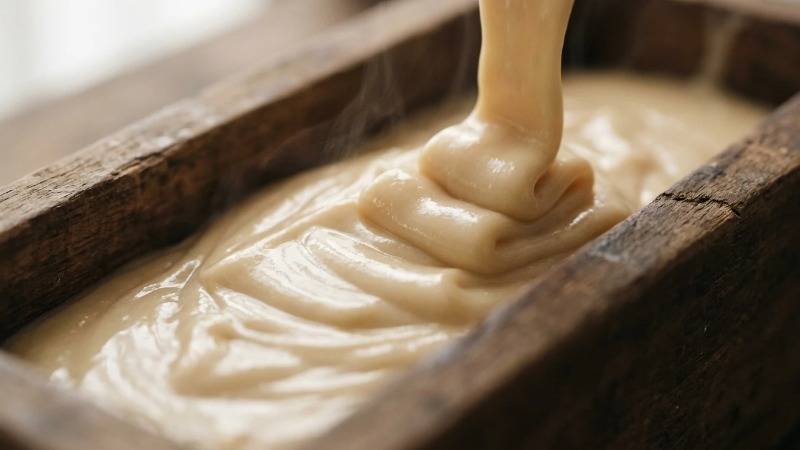
The cold and hot process methods are the traditional, batch-based approach, scaled up for bigger operations. In a batch, a set amount of oils and lye is combined, reacted, and then processed as one unit before the next batch begins.
This is the method smaller and mid-sized producers often favor. It gives them flexibility to switch recipes, run limited editions, or craft specialty soaps without retooling an entire line.
The Continuous Saponification Process
Large manufacturers lean on the continuous saponification process instead. Rather than making one batch at a time, raw materials flow steadily into a system that never stops. Oils and lye enter one end, and finished soap comes out the other in an unbroken stream.
This nonstop flow is the engine behind mass-market industrial soap production. It's fast, consistent, and efficient, which is exactly what you need when a single brand sells millions of bars a year.
Batch vs. Continuous Production Compared
| Factor | Batch Process | Continuous Process |
|---|---|---|
| Output speed | Lower | Very high |
| Flexibility | High | Lower |
| Best for | Specialty soaps | Mass-market brands |
| Typical scale | Small/mid factories | Large facilities |
How Is Soap Made in a Factory: The Step-by-Step Process
Now for the main event. Here's how soap gets made in a factory, broken into the seven stages that turn raw oils into a finished, wrapped bar. Most large plants follow this same broad sequence, whether they run batch or continuous systems.
Step 1: Blending and Measuring Raw Materials
It all starts with precision. Automated systems weigh out oils, fats, and alkali down to exact amounts, because even small errors would throw off the reaction.
The measured ingredients are then blended and fed into the system. Getting these ratios right is the difference between a smooth, gentle bar and a batch that has to be scrapped.
Step 2: The Saponification Reaction
Next, the blended mixture is heated and reacted. In a continuous system, this happens inside a reactor where oils and lye combine as they flow through. In a batch setup, it happens inside large heated vessels.
Heat speeds the reaction along, and within a controlled window the fats and alkali fully convert into soap and glycerin. This is the chemical heart of the whole operation.
Step 3: Separating Soap and Glycerin
Once the reaction is done, the mixture contains both soap and glycerin. Factories wash the soap with a salt solution, which causes it to separate from the glycerin-rich liquid.
The glycerin doesn't go to waste. It's a valuable byproduct that gets recovered and sold for use in cosmetics, pharmaceuticals, and even food products. That recovery step adds real value to the whole process.
Step 4: Drying and Forming Soap Noodles
At this stage the soap is still wet and soft. It's pushed through a dryer that removes most of the moisture, then formed into small pellets known as "soap noodles."
These noodles are the standard base for solid bars. Many companies actually buy pre-made noodles and start their process here, skipping the earlier chemistry entirely.
Step 5: Mixing, Milling, and Adding Extras
Now the personality gets added. The noodles go into a soap making machine where fragrance, color, moisturizers, and other additives are blended in. Milling rollers crush and mix everything into a smooth, uniform mass.
This milling step matters more than it sounds. It ensures the color is even and the fragrance is distributed throughout, so every part of the bar smells and looks the same.
Step 6: Extruding, Cutting, and Stamping
The smooth soap mass is forced through an extruder, which compresses it into a long, continuous bar, a bit like toothpaste squeezing from a tube. A cutter slices that bar into individual pieces.
Finally, a stamping press gives each piece its final shape and imprints the brand logo. This is the moment a generic block becomes a recognizable product.
Step 7: Cooling, Wrapping, and Packaging
The stamped bars are cooled to firm up, then inspected for defects. Bars that pass move on to wrapping and packaging, often at high speed by automated machinery.
From there, they're boxed, palletized, and shipped out to stores. The bar that took years to invent now takes only minutes to produce from start to finish.
The Machines Behind the Process
None of this happens without serious equipment. A modern line is a chain of specialized machines, each handling one part of the journey and passing the soap to the next.
Key Equipment in a Modern Soap Making Machine Line
A typical line includes mixers that blend the raw ingredients, and amalgamators that fold in fragrance and color evenly. Then come the mills that refine the texture, and the extruders that shape the soap into bars.
After that, cutters slice the bars to size and stampers press in the final shape and logo. Together, this equipment forms the backbone of commercial soap production, moving product along with minimal manual work.
Automation and Quality Control
Sensors and automated checks run throughout the line. They monitor temperature, moisture, weight, and consistency, flagging anything that drifts outside the acceptable range.
Samples are pulled and tested to confirm the soap is safe, gentle, and balanced. This constant monitoring is how factories keep millions of bars identical, batch after batch.
Real-World Context: The Soap Industry by the Numbers
Soap might feel like a humble product, but it sits inside a massive global industry. As of the most recent estimates available in 2026, the worldwide soap market is valued in the tens of billions of dollars and continues to grow steadily.
Much of that growth is fueled by rising hygiene awareness and by demand in fast-developing regions. The Asia-Pacific region leads global production, driven by both huge populations and major manufacturing capacity.
Snapshot of the Global Soap Market
| Metric | Approximate Figure |
|---|---|
| Global market value | Estimated in the range of tens of billions USD (2026 estimates) |
| Projected growth rate | Roughly a low-to-mid single-digit CAGR |
| Leading production regions | Asia-Pacific, North America, Europe |
| Common product types | Bar soap, liquid soap, specialty/artisan |
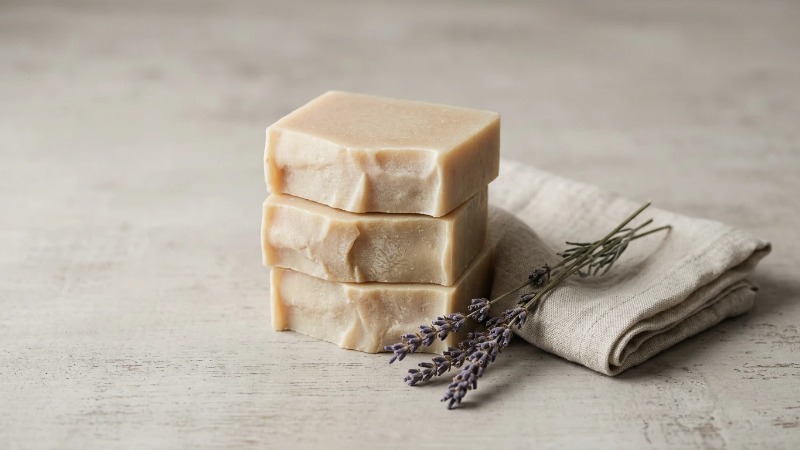
Bar soap remains a staple, but liquid soaps and specialty artisan products have carved out growing shares. Consumers increasingly want options tailored to their skin, their values, and their scent preferences.
Sustainability and Modern Trends
Today's shoppers don't just ask whether a soap works. They ask how it was made and what it cost the planet. The industry has been responding to that shift.
Greener Ingredients and Palm Oil Concerns
Palm oil is one of the most useful ingredients in soap, but its cultivation has been tied to deforestation and habitat loss. That has put real pressure on manufacturers to source responsibly.
Many now use certified sustainable palm oil or turn to alternative oils altogether. Others are reformulating with plant-based ingredients that carry a lighter environmental footprint.
Waste Reduction and Glycerin Recovery
Recovering glycerin, which we touched on earlier, is a prime example of smart waste reduction. What could be discarded instead becomes a profitable product for other industries.
Factories are also cutting water use, reusing process heat, and trimming packaging waste. These changes reduce costs and appeal to eco-minded buyers at the same time, a rare win-win.
Frequently Asked Questions
How long does it take to make soap in a factory?
In a continuous system, soap can move from raw materials to finished bar in a matter of hours, sometimes less. Batch processes take longer, often a day or more, because each batch is reacted and processed separately before moving on.
Is factory-made soap different from handmade soap?
Yes, mostly in consistency and scale. Factory soap is highly uniform, with every bar looking and performing the same, and it usually has additives for shelf life and lather. Handmade soap often keeps its natural glycerin and may feel more moisturizing, but it can vary from batch to batch.
What happens to the glycerin in commercial soap production?
In large-scale production, glycerin is typically separated out during the washing stage. It's then purified and sold for use in cosmetics, medicines, and food, making it a valuable byproduct rather than waste.
Are the chemicals used in soap factories safe?
Yes, when the process is done correctly. Lye is caustic on its own, but saponification fully consumes it during the reaction. A properly made bar contains no leftover lye, just soap and gentle additives.
Why do some soaps float?
Floating soap is made by whipping tiny air bubbles into the soap mass before it's shaped. Those bubbles make the bar less dense than water, so it bobs to the surface instead of sinking. It's a clever manufacturing trick, not a sign of purity.
Conclusion: Appreciating the Everyday Bar
The next time you pick up a bar of soap, you'll know the real story behind it. What started as fats, oils, and alkali went through a precise chemical reaction, got separated, dried, milled, shaped, stamped, and wrapped, often in less time than it takes to watch a movie.
It's a remarkable blend of ancient chemistry and modern engineering, hidden inside the most ordinary object in your bathroom. That humble bar carries thousands of years of know-how in every wash.
So here's your next step: take a closer look at the label on your favorite soap. Notice the ingredients, check whether it's true soap or a detergent bar, and consider seeking out brands with sustainable sourcing. And if you found this journey through the factory floor interesting, share it with someone who's curious about how everyday products really get made.