You use it every single day without thinking twice. But have you ever wondered where soap actually came from? The answer takes us on a journey spanning nearly 5,000 years — from ancient clay tablets to the bar sitting on your bathroom counter right now.
The history of soap making is far more dramatic than you might expect. It involves ancient empires, medieval trade wars, scientific revolutions, and world wars. Let's trace the full soap origin timeline from its earliest beginnings to the product we know today.
The Ancient Origins of Soap — Where It All Began
Soap didn't appear overnight. Its invention was a gradual process that unfolded across centuries and civilizations. The desire to get clean is as old as humanity itself, but the chemistry to make it happen took a surprisingly long time to figure out.
The Babylonian Soap Discovery (Around 2800 BCE)
The oldest documented evidence of soap-like substances comes from ancient Babylon. Archaeologists discovered clay tablets dating to approximately 2800 BCE that describe a mixture of water, alkali, and cassia oil — essentially a primitive soap recipe.
These tablets didn't describe soap for personal hygiene, though. The Babylonians appear to have used this early concoction primarily for cleaning wool and cotton fibers in textile preparation. Still, the basic chemistry was there: fats combined with wood ash to create a cleansing agent.
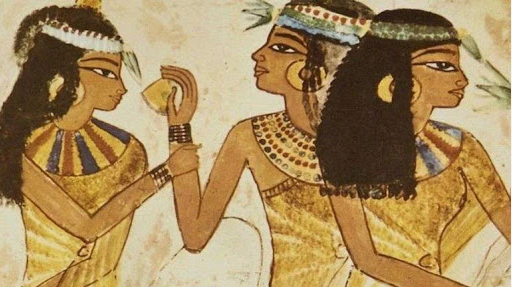
This Babylonian soap discovery represents the earliest known record of ancient soap production. It tells us that nearly 4,800 years ago, people had already figured out the fundamental reaction that makes soap work — even if they didn't fully understand the science behind it.
Early Cleansing Agents Before "True" Soap
Long before anyone mixed fat with ash, ancient people found creative ways to get clean. Nature provided plenty of options for those who knew where to look.
Many cultures used plant-based saponins — naturally foaming compounds found in soapwort, yucca root, and horse chestnuts. When agitated in water, these plants produce a lather that effectively removes dirt and oil from skin and fabric.
Others relied on abrasives like fine sand, pumice, or clay. Ancient Egyptians used a paste made from clay and olive oil. Greeks famously scraped oil and dirt from their skin using a curved metal tool called a strigil after bathing. These early cleansing agents remind us that the human drive for cleanliness has always been strong — people simply worked with whatever materials their environment provided.
Soap Origin Timeline — From Ancient Civilizations to the Roman Era
After the Babylonian discovery, soap-making knowledge spread slowly across the ancient world. Different civilizations contributed their own innovations, gradually refining the process over thousands of years.
Egyptian and Mesopotamian Contributions
The ancient Egyptians advanced soap-making significantly. The Ebers Papyrus, a medical document dating to around 1550 BCE, describes a substance made by combining animal and vegetable oils with alkaline salts. Egyptians used this mixture for treating skin diseases as well as for general washing.
This is an important detail in the history of soap making — it shows that early civilizations recognized soap's medicinal properties, not just its cleaning power. The connection between cleanliness and health was already forming thousands of years before germ theory.
Mesopotamian cultures continued refining their recipes as well, experimenting with different fats and alkaline sources to produce more effective cleansing compounds.
The Roman Legend of Mount Sapo
One of the most famous stories about soap's origin involves a mythical place called Mount Sapo near Rome. According to legend, women washing clothes in the Tiber River below the mountain noticed their laundry came out cleaner in certain spots.
The explanation? Animal sacrifices performed on the mountaintop sent a mixture of melted animal fat and wood ash flowing down into the river. This combination created a natural soap that made the water below especially effective for washing.
It's a compelling story, and the word "saponification" — the chemical process of making soap — does seem to reference it. However, historians have found no actual evidence that Mount Sapo existed. The tale is likely a folk etymology invented after the fact. Still, it shaped public understanding of soap's origin for centuries and remains one of the most widely repeated accounts of how soap was "discovered."
Greek and Phoenician Advances
The Phoenicians, those legendary traders of the ancient Mediterranean, were producing soap from goat tallow and wood ash by around 600 BCE. Their extensive trade networks helped spread soap-making knowledge across the region.
Greek writers made references to cleansing compounds as well, though the Greeks themselves seemed to prefer oil-and-scraper bathing methods over soap. The Roman historian Pliny the Elder later wrote about soap being used by Germanic and Gallic tribes, noting they used it primarily as a hair pomade rather than a body cleanser.
By the end of the Roman era, soap was known throughout the Mediterranean world — but it remained a relatively crude product, far from the refined bars we use today.
The Middle Ages — Soap Becomes a Craft and Trade
The medieval period transformed soap from a simple homemade mixture into a sophisticated craft product and valuable trade commodity.
Arabic Innovations in Soap Making
Arab chemists in the 7th century made what might be the single biggest leap in the history of soap making before the Industrial Revolution. They perfected recipes for hard bar soap using olive oil and lye (sodium hydroxide), producing a product that was firm, long-lasting, and pleasantly scented.
These weren't the soft, greasy pastes of earlier centuries. Arab soap makers created bars that could be easily transported and stored — a practical innovation that made commercial soap trade viable. They also experimented with adding fragrances and colors, elevating soap from a purely functional item to something approaching a luxury good.
This knowledge spread through trade routes and during the Crusades, eventually reaching European shores and sparking a new industry.
European Soap Guilds and Regional Specialties
By the late Middle Ages, soap making had become a serious business in Europe. Major production centers emerged in Marseille (France), Castile (Spain), and Savona (Italy) — each developing distinctive recipes based on locally available ingredients.
Marseille soap used olive oil from Provence. Castile soap, still famous today, was made exclusively from olive oil, producing an exceptionally mild and pure bar. Northern European soap makers, lacking abundant olive oil, relied on animal tallow instead, creating a different but equally functional product.
Soap-making guilds jealously guarded their recipes and techniques. In some cities, soap makers were required to work at night so competitors couldn't observe their methods. Soap had become valuable enough to warrant such secrecy — though it remained expensive enough that only the wealthy used it regularly for personal hygiene.
The Industrial Revolution — Soap for the Masses
For most of human history, soap was either a luxury or a laborious homemade product. The Industrial Revolution changed everything.
Scientific Breakthroughs That Transformed Production
Two scientific advances made modern soap production possible. In 1791, French chemist Nicolas Leblanc patented a process for making soda ash (sodium carbonate) from common salt. This eliminated dependence on scarce natural alkali sources and dramatically reduced production costs.
Then in the 1820s, French chemist Michel Eugène Chevreul published groundbreaking research on the chemistry of fats and oils. His work explained exactly how saponification worked at a molecular level, allowing manufacturers to optimize their processes with scientific precision rather than relying on trial and error.
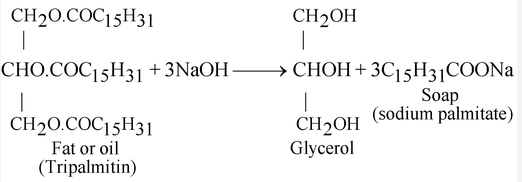
Together, these breakthroughs transformed soap making from an artisanal craft into an industrial process capable of producing enormous quantities at low cost.
From Luxury Item to Household Staple
The results were dramatic. As production scaled up and prices dropped, soap became accessible to ordinary working families for the first time in history. This wasn't just a commercial shift — it was a public health revolution.
Brands emerged to compete for this new mass market. Pears Transparent Soap, launched in 1807, became one of the world's first branded consumer products. Ivory Soap debuted in 1879 with its famous "99 and 44/100% pure" slogan. Advertising transformed soap from a commodity into a branded experience.
Governments also recognized soap's importance. When Britain repealed its soap tax in 1853, consumption surged. Victorian public health campaigns actively promoted regular washing with soap, and disease rates dropped noticeably in communities that adopted the practice.
Modern Soap — What Ancient Soap Production Evolved Into
The 20th century brought yet another transformation to the world of cleansing products — one that took soap in an entirely new chemical direction.
Synthetic Detergents and the 20th Century Shift
During World War I, animal and vegetable fat shortages in Germany forced chemists to develop synthetic alternatives to traditional soap. These synthetic detergents — made from petroleum-derived chemicals — worked differently from soap at a molecular level but achieved similar cleaning results.
World War II accelerated this trend globally. By the 1950s, synthetic detergents had largely replaced traditional soap for laundry and household cleaning in developed countries. They offered advantages in hard water (where traditional soap leaves scum) and could be engineered for specific purposes.
It's worth noting the distinction: what most people call "soap" today — liquid hand wash, body wash, most commercial bar cleansers — is technically synthetic detergent, not true soap in the chemical sense. Real soap, made through saponification of fats with alkali, became a niche product.
The Natural Soap Revival
In recent decades, consumer interest has swung back toward traditional soap-making methods. Handcrafted soaps made with olive oil, shea butter, and essential oils have become a thriving market segment.
This revival connects directly to ancient methods. Modern artisan soap makers use essentially the same cold-process saponification that Arab chemists perfected over a thousand years ago — just with better-quality ingredients and more precise measurements. It's a remarkable full-circle moment in the history of soap making.
Why the Invention of Soap Matters Today
Soap's story isn't just historical trivia. It carries real significance for our world right now.
Public Health and Hygiene Milestones
Handwashing with soap remains one of the single most effective ways to prevent infectious disease transmission. Global health organizations consistently emphasize that this simple act — made possible by a 4,800-year-old invention — saves millions of lives annually.
Yet access isn't universal. Billions of people worldwide still lack reliable access to soap and clean water. Understanding soap's history reminds us that what seems like a basic commodity required millennia of innovation to develop and still isn't available to everyone.
Key Takeaways From Soap's 5,000-Year Journey
Here's the complete soap origin timeline in brief:
~2800 BCE: Babylonians record the earliest known soap recipe on clay tablets
~1550 BCE: Egyptians document soap-like mixtures in the Ebers Papyrus
~600 BCE: Phoenicians produce soap from goat tallow and wood ash
7th century CE: Arab chemists create the first hard bar soaps
12th-17th centuries: European soap guilds establish major production centers
1791: Leblanc's soda ash process enables industrial-scale production
1800s: Soap becomes affordable for ordinary households
20th century: Synthetic detergents largely replace traditional soap
21st century: Natural soap revival reconnects consumers with ancient methods
So when was soap invented? The answer is approximately 4,800 years ago in ancient Babylon. But the full story is one of continuous reinvention — a simple mixture of fat and ash that evolved across dozens of civilizations into one of humanity's most important everyday products.
Next time you wash your hands, you're participating in a tradition that stretches back to the very dawn of recorded history. That humble bar of soap connects you to Babylonian textile workers, Egyptian physicians, Arab chemists, medieval guild masters, and Industrial Revolution entrepreneurs. Not bad for something you probably take completely for granted.