Hair loss affects millions of people worldwide, and the search for effective remedies often leads back to the simplest solutions. While pharmaceutical treatments dominate the conversation, a growing number of people are turning to handmade soap as a gentler alternative for supporting scalp health and reducing hair thinning.
But does it actually work? The answer lies at the intersection of traditional botanical wisdom and modern dermatological science. Let's examine what we know.
Why Commercial Shampoos May Contribute to Hair Thinning
Sulfate-Free Hair Washing — The Case Against SLS and SLES
Sodium lauryl sulfate (SLS) and sodium laureth sulfate (SLES) are aggressive surfactants found in most commercial shampoos. Their primary function is to create lather, but they achieve this by stripping the scalp of its natural protective oils — including the sebum that keeps follicles nourished and resilient.
Research published in the International Journal of Trichology has shown that prolonged SLS exposure can penetrate the hair follicle, causing inflammation at the dermal papilla level. This chronic low-grade irritation weakens the hair growth cycle over time.
Beyond direct follicle damage, sulfates disrupt the scalp microbiome — the delicate ecosystem of beneficial bacteria and fungi that protects against pathogens. When this balance is destroyed through daily sulfate-free hair washing alternatives aren't used, opportunistic organisms can trigger conditions like seborrheic dermatitis, which accelerates shedding.
Silicone Buildup and Follicle Suffocation
Dimethicone, cyclomethicone, and other silicones coat the hair shaft to create an illusion of smoothness. However, these synthetic polymers accumulate on the scalp with each wash, forming a hydrophobic barrier over follicle openings.
This buildup prevents nutrients and oxygen from reaching hair roots while trapping sebum beneath the surface. The result is a suffocating environment where follicles gradually miniaturize — producing thinner, weaker strands before eventually ceasing production altogether.
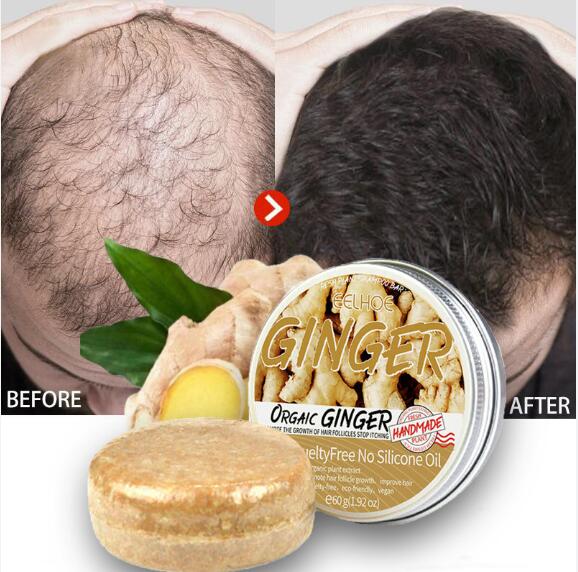
How Handmade Soap Supports Scalp Health and Hair Growth
Natural Soap for Hair Growth — Key Mechanisms
Cold-process saponification — the chemical reaction between plant oils and lye — produces soap that naturally retains glycerin. Commercial manufacturers typically extract this glycerin for resale in other products, but handmade soap keeps it intact.
Glycerin is a humectant that draws moisture to the scalp without clogging pores. Combined with the gentle cleansing action of saponified oils, natural soap for hair growth works by preserving the scalp's sebum balance rather than destroying it.
This means follicles remain lubricated, the acid mantle stays functional, and the hair growth cycle isn't disrupted by chemical aggression at every wash.
Organic Soap Scalp Health — Restoring the Skin Barrier
The scalp's skin barrier functions optimally at a pH between 4.5 and 5.5. While handmade soap typically has a higher pH (8–10), this temporary alkalinity can actually help dissolve stubborn product buildup that acidic shampoos leave behind.
When followed by an acidic rinse, this cleansing method supports organic soap scalp health by removing inflammatory residues while allowing the microbiome to recolonize naturally. Reduced inflammation at the follicle level means less premature catagen (shedding phase) entry.
Many users report decreased scalp redness, itching, and flaking within weeks — all indicators that the skin barrier is healing and follicles are experiencing less oxidative stress.
Herbal Soap Hair Thinning Remedy — Active Botanical Ingredients
The true power of handmade soap lies in the botanical ingredients that can be incorporated during the cold-process method. These plant compounds deliver therapeutic benefits directly to the scalp during each wash. Here's what the evidence shows for each herbal soap hair thinning remedy ingredient:
| Ingredient | Mechanism of Action | Supporting Evidence |
|---|---|---|
| Rosemary essential oil | Increases microcirculation to follicles | Comparable to 2% minoxidil in a 2015 randomized clinical trial (SKINmed Journal) |
| Castor oil (ricinoleic acid) | Anti-inflammatory, prostaglandin stimulation | Traditional use supported by emerging in-vitro data on PGE2 pathway activation |
| Nettle extract | DHT-blocking properties | Phytotherapy research demonstrating 5-alpha reductase inhibition |
| Tea tree oil | Antifungal, unclogs follicles | Proven effective against Malassezia-related scalp conditions |
| Neem oil | Antibacterial, scalp detoxification | Ayurvedic tradition backed by modern dermatological studies |
| Saw palmetto oil | Androgen receptor modulation | Multiple peer-reviewed studies showing improved hair density |
When these ingredients are saponified or added at trace during soap-making, they maintain much of their bioactivity — delivering targeted support to struggling follicles with every wash.
Handmade Shampoo Bar Benefits vs. Liquid Shampoo
Understanding the fundamental differences between these two approaches helps explain why many people experience improved hair retention after switching. The handmade shampoo bar benefits extend beyond just ingredient quality:
| Factor | Handmade Soap Bar | Commercial Liquid Shampoo |
|---|---|---|
| Surfactant type | Saponified plant oils | SLS/SLES, cocamidopropyl betaine |
| Preservatives | None or minimal (natural) | Parabens, methylisothiazolinone |
| Glycerin content | Naturally retained | Often removed and sold separately |
| Environmental impact | Zero-plastic, biodegradable | Plastic bottles, microplastics |
| Scalp pH adjustment | May need ACV rinse (transitional) | Formulated to ~5.5 |
| Cost per wash | Lower long-term | Higher recurring cost |
The absence of preservatives like methylisothiazolinone is particularly significant. This chemical is a known contact allergen that causes scalp inflammation in sensitive individuals — inflammation that directly contributes to follicle miniaturization and hair thinning.
The Transition Period — What to Expect When Switching
Week-by-Week Scalp Adjustment Timeline
Switching from commercial shampoo to handmade soap isn't instant gratification. Your scalp needs time to recalibrate after years of chemical dependency. Here's what most people experience:
Weeks 1–2: Hair may feel waxy, heavy, or coated. This is silicone and polymer residue lifting from the hair shaft and scalp. It's not the soap failing — it's years of buildup finally releasing.
Weeks 3–4: Sebum production begins to normalize. Your scalp has been overproducing oil to compensate for sulfate stripping. As it realizes the oils aren't being aggressively removed, production decreases to healthy levels.
Weeks 5–8: Many users report noticeably reduced shedding during this phase. Hair feels lighter, scalp itching diminishes, and new growth may become visible at the hairline and part line.
Apple Cider Vinegar Rinse and Other Companion Techniques
An apple cider vinegar (ACV) rinse is the essential companion to soap-based hair washing. Mix one to two tablespoons of raw ACV in a cup of cool water and pour over hair after rinsing out the soap.
This acidic rinse serves three purposes: it closes the hair cuticle for smoother texture, restores the scalp's natural pH after alkaline soap exposure, and dissolves any mineral deposits from hard water. The result is hair that feels soft rather than straw-like.
Other helpful techniques include a final cold water rinse to boost circulation, weekly scalp massage to stimulate blood flow to follicles, and allowing hair to air-dry to avoid heat damage to already-vulnerable strands.
Who Benefits Most — And Who Should Be Cautious
Ideal Candidates
Handmade soap works best for people whose hair thinning stems from external causes rather than internal ones. You're an ideal candidate if your hair loss correlates with:
- Product buildup causing follicle congestion
- Scalp inflammation or sensitivity to sulfates and synthetic fragrances
- Seborrheic dermatitis or dandruff-related shedding
- Telogen effluvium triggered by scalp irritation
- General hair weakening from chemical overprocessing
People with fine, thinning hair who notice excessive shedding in the shower — particularly if it worsened after switching to a new commercial product — often see the most dramatic improvement.
When to See a Dermatologist Instead
Handmade soap is not a medical treatment. If you're experiencing rapid, patchy, or pattern-based hair loss, professional evaluation is essential. Conditions that require medical intervention include:
- Androgenetic alopecia — genetically programmed follicle miniaturization requiring pharmaceutical or procedural treatment
- Alopecia areata — an autoimmune condition where the body attacks its own follicles
- Thyroid-related hair loss — requires hormonal correction, not topical solutions
- Scarring alopecias — permanent follicle destruction needing urgent dermatological care
In these cases, handmade soap can serve as a gentle complementary cleanser alongside medical treatment — but it cannot replace it.
How to Choose the Right Handmade Soap for Thinning Hair
Ingredients to Look For
Not all handmade soaps are created equal for hair care. Look for formulations built around these oil profiles:
- Coconut oil — high in lauric acid, which penetrates the hair shaft and reduces protein loss
- Olive oil — rich in oleic acid, providing deep conditioning without heaviness
- Hemp seed oil — balanced linoleic acid content that won't clog follicles
- Castor oil — thickens lather and delivers ricinoleic acid directly to the scalp
The best formulations also include superfat (extra unsaponified oil) at 5–8%, ensuring the soap deposits nourishing lipids on the scalp rather than stripping it completely clean.
Red Flags in "Natural" Products
The term "natural" is unregulated, and many products exploit this ambiguity. Watch for these warning signs:
- Fragrance oils listed as essential oils — synthetic fragrances contain phthalates and allergens that inflame the scalp
- Detergent bars marketed as soap — if the label says "beauty bar" or "cleansing bar" instead of "soap," it likely contains syndet (synthetic detergent) surfactants
- "Made with organic oils" claims — this can mean 1% organic content with 99% conventional ingredients
- Titanium dioxide or artificial colorants — unnecessary additives that offer no scalp benefit and may cause sensitivity
True handmade soap will list saponified oils (or sodium olivate, sodium cocoate, etc.) as primary ingredients, with essential oils and botanical extracts as secondary additions.
Frequently Asked Questions (FAQ)
Does handmade soap work for all types of hair loss?
No. Handmade soap is most effective for hair thinning caused by product buildup, scalp inflammation, or sensitivity to commercial shampoo ingredients. It does not treat genetic hair loss (androgenetic alopecia), autoimmune conditions like alopecia areata, or hormonal imbalances. For these conditions, consult a dermatologist for appropriate medical treatment. Handmade soap can complement medical therapies as a gentle cleanser but should not replace them.
How often should I wash my hair with handmade soap?
Two to three times per week is optimal for most people. Even though handmade soap is gentler than commercial shampoos, over-washing still disrupts the scalp's natural sebum cycle and can lead to dryness or rebound oiliness. On non-wash days, rinse with water only or use a diluted ACV spray to refresh without stripping. Those with very oily scalps may wash every other day during the transition period, then reduce frequency as sebum production normalizes.
Will handmade soap make my hair greasy or dry?
During the first two to four weeks, you may experience both extremes as your scalp adjusts. Initial greasiness is typically silicone residue lifting, not excess oil production. Dryness usually indicates you need a more superfatted formula or an ACV rinse to close the cuticle. Match your soap's oil profile to your hair type — lighter oils like hemp seed for fine hair, richer oils like olive for coarse or curly textures. After the transition period, most people find their hair reaches a balanced state it never achieved with commercial products.
Can I use handmade soap on color-treated hair?
Yes, but with caveats. Handmade soap is gentler than sulfate shampoos, which are notorious for stripping color rapidly. However, the alkaline pH of soap opens the hair cuticle slightly, which can allow color molecules to escape faster than a pH-balanced, silicone-sealed commercial product would. To minimize fading, always follow with an ACV rinse to close the cuticle, wash less frequently, and choose soaps without strong essential oils like tea tree that may accelerate color loss.
How long before I see results with natural soap for hair growth?
Set realistic expectations. Most users notice reduced shedding within 8 to 12 weeks as scalp inflammation decreases and follicles strengthen. Visible improvements in hair density typically require 4 to 6 months, since hair grows approximately half an inch per month and new growth needs time to become noticeable. Factors like diet, stress levels, and the severity of prior scalp damage all influence your timeline. Photograph your part line monthly to track subtle changes that are easy to miss day-to-day.
Is there scientific proof that handmade soap reduces hair loss?
There are no randomized controlled trials (RCTs) specifically testing handmade soap bars for hair loss. However, substantial evidence supports the individual ingredients commonly found in these soaps. Rosemary oil has clinical trial data showing efficacy comparable to minoxidil. Nettle and saw palmetto have peer-reviewed research on DHT inhibition. Tea tree oil has proven antifungal properties relevant to scalp health. The evidence is ingredient-level rather than product-level, which means results depend heavily on formulation quality and individual scalp conditions.
Bottom line: Handmade soap isn't a miracle cure for hair loss, but for many people, removing harsh chemicals and replacing them with nourishing botanicals creates the scalp environment where healthy hair growth can resume naturally. The science supports the ingredients. Tradition supports the approach. Your scalp will tell you whether it works for you.