
"Just send me the supplies list" sounds simple, but a list says nothing about oil quality, lye grade or mold fit. Start with the oil and butter spec sheet. Those ingredients make up most of the bar and set its hardness, lather and shelf life. Once they are right, the rest of your cold process soap making supplies are easier to choose.
Oils and Butters Spec Sheets Come First
Oils and butters decide how hard a bar is, how it lathers and how long it lasts before it turns rancid. Read the spec sheet of each one before you compare prices on molds, wrappers or fragrance. A cheap oil with vague paperwork can cost you a whole batch.
Base oils and butters that carry the recipe
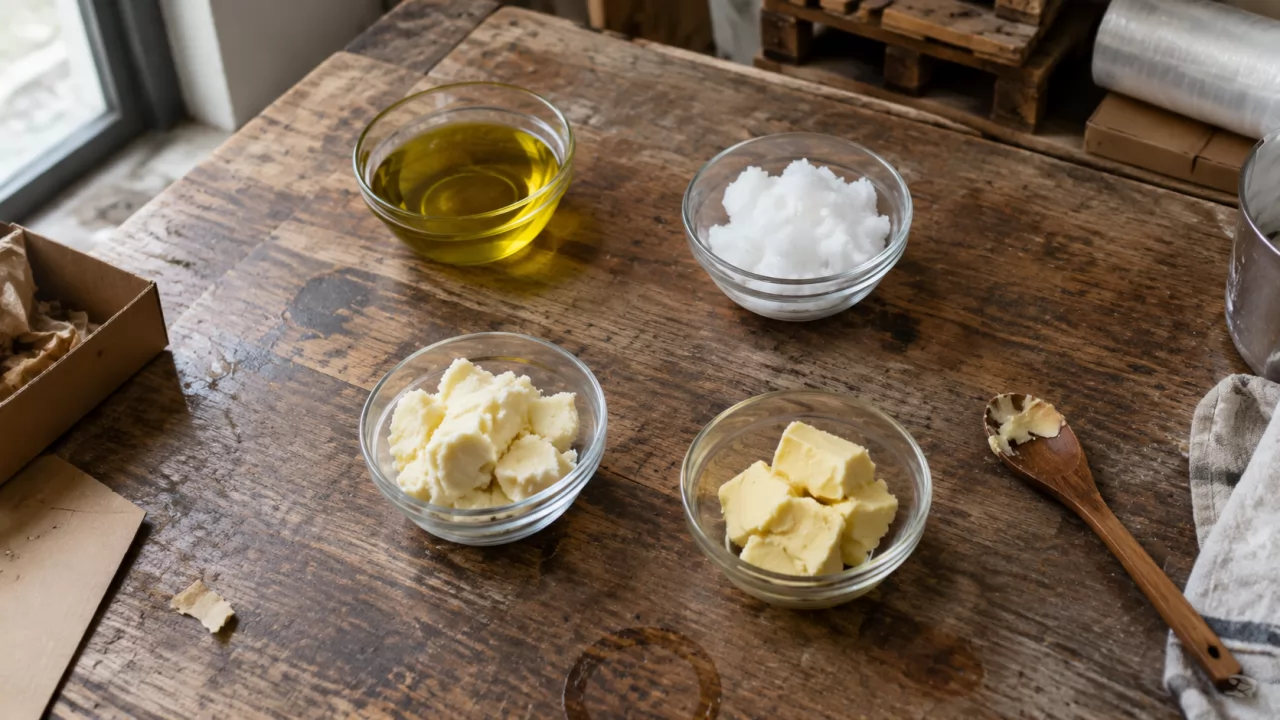
Most recipes lean on a handful of ingredients. Olive oil usually gives a mild, conditioning bar. Coconut oil and palm-derived oils add hardness and lather, while shea and cocoa butter bring firmness and a creamy feel. Castor oil is typically used in small amounts to support lather. Each has its own saponification value, so your recipe calculator needs the real figures for the oil you buy.
A useful spec sheet names the oil by its INCI name and states the origin or grade (refined, unrefined, virgin). It also gives a fatty acid profile or saponification value, a batch or lot number, and a best-before date. If a supplier cannot provide these, treat that as information about the supplier.
Freshness, storage and batch-to-batch variation
Rancid oil shows up late. A bar can smell fine at cutting, then develop an off, crayon-like odour or orange-brown spots weeks into curing. Oils with a high share of unsaturated fats go off faster, so ask for the date of manufacture, not just the expiry date. Ask what packaging the oil ships in, and whether the supplier changes its source without notice. Keep a small retained sample from each lot so a problem can be traced back.
What Supplies Do I Need to Make Cold Process Soap?
You need four groups of supplies. Ingredients are oils, butters, lye, water, scent and colour. Safety gear is the second group. Equipment covers a scale, containers, a stick blender, a mold and a cutter. Finishing items are a curing rack, wrappers and labels. Buy ingredients and safety gear first; finishing items can wait until you have a batch that cures well.
Cold process soap making supplies list for beginners
Cold process soap is made by mixing oils with a lye solution and letting the mixture saponify in the mold without external heat. The list below follows the order in which you will use things.
- Buy oils and butters with spec sheets and lot numbers.
- Order sodium hydroxide lye with a safety data sheet.
- Get goggles, gloves and long sleeves before the lye arrives.
- Choose a digital scale that reads to at least 1 gram.
- Pick heat-safe containers, plus a stick blender.
- Select a mold sized for one batch.
- Prepare a curing rack with airflow.
- Leave wrappers, boxes and custom labels for the second batch.
Specialty colorants, exfoliants and fancy molds can wait until the base recipe behaves the way you want.
Where a small run differs from a production run
Hand-stirred batches fit a kitchen scale and a few loaf molds. Once you pour many kilos at a time, things change: you need larger mixing vessels, a safe way to move heavy batches, multi-bar cutters, and rack space for several weeks of stock. Labour per bar becomes the main cost, so cutting and handling equipment pays back faster than extra recipes.
Lye, Water and Safety Handling
Lye for soap making is sodium hydroxide (NaOH), a caustic chemical that reacts with oils to form soap. Buy it on grade and paperwork, not on price alone. Rules for storing, labelling and shipping caustic goods vary by carrier and country, and they can limit which suppliers will deliver to you.
Grade, purity and documentation
Ask for a purity statement, usually given as a percentage, and the safety data sheet (SDS). Check the packaging too. Sealed, moisture-proof containers matter because lye absorbs water from the air, and then your calculations drift. Confirm that the grade suits cosmetic soap making, and ask how the supplier ships it. Some carriers restrict or surcharge caustic products, so ask before you commit.
Protective gear and workspace rules
Wear splash-proof goggles, chemical-resistant gloves, long sleeves and closed shoes. Work in a ventilated space away from children and pets. Use containers that are labelled and reserved for soap. Always add lye to water, never water to lye.
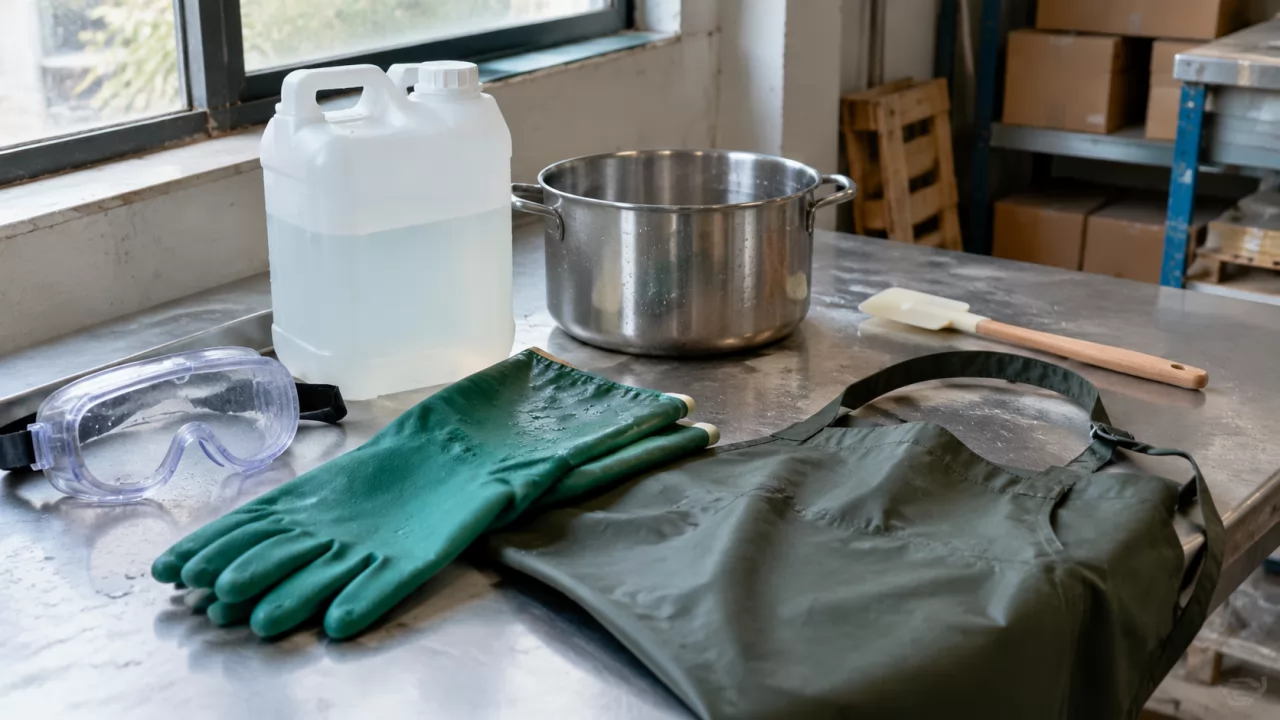
Note: Follow the supplier's SDS and local rules for handling caustic materials. This guide gives general habits, not a safety guarantee.
Fragrance, Essential Oils, Colorants and Additives
These ingredients change your cost per bar and how the batch behaves in the mold. They also change which documents you need to keep. Regulators and marketplaces ask the most questions about them, so decide early how you will document each one.
Essential oils versus fragrance oils
Essential oils for soap are concentrated plant extracts. Fragrance oils are blended aroma materials, which may be synthetic, natural or both. Essential oils vary more from crop to crop and can cost more, and some fade in the alkaline soap environment. Fragrance oils tend to be more consistent and offer scents that plants cannot, but they need good documentation, such as an SDS and usage-rate guidance from the supplier. Many markets require certain fragrance allergens to be declared on the label. The rules differ by country, so check the requirements where you sell.
Colorants, exfoliants and botanicals
Colorants include mineral pigments, micas and plant powders. Some bleed into neighbouring layers, some fade or turn brown, and some botanicals darken or speed up trace. Exfoliants such as ground seeds or oats feel scratchy if the particle size is too large. A catalogue page cannot reliably predict any of this.
Tip: Test every colorant, scent and additive in your own recipe on a small batch and watch it through the full cure before you scale up.
INCI naming and ingredient documents to request
INCI stands for International Nomenclature of Cosmetic Ingredients, a standard naming system used on cosmetic ingredient lists. Ask each supplier for the INCI name of every item, so your label and your paperwork match. For each ingredient, request a specification sheet and an SDS. Add a certificate of analysis where available, and an allergen declaration for fragrances. If you make claims such as "natural" or "vegan", ask the supplier for supporting documents rather than relying on a catalogue description.

Soap Molds, Cutters and Packaging Fit
Molds and cutters decide the shape of the bar, how much you trim away as waste, and how many minutes of labour each batch takes. They should also match the wrapper or box you plan to use. A bar that is 3 mm too wide will not fit a carton designed for a different size.
Mold materials and sizes compared
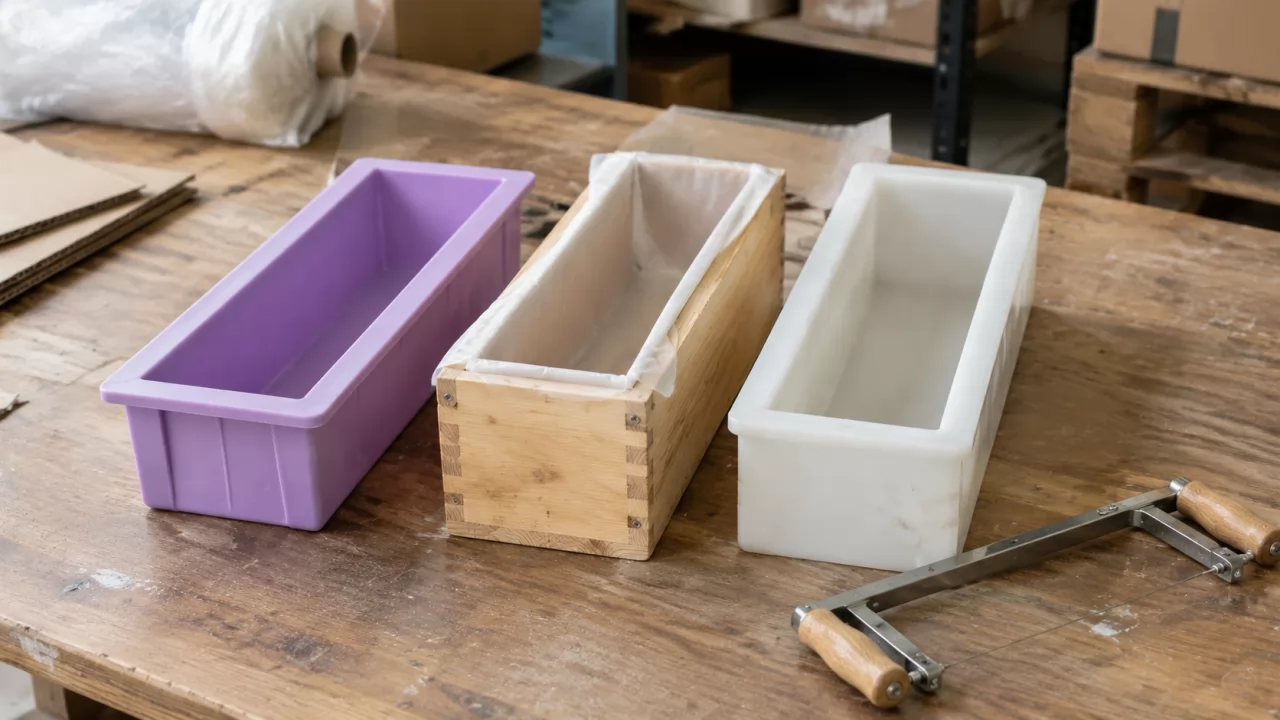
The table compares the common mold types on the points that matter in daily use.
| Criterion | Silicone | Wood-lined | Rigid plastic |
|---|---|---|---|
| Upfront cost | Low to medium | Medium to high | Low |
| Release | Flexible, easy | Needs a liner | Can stick |
| Cleaning | Simple | Liner is replaced | Simple |
| Shape consistency | Can bulge when full | Holds straight sides | Holds shape |
| Best for | Small runs, shaped bars | Larger loaf batches | Budget loaf molds |
For most small producers, silicone loaf molds are the practical start. Wood-lined molds become attractive once batch size grows.
Cutters, trimming and curing racks
Uneven cuts lead to uneven bar weights, which affects labelling and your cost per bar. Wire cutters and guided blade cutters both work, though a guide matters more than the blade. Set a target weight and tolerance, and weigh a few bars from every batch. Curing racks need airflow on all sides. Soap usually cures for several weeks, and crowded shelves with poor ventilation slow the process and can leave soft bars.
Wrapping, boxes and labels
Give the packaging supplier your finished bar length, width and height, including any shrinkage during cure. Bars lose water as they cure, so measure after curing, not at cutting. Labels usually need the product name, the ingredient list in INCI order, net weight and your business details. Exact content varies by market, so confirm local rules before printing.
Where to Buy Soap Making Supplies Wholesale
There are three common routes. Retail craft suppliers suit small, first batches. Wholesale distributors suit repeat production. The third route is a manufacturer who makes finished bars under your label, which fits you if you want the product but not the production work.
Wholesale terms and cost drivers
The unit price is rarely the main cost. Minimums, freight, shelf life on arrival and sample policy usually matter more.
| Cost driver | Retail supplier | Wholesale distributor |
|---|---|---|
| Minimum order | Usually none | Often set per item |
| Freight | Paid per small parcel | Pallet or carton freight |
| Shelf life on arrival | Varies by turnover | Ask for the date code |
| Samples | Buy a small size | Policy differs by supplier |
| Best for | Testing recipes | Repeat production |
Compare the landed cost per bar, including freight and waste, rather than the price per kilo.
Cold process soap base and molds supplier: questions to ask
A reliable supplier answers specific questions with documents. A catalogue reseller often cannot. Run through this checklist before a first order.
- Ask for the spec sheet and SDS of each item before ordering.
- Confirm lot numbers and date codes on every shipment.
- Check whether the supplier changes sources, and how it tells you.
- Request a sample before a full order.
- Verify packaging, labelling and shipping rules for caustic and flammable goods.
- Ask for the minimum order per item and the reorder lead time.
- Confirm how defective or out-of-spec goods are handled.
If a supplier dodges two or three of these, move on.
When buying finished bars makes more sense than buying supplies
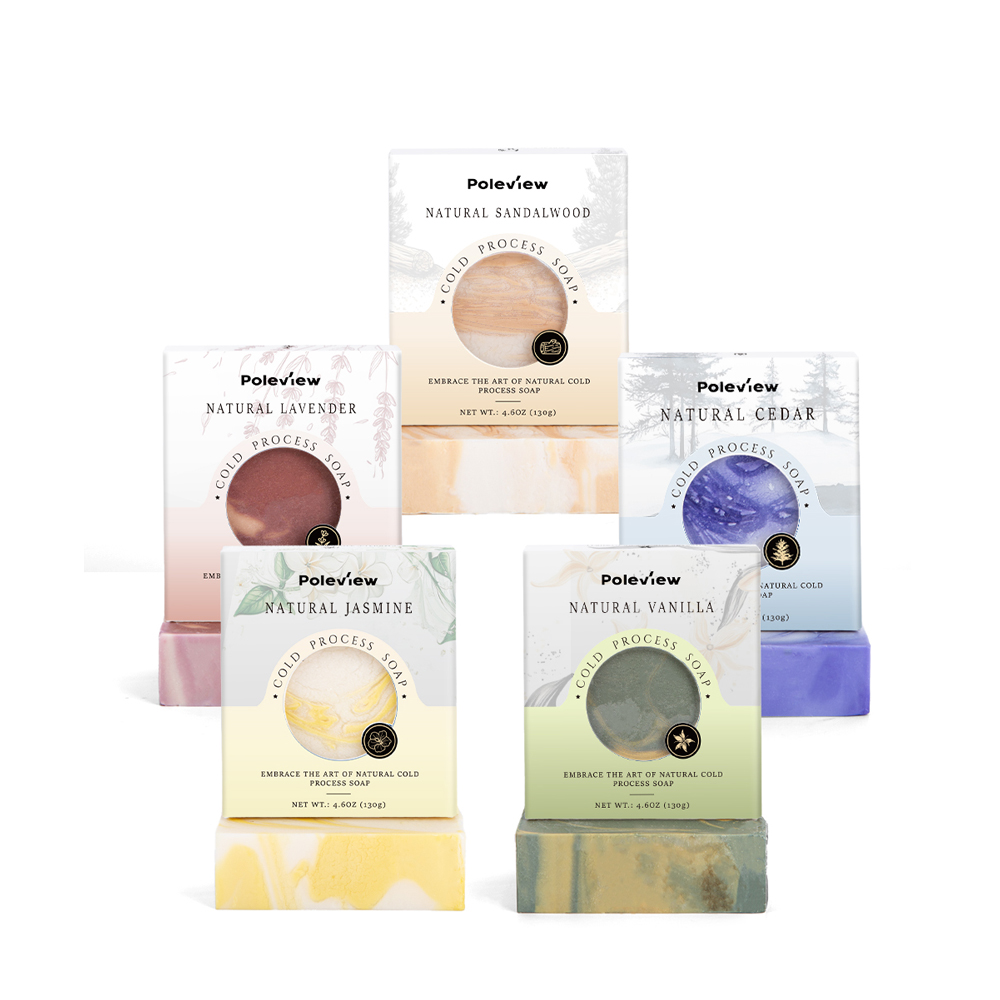
Owning production gives you control of the recipe and the schedule. It also means managing raw materials, safety, curing space, labour and quality checks. Private label manufacturing hands that work to a factory, so you can focus on brand, design and sales. The trade-off is less hands-on control and a minimum order per style. For example, Poleview makes custom natural soap formulas with a low minimum of 1000 pieces per color or style, and offers free samples with freight paid by the buyer. That route suits you if you want to test a market before investing in equipment.
From Supply Order to First Cured Batch: Timeline
Timings vary with supplier, destination and recipe. Treat these ranges as rough guides and build in a buffer.
| Stage | What happens | Typical time |
|---|---|---|
| Ordering | Confirm specs and documents | A few days |
| Receiving | Check lots, dates, packaging | 1 to 3 weeks |
| Small test batch | Test recipe, scent, colour | 1 to 2 days |
| Pouring | Mix, pour, insulate | 1 day |
| Cutting | Unmold and cut after firming | 1 to 2 days later |
| Curing | Air-dry on racks | Usually 4 to 6 weeks |
Plan roughly two months from order to a bar you can sell, and longer if documents or shipping are delayed.
FAQ
Do I need a different mold for cold process soap?
No special mold is required, but it must handle caustic, wet soap batter. Silicone, wood-lined and many plastic molds work. Avoid reactive metals such as aluminium.
How long do the oils and butters stay usable once opened?
It depends on the oil, and the supplier's date is the best guide. Typically, store them sealed, cool and dark. Discard anything that smells sharp or like old crayons.
Can I test a small batch before a full order?
Yes, and you should. Ask suppliers for samples or buy small sizes. Then run a small test batch through a full cure before ordering in volume.
What documents should I request from an ingredient supplier?
Ask for a specification sheet, an SDS and a certificate of analysis where available. For fragrances, add an allergen declaration. Request certificates only for claims you plan to make.