
Never change an oil without recalculating the lye. A bar can look fine on cutting day and still turn out harsh or soft a month later.
Cold process soap recipes are fixed by chemistry, which is why one formula can be repeated across batches. This guide is for people building or sourcing a soap line, and it runs from a base formula to a spec you can hand to a maker.
Cold process soap is made by mixing oils with a lye solution and letting the mixture turn into soap without external cooking. A good recipe pairs a balanced oil blend with a lye amount calculated for that blend, then adds a cure period before use. Variations in scent, color or additives sit on top of that core formula.
- The base formula is oils, lye and water.
- The lye calculator output defines the recipe, not the oil list.
- Home and production methods share the chemistry but not the controls.
- Cure time affects hardness, mildness and shelf life.
- A written spec protects batch-to-batch consistency.
Cold process soap recipes all start from one base formula
A cold process soap base recipe has three parts: fats or oils, sodium hydroxide (lye) and water. Everything else is a modification of that base. Fragrance, colorant, clay, oats or milk powder are added around it and do not change the saponification itself.
Five terms come up in every recipe discussion. Saponification is the chemical reaction in which lye splits oils into soap and glycerin. A SAP value is the amount of lye needed to saponify one gram of a given oil, and each oil has its own. Superfat is the share of oil deliberately left unreacted, so the bar contains a little free oil rather than free lye. Trace is the point where the batter thickens enough to leave a visible trail on its surface. INCI is the International Nomenclature of Cosmetic Ingredients, the standard naming system used on ingredient lists.
Because SAP values differ by oil, swapping one oil for another changes the lye demand. That single fact drives most of the rules below.
What are the oils used in cold process soap?
Cold process soap usually combines several oils, each chosen for a role: hardness, lather, conditioning feel or cost. Common choices are olive oil, coconut oil, castor oil, shea butter and cocoa butter. No single oil does every job, so recipes blend them.
Hard fats such as coconut oil and cocoa butter firm up the bar. Coconut oil also gives fast, bubbly lather, though in large shares it can feel drying. Olive oil is soft and conditioning, and makes a gentler, slower-lathering bar that needs longer to harden. Castor oil is typically used in small amounts to support lather. Shea butter adds a creamy, conditioning feel.
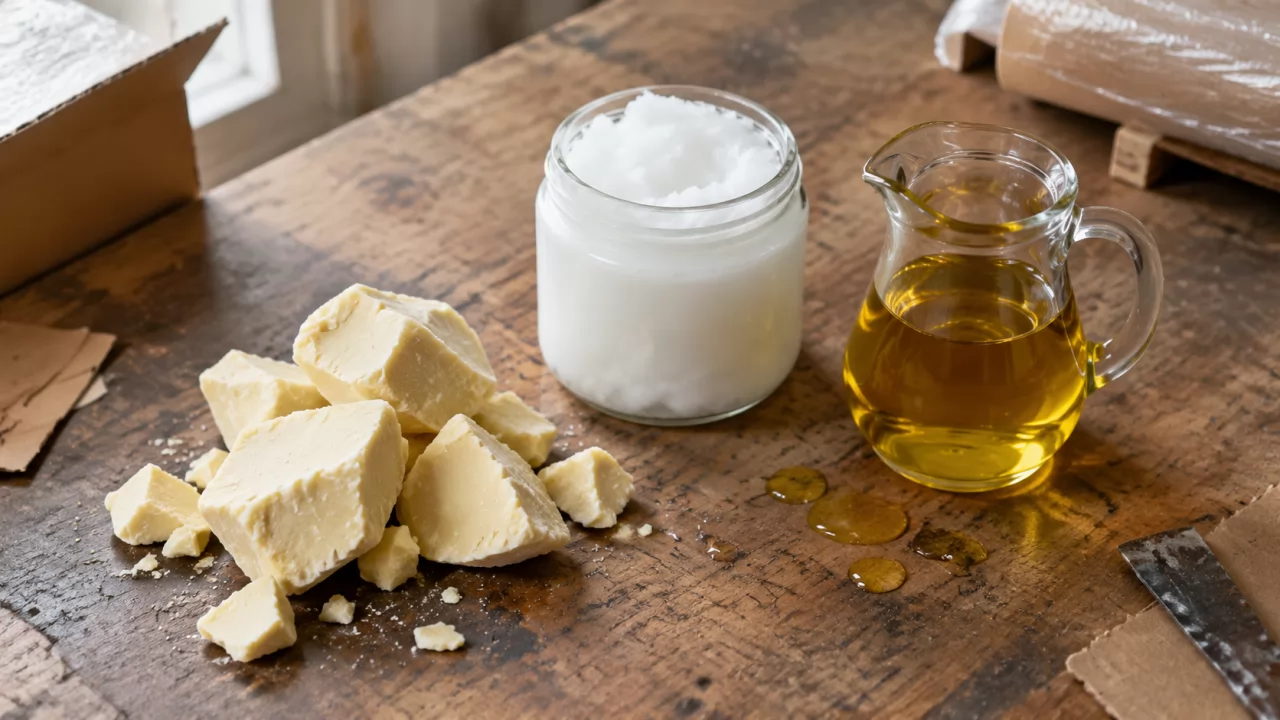
Palm oil is the traditional hardness and stability contributor. Palm-free recipes often replace it with a mix of other hard fats, which shifts the balance of hardness, lather and cost. Treat any palm-free swap as a new recipe, not a substitution.
| Oil or butter | Bar hardness | Lather | Conditioning feel | Typical role |
|---|---|---|---|---|
| Olive oil | Soft to medium | Low, creamy | High | Base oil |
| Coconut oil | Hard | High, bubbly | Lower | Lather and firmness |
| Castor oil | Soft | Supports lather | Medium | Small-share booster |
| Shea butter | Medium to hard | Low | High | Creamy feel |
| Cocoa butter | Hard | Low | Medium | Firmness |
| Palm alternative blend | Medium to hard | Varies by blend | Varies by blend | Replaces palm hardness |
Most recipes pair one soft conditioning oil with one or two hard fats, then adjust from there.
The lye calculator sets the recipe, not the oil list
A lye calculator for soap making takes each oil and its weight, multiplies by that oil's SAP value, and returns the lye needed. Change any oil or any weight and the answer changes. So the calculator is rerun for every formula change, even a small one, and its output becomes part of the recipe.
Water is a decision too. Calculators usually let you set water as a share of the oil weight or as a lye concentration. Less water tends to speed up trace and shorten cure. More water gives longer working time but can mean softer bars and a longer cure. Pick a figure, record it, and keep it.
Superfat as a design choice
Superfat is commonly set in a low single-digit to mid-teens percentage range. A higher setting usually gives a softer, more conditioning feel, and can make the bar more prone to going rancid sooner. A lower setting usually gives a firmer, cleaner-feeling bar with less margin if the lye weighing is off. Treat it as a design choice tied to the product's intended feel, and write it into the spec.
Lye safety in the workshop
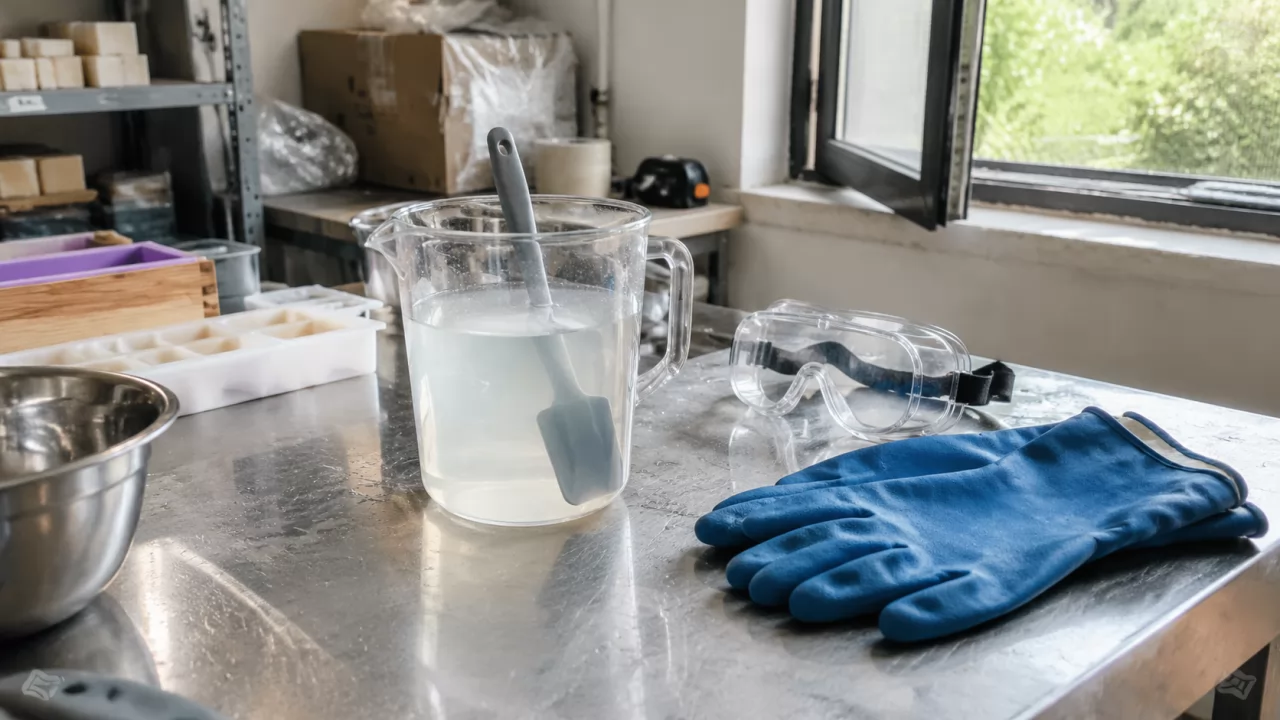
Lye is caustic. Wear splash goggles, chemical-resistant gloves and long sleeves. Work with ventilation, because the solution releases fumes when it first heats. Always add lye to water, never water to lye, to avoid a violent reaction. Store lye in a labeled, sealed container away from children, pets and moisture.
Tip: Save the calculator printout with every batch record. When a bar behaves oddly, the printout shows what was actually calculated.
How to make cold process soap at home: the batch in seven steps
The method below suits a small test batch and doubles as a cold process soap recipe for beginners. Use a simple formula, a lye calculator and a digital scale.
- Weigh everything. Use a scale, not volume measures. Check: weigh lye and oils by weight to the gram, and compare against the printout.
- Mix the lye solution. Add lye to water in a heat-safe container and stir until clear. Check: it heats sharply, so let it cool before use.
- Melt the oils. Warm hard fats until fully liquid, then blend with soft oils. Check: no solid lumps of butter remain.
- Combine. Pour the lye solution into the oils and blend with a stick blender in short bursts. Caution: this is the step people most often get wrong. Blending too long or at too high a temperature can thicken the batter before you are ready, so pulse and stir, and stop as soon as it starts to thicken.
- Reach trace. Blend until the batter leaves a trail on the surface. Check: light trace gives time for swirls, heavy trace is harder to pour.
- Pour. Pour into the mold and tap out air bubbles. Check: work quickly, since the batter keeps thickening.
- Insulate. Cover the mold and keep it warm for the first day or so. Check: the bar should go through gel phase evenly and not crack from uneven cooling.
Note: Scent and color go in at trace. Some essential oil blends can speed up or thicken a batch, so test a small amount first before committing a full pour.
How long does cold process soap need to cure?
Cold process soap usually needs several weeks of cure, commonly around four to six. During cure, water leaves the bar, so it firms up and the feel becomes milder. The exact time depends on the oil blend, water amount and bar size.
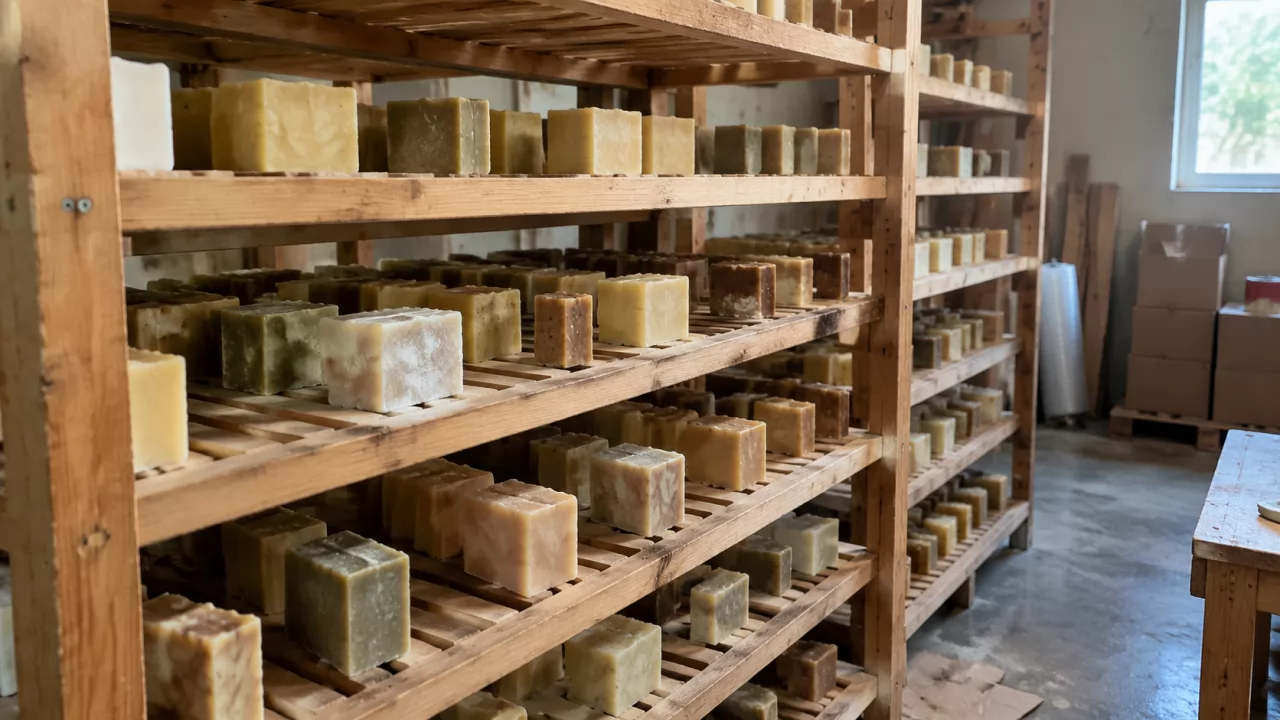
Soap curing time is not only about hardness. A bar that is cut early can deform. One that is used early can feel soft and wear down fast. The cure also lets the reaction finish, which is part of why a recipe is held to a stated cure period before release.
| Stage | Typical duration | What to check | Common fault |
|---|---|---|---|
| In mold | About 1 to 2 days | Firmness, even color | Soft bars |
| Unmolding and cutting | Day 1 to 3 | Clean edges, no sticking | Crumbling or smearing |
| Cure on racks | Roughly 4 to 6 weeks | Airflow, weight loss | Sweating |
| Surface check | During cure | Powdery film on top | Soda ash |
| Final review | Before release | Appearance, hardness, scent | Fading scent |
Before a batch moves on, look at appearance, hardness and scent against the approved reference bar.
Typical faults and their causes
Soft bars usually trace back to too much water, a high share of soft oils, a high superfat or an early unmold. Check the recipe first, then the process.
Soda ash is a white, powdery film on the surface. It often follows a cool, drafty mold or uneven insulation, and is generally cosmetic.
Sweating, meaning beads of moisture on the bar, can come from humid storage, or from glycerin drawing moisture from the air. Better airflow and drier storage usually help.
Harsh bars point to a lye weighing error or a missed recalculation after an oil change. This is the fault that matters most, because the bar looks normal.
Cold process soap recipe for private label: what changes at scale
Moving a recipe from a test batch to a repeat order means turning a method into a document. The maker should be able to produce the same bar from your spec, and you should be able to tell if they did not. Fix in writing what affects the bar's identity, and leave open what is a matter of workshop practice, such as mixing speed or mold type.
Fields a recipe spec should lock
The table lists the fields worth fixing. A maker with an established formula library may offer a close existing formula, and a custom one is also possible. In both cases the spec is what you compare batches against.
| Spec field | What to record | Why it matters |
|---|---|---|
| INCI list | Full ingredient names in order | Labeling and traceability |
| Oil proportions | Each oil as a share of total oil | Defines hardness and lather |
| Superfat | Set percentage | Feel and shelf life |
| Fragrance and colorant | Type, supplier grade, dose | Scent and color stability |
| Cure time | Minimum days before release | Hardness and mildness |
| Bar weight and tolerance | Target weight, allowed range | Pack fit and consistency |
| Batch record | Lot number, calculator printout | Trace faults to a batch |
Bar weight is stated at the end of cure, since bars lose water and weigh less than they did when cut.
Labeling and compliance in general terms
Ingredient lists in many markets use INCI names, and the rules for format and order differ by country. Fragrance allergen declarations and permitted claims also vary by destination. Check the label, the claims and the ingredients against the rules of the market where you sell, rather than assuming one approval carries over.
Patch testing and a cosmetic safety assessment by a qualified assessor are standard parts of preparing a product for sale in many regions. Neither is a claim the recipe makes by itself. Do not describe a bar as gentle, safe or suitable for a skin type unless documents support it.
Samples and approval before production
A sample round confirms the formula, scent and bar size. Once you are happy, approve one reference bar and keep it. Later batches are judged against it for look, hardness and scent.
Note: Any change to oils, fragrance or colorant after approval usually means a re-check of the sample. Even a small fragrance change can alter trace, color and cure.
To start, send your target formula or a short brief and ask for a sample.
FAQ
Is there a cold process soap recipe for beginners that works for a first test batch?
Yes. Start with a simple formula built on a few common oils, such as olive, coconut and a soft butter, and check every weight in a lye calculator. Make a small batch, skip fragrance on the first try, and keep notes.
Can I swap one oil for another in a recipe?
Yes, but recalculate the lye first.
Why do cold process bars need weeks before use?
Cure removes water and lets the bar firm up. Used too early, the bar is usually softer and wears away faster.
Who owns a custom formula?
It depends on what is agreed in the contract. Ownership and exclusivity are not automatic, so settle both in writing before development starts. This article covers the technical side and is not legal advice.