If you work in healthcare, food service, or any environment where infection control isn't optional, you've probably stared at a product catalog wondering which antibacterial soap actually delivers. The answer isn't as simple as picking the most expensive option or the one with the boldest label claims.
This guide breaks down what industry professionals genuinely need to know — from active ingredients and testing standards to the practical realities of getting staff to actually use the stuff consistently.
Why Antibacterial Soap Still Matters in Professional Settings
Back in 2016, the FDA banned 19 active ingredients — including triclosan and triclocarban — from over-the-counter consumer antibacterial soaps. The ruling was clear: manufacturers hadn't demonstrated these ingredients were safe for long-term daily use or more effective than plain soap and water for the general public.
But here's the nuance that often gets lost. That ruling targeted consumer products sold to everyday shoppers. Healthcare antiseptics, surgical scrubs, and professional-grade antibacterial hand wash products operate under different regulatory pathways and remain very much in play.
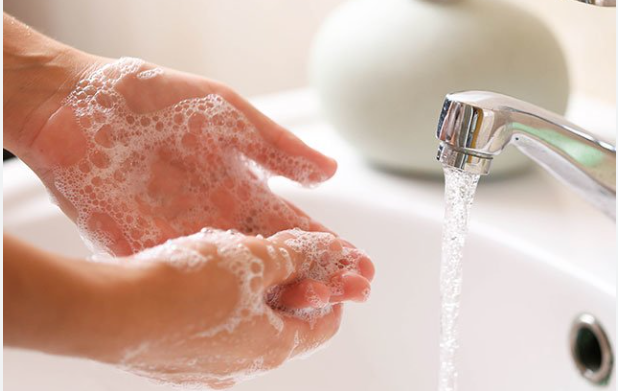
In professional settings — operating rooms, commercial kitchens, long-term care facilities — the calculus is different. The frequency of pathogen exposure, the vulnerability of the populations being served, and the sheer volume of hand hygiene events per shift all create scenarios where a quality germ-killing soap provides measurable, evidence-backed protection beyond what mechanical washing alone achieves.
The Difference Between Antibacterial, Antimicrobial, and Regular Soap
These terms get used interchangeably, but they mean different things. Regular soap works through mechanical action — it lifts and suspends microorganisms so water can rinse them away. It doesn't kill anything; it removes.
Antibacterial soap contains active chemical agents that specifically target and kill bacteria. Antimicrobial soap is the broader umbrella term, covering agents that may act against bacteria, viruses, fungi, or some combination. When evaluating antimicrobial soap ingredients on a product label, the specificity of the claim matters enormously.
A product labeled "antimicrobial" without specifying which organisms it's effective against is a red flag, not a selling point. Professionals should demand specificity.
When Antibacterial Soap Is Genuinely Necessary vs. Overkill
The CDC and WHO are aligned on this: for most everyday handwashing, plain soap and proper technique are sufficient. The 20-second rule with thorough friction does the heavy lifting.
Antibacterial formulations earn their place in specific high-stakes scenarios:
Surgical hand preparation — where persistent antimicrobial activity between washes is critical
Food handling in commercial settings — especially when working with raw proteins
Care of immunocompromised patients — including ICU, oncology, and transplant units
MRSA and multi-drug resistant organism (MDRO) decolonization protocols
Post-exposure situations — contact with bodily fluids, contaminated surfaces, or known pathogens
Outside these contexts, reaching for antibacterial products is often unnecessary and can contribute to skin irritation without meaningful benefit.
Key Ingredients to Look For in a Quality Antibacterial Soap
This is where procurement decisions should start. Not with the brand name, not with the packaging — with the active ingredient and its concentration. Let's walk through what's approved, effective, and appropriate for professional use.
Benzalkonium Chloride — The Post-Triclosan Standard
After triclosan's exit from the consumer market, benzalkonium chloride (BAC or BZK) stepped into the spotlight. It's a quaternary ammonium compound that disrupts bacterial cell membranes, and you'll find it in a wide range of antibacterial hand wash products at concentrations typically between 0.1% and 0.13%.
BAC is generally well-tolerated on skin and effective against many common gram-positive and gram-negative bacteria. However, it has limitations. Its activity against certain organisms like Pseudomonas species can be inconsistent, and it requires adequate contact time — typically 15 to 30 seconds of lathering — to achieve meaningful log reductions.
For light-professional environments like offices, retail, and general commercial spaces, BAC-based products strike a reasonable balance between efficacy and gentleness.
Chlorhexidine Gluconate (CHG) — The Healthcare Gold Standard
If you work in clinical settings, CHG is likely already part of your hand hygiene protocol. Available in concentrations from 0.5% to 4%, CHG offers something most other agents don't: persistent antimicrobial activity. It binds to the skin's outer layer and continues suppressing microbial growth for hours after application.
This persistence makes CHG the go-to for surgical scrubs and pre-operative patient preparation. CHG-based antibacterial body wash products are now standard in many hospitals for pre-surgical bathing and MRSA decolonization protocols. Its broad-spectrum activity covers gram-positive bacteria, gram-negative bacteria, and some fungi.
The tradeoff? CHG can cause allergic reactions in a small percentage of users, and it's not compatible with certain anionic surfactants — meaning formulation matters as much as the active ingredient itself.
Benzethonium Chloride, PCMX, and Other Active Agents
Beyond the two dominant players, professionals may encounter several other antimicrobial soap ingredients:
| Active Ingredient | Efficacy Spectrum | Skin Compatibility | Regulatory Status (2026) |
|---|---|---|---|
| Benzethonium Chloride | Moderate (gram-positive focus) | Good | Under ongoing FDA review for consumer use; permitted in healthcare |
| PCMX (Chloroxylenol) | Broad but moderate potency | Good | Under ongoing FDA review; widely used internationally |
| Povidone-Iodine | Broad-spectrum, including spores | Can stain and irritate with repeated use | Approved for healthcare antiseptic use |
| Alcohol (ethanol/isopropanol) | Excellent rapid kill | Drying with frequent use | Approved; primarily in rubs/gels, not wash formulations |
PCMX remains popular in some international markets and is the active ingredient in several well-known brands. Its efficacy is decent but generally considered a step below CHG for high-acuity settings.
What the Ingredient Label Should NOT Contain
Be wary of products that claim "antibacterial" on the front label but list no active ingredient in the Drug Facts panel. In the U.S., a true antibacterial soap is regulated as an over-the-counter drug and must declare its active ingredient and concentration.
Watch for these red flags:
Triclosan or triclocarban — banned in consumer antiseptic washes; still appears in some imported products
Vague claims like "kills 99.9% of germs" without specifying test methodology or organisms
Heavy fragrance loads — common sensitizers that cause contact dermatitis, especially problematic for workers washing 40+ times per shift
Formaldehyde-releasing preservatives — DMDM hydantoin, quaternium-15 — increasingly flagged for occupational skin sensitization
How to Evaluate the Best Hand Soap for Germs — Beyond the Active Ingredient
The active ingredient gets you into the conversation. Everything else determines whether the product actually works in your real-world environment.
Formulation Type — Liquid, Foam, or Bar?
Bar soap has largely disappeared from professional settings due to cross-contamination concerns and difficulty in dispensing hygiene. The real debate is between liquid and foam.
Foam formulations are gaining significant traction in professional environments. They use less product per wash, reduce water consumption during rinsing, and provide better surface coverage on hands. Studies have shown comparable antimicrobial efficacy when the active ingredient concentration is equivalent.
Liquid formulations remain the standard in surgical and high-acuity settings, partly due to tradition and partly because higher-viscosity products allow more controlled application during extended scrub protocols.
For general commercial use, foam is increasingly the smarter choice from both a cost and compliance perspective.
Skin Health and Repeated Use
Here's a reality that procurement managers often underestimate: the best antibacterial soap is one your staff will actually use consistently. Occupational contact dermatitis is one of the leading causes of hand hygiene non-compliance in healthcare and food service.
When workers wash their hands 40 to 80+ times per shift, even mild irritants compound. Look for formulations that include emollients like glycerin, aloe, or vitamin E. Check that the pH falls between 4.5 and 6.5 — close to the skin's natural acid mantle.
A product with superior antimicrobial kill rates means nothing if half your staff develops cracked, bleeding hands and starts skipping washes. Skin health isn't a luxury feature; it's a compliance requirement.
Efficacy Testing and Certifications to Trust
Marketing copy is easy. Validated test data is not. When evaluating the best hand soap for germs, look for these standards:
ASTM E1174 — the U.S. standard for evaluating healthcare handwash formulations, measuring log reductions after simulated use conditions
EN 1499 — the European standard for hygienic handwash, comparing the test product against a reference soap
EPA registration — required for products making public health antimicrobial claims
NSF certification — particularly relevant for food service applications
Ask suppliers for their test data. A reputable manufacturer will provide log-reduction figures, test organisms, and the methodology used. If they can't or won't, move on.
Top Antibacterial Soap Categories Worth Considering
Rather than recommending specific brands — which shift in formulation, availability, and pricing — here's a use-case framework for matching the right product category to your environment.
Best for Healthcare and Clinical Environments
CHG-based surgical scrubs (2% or 4%) remain the benchmark. For routine clinical handwashing, CHG at lower concentrations (0.5%–2%) or PCMX-based products offer a solid balance. Ensure compatibility with nitrile and latex gloves, as some formulations can degrade glove integrity.
Persistent antimicrobial activity is the key differentiator here. In a setting where hands are re-contaminated between washes, residual kill matters.
Best for Food Service and Hospitality
Fragrance-free formulations with benzalkonium chloride are the workhorses of commercial kitchens. Look for quick-rinse formulas — food handlers need speed, and residue can transfer to food products. NSF-listed products provide an additional layer of regulatory confidence.
Cross-contamination prevention is the primary goal. The soap should complement, not replace, a robust HACCP-based hygiene program.
Best Antibacterial Body Wash for Decolonization Protocols
Universal decolonization — using CHG-based antibacterial body wash on all patients in high-risk units — has become an increasingly adopted infection prevention strategy. Research published in recent years continues to support its effectiveness in reducing bloodstream infections in ICU and long-term care settings.
These products typically contain 2% or 4% CHG and are designed for full-body application. Patient education is critical: CHG must be applied to wet skin, lathered for the recommended duration, and rinsed thoroughly. It should not contact eyes, ears, or mucous membranes.
Best for General Commercial and Office Use
For standard office buildings, retail spaces, and commercial facilities, a mild germ-killing soap with benzalkonium chloride or benzethonium chloride at standard concentrations is appropriate. The priority shifts toward skin gentleness, pleasant user experience, and cost efficiency.
Foam dispensers with sealed cartridges offer the best combination of hygiene, waste reduction, and user satisfaction in these environments.
Common Mistakes Professionals Make When Selecting Antibacterial Soap
Choosing on Price Alone
The cheapest soap per unit is almost never the cheapest soap per outcome. A low-cost product that causes dermatitis leads to workers' compensation claims, increased absenteeism, and — most critically — reduced hand hygiene compliance. Calculate total cost of ownership, not just price per case.
Ignoring Contact Time Requirements
Most antibacterial products require 15 to 30 seconds of active lathering to achieve the log reductions claimed on the label. Observational studies consistently show that average handwash duration in real-world settings falls well below this — often under 10 seconds.
If your staff isn't washing long enough, even the best formulation underperforms. Product selection must be paired with training and behavioral reinforcement.
Overlooking Dispenser Contamination
This is one of the most well-documented yet persistently ignored problems in hand hygiene. Bulk-refillable soap dispensers — the kind where you pop the top and pour in more soap — can become reservoirs of bacterial contamination. Studies have found coliform bacteria, Serratia, and other organisms thriving in refillable dispensers at levels that actually increase bacteria on hands after washing.
The fix is straightforward: use sealed, disposable cartridge dispensers. The upfront cost is higher. The infection risk is dramatically lower.
The Bottom Line — Matching the Soap to the Risk
There's no single "best" antibacterial soap. There's only the right soap for your specific risk profile, environment, and workforce. Here's a simple decision framework:
Assess the risk level — Is this a surgical suite or a break room? The answer dictates everything.
Match the active ingredient — CHG for high-acuity clinical settings, BAC for general professional use, povidone-iodine for specific procedural needs.
Verify the formulation — Check for emollients, appropriate pH, validated efficacy data, and regulatory compliance.
Ensure compliance-friendly usability — If it hurts, smells bad, or takes too long, people won't use it. Period.
Looking ahead, the professional hygiene market is evolving. Copper-infused soap formulations, enzymatic approaches that disrupt biofilms, and novel quaternary ammonium compounds are all entering the pipeline. But the fundamentals won't change: know your risk, know your ingredients, and never underestimate the human factor in hand hygiene compliance.
The soap you choose is only as good as the system you build around it.