Stunning, multicolored clouds have been appearing over Chinese cities with increasing frequency — or at least, that's what social media feeds suggest. From Haikou to Kunming, videos of shimmering, rainbow-hued skies have racked up millions of views, accompanied by ominous captions warning of earthquakes, government experiments, and apocalyptic omens.
But what's actually happening in the atmosphere? And should anyone genuinely be alarmed? The answers lie at the intersection of atmospheric science, cultural history, digital misinformation, and human psychology.
What Are Rainbow Clouds and Why Do They Appear Over China?
The Science Behind Iridescent Clouds
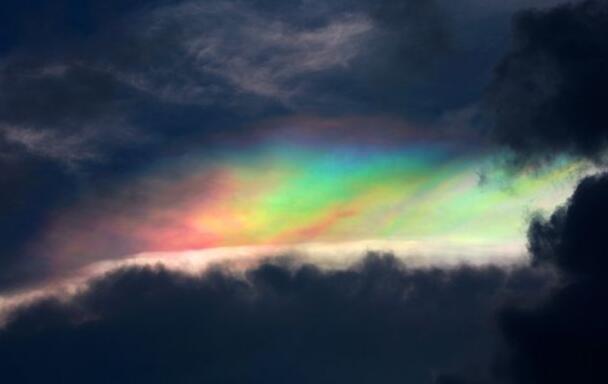
Cloud iridescence is an atmospheric optical phenomenon caused by the diffraction of sunlight through water droplets or ice crystals of remarkably uniform size. When these particles are small and similarly shaped — typically between 10 and 30 micrometers — they bend light at slightly different angles depending on wavelength, splitting white sunlight into vivid pastel bands of color.
This is fundamentally the same physics that creates the shimmering colors on a soap bubble or an oil slick. The clouds themselves are not emitting light or containing unusual chemicals; they are simply acting as a natural diffraction grating.
Several subtypes of rainbow-colored cloud phenomena exist. Pileus clouds form thin, cap-like layers over rapidly rising cumulonimbus towers, creating spectacular iridescent veils. Circumhorizontal arcs appear as broad, horizontal rainbow bands when sunlight passes through hexagonal ice crystals in high-altitude cirrus clouds at precisely the right angle.
Why China Seems to Experience More Visible Occurrences
China's geographic and climatic diversity creates ideal conditions for frequent iridescent cloud formation. The country spans tropical monsoon zones in the south, high-altitude plateaus in the west, and complex mountainous terrain throughout — all factors that promote the specific cloud types associated with iridescence.
Monsoon moisture provides abundant water vapor that feeds thin, uniform cloud layers at high altitudes. The Tibetan Plateau and surrounding mountain ranges force air upward rapidly, generating pileus clouds atop powerful convective towers. Subtropical regions like Hainan experience intense solar angles that illuminate these formations with maximum spectral effect.
However, the perception that the China sky phenomenon occurs disproportionately is also a function of population density. With 1.4 billion people carrying smartphones, the statistical likelihood of any atmospheric event being captured and shared is vastly higher than in less populated regions experiencing identical phenomena.
Notable Recent Sightings That Went Viral
The August 2024 sighting over Haikou, Hainan Province, became one of the most widely shared atmospheric events in social media history. A brilliantly colored pileus cloud formation sat atop a towering cumulonimbus, creating an image so vivid that many viewers assumed it was digitally manipulated.
Earlier sightings near Zhangye in Gansu Province and multiple events over Kunming, Yunnan Province, had already primed Chinese social media audiences to associate rainbow clouds with mystery and danger. Each subsequent sighting built upon the narrative momentum of previous events, creating a self-reinforcing cycle of attention and alarm.
By 2025, virtually any colorful cloud sighting anywhere in China triggered immediate viral sharing, often accompanied by earthquake warnings or conspiracy theories — regardless of how common the underlying phenomenon actually was.
The Earthquake Prediction Connection — Myth or Science?
Historical Claims Linking Rainbow Clouds to Seismic Activity
The theory of earthquake prediction clouds has deep roots in Chinese cultural memory. Following the devastating 2008 Sichuan earthquake that killed nearly 70,000 people, photographs of unusual cloud formations taken in the days before the disaster circulated widely online. Many claimed these images proved that the atmosphere provides visible warnings before major seismic events.
The concept predates modern social media considerably. Chinese folklore spanning centuries attributes unusual sky colors and cloud formations to disturbances in the earth's energy — a belief system rooted in traditional cosmology where heaven and earth are interconnected. Some proponents cite a 1999 paper by Chinese researcher Zhonghao Shou, who proposed that thermal energy released from tectonic stress could create unusual cloud formations.
What Geologists and Atmospheric Scientists Actually Say
The scientific consensus is unambiguous: no validated mechanism connects atmospheric optical phenomena to seismic activity. The United States Geological Survey (USGS) has repeatedly stated that earthquake prediction clouds have no scientific basis and that no reliable short-term earthquake prediction method currently exists.
Researchers at the Chinese Academy of Sciences have similarly rejected the hypothesis. Peer-reviewed studies examining pre-earthquake atmospheric conditions have found no statistically significant correlation between unusual cloud formations and subsequent seismic events. The atmosphere and the lithosphere operate on fundamentally different physical principles and timescales.
The proposed mechanisms — such as radon gas release, electromagnetic emissions, or thermal anomalies — have been tested and found insufficient to produce visible cloud modifications at the scale or appearance described by proponents.
Why the Myth Persists Despite Scientific Consensus
Despite overwhelming scientific rejection, the belief that rainbow clouds predict earthquakes continues to spread. Several psychological and social factors sustain this myth.
| Factor | Role in Spreading Concern |
|---|---|
| Confirmation bias | People remember "hits" (cloud before quake) and forget the thousands of "misses" |
| Social media algorithms | Sensational content is prioritized over scientific explanations in recommendation systems |
| Cultural folklore | Centuries-old traditions attributing sky signs to earth events lend perceived legitimacy |
| Proximity to real disasters | China's seismically active regions create coincidental timing that appears meaningful |
| Distrust of official explanations | Public skepticism toward authorities amplifies alternative theories |
China experiences thousands of minor earthquakes annually across its seismically active western and southwestern regions. With iridescent clouds also being relatively common in these same mountainous areas, the probability of temporal coincidence is high — creating the illusion of a pattern where none exists.
HAARP, Weather Manipulation, and Conspiracy Theories
How Conspiracy Communities Interpret the Phenomenon
Within conspiracy theory communities, rainbow clouds are frequently cited as evidence of weather modification technology, directed-energy weapons, or clandestine government experiments. These claims often adapt Western HAARP conspiracy narratives to the Chinese context, suggesting that either the Chinese government or foreign powers are manipulating the atmosphere for military or population-control purposes.
Common claims include assertions that the colors indicate chemical dispersal, electromagnetic frequency testing, or ionospheric heating experiments. These theories typically lack any proposed physical mechanism and rely instead on the unfamiliarity of the visual phenomenon to generate suspicion.
China's Actual Cloud-Seeding Programs and Public Awareness
China operates the world's largest weather modification program, employing thousands of workers who fire silver iodide rockets and use ground-based generators to induce rainfall. The program is openly acknowledged by the Chinese government, which announced plans to expand coverage to 5.5 million square kilometers.
Public awareness of these real programs creates fertile ground for speculation. When citizens know their government actively modifies weather, the cognitive leap to believing it might also create unusual visual phenomena becomes shorter. The existence of legitimate atmospheric intervention programs paradoxically makes illegitimate conspiracy claims seem more plausible.
Separating Legitimate Atmospheric Science from Misinformation
Cloud seeding produces precipitation — rain or snow — by providing nucleation particles around which water vapor can condense. It does not produce iridescent colors, rainbow effects, or unusual visual phenomena. The output of cloud seeding is mundane: slightly enhanced rainfall in targeted areas.
Iridescent clouds, by contrast, require extremely uniform droplet or crystal sizes — a condition that arises naturally in thin, newly formed cloud layers but would be extraordinarily difficult to engineer artificially. The physics of diffraction-based color production has been understood since the 19th century and requires no exotic technology to explain.
Key distinguishing criteria: natural iridescence appears in thin clouds near the sun, displays pastel rather than saturated colors, shifts with viewing angle, and dissipates as clouds thicken or age. None of these characteristics align with any known artificial atmospheric intervention.
The Role of Social Media in Amplifying Fear
Viral Mechanics — From Local Sighting to Global Panic
A single smartphone video of an iridescent cloud can travel from a local Weibo post to international news coverage in under six hours. The amplification pathway typically follows a predictable pattern: initial capture, sharing within Chinese social platforms, cross-posting to TikTok and X (formerly Twitter), pickup by aggregator accounts, and finally coverage by mainstream media outlets seeking trending content.
At each stage, context is stripped away and emotional framing is added. A calm observation becomes an urgent warning. A beautiful natural phenomenon becomes evidence of impending catastrophe.
Misleading Captions, Recycled Footage, and Decontextualized Clips
Misinformation researchers have identified several recurring tactics in rainbow cloud viral content. Old footage is frequently relabeled with current dates and locations. Unrelated disaster footage — earthquakes, floods, volcanic eruptions — is edited alongside cloud videos to create false causal narratives.
AI-generated imagery has further complicated verification efforts. Synthetic images of impossibly vivid cloud formations are mixed with authentic captures, making it increasingly difficult for casual viewers to distinguish real atmospheric events from fabricated content designed for engagement.
The Psychology of Dread and Apocalyptic Framing
Humans possess an evolved tendency to interpret unfamiliar natural phenomena as threatening. This negativity bias served our ancestors well — treating an ambiguous stimulus as dangerous was less costly than ignoring a genuine threat. In the modern context, this bias transforms beautiful but unfamiliar atmospheric optics into sources of anxiety.
End-times narratives exploit this tendency effectively. Content creators have learned that pairing stunning natural imagery with apocalyptic captions generates dramatically higher engagement than scientifically accurate explanations. The resulting feedback loop rewards fear-based framing and punishes measured, educational content.
Types of Rainbow-Colored Cloud Phenomena Explained
| Phenomenon | Appearance | Cause | Frequency | Threat Level |
|---|---|---|---|---|
| Cloud iridescence | Pastel rainbow patches in thin clouds | Diffraction by uniform water droplets | Common | None |
| Pileus clouds | Rainbow cap atop cumulonimbus | Thin ice-crystal layer over rising air | Moderate | None (storm below may be severe) |
| Circumhorizontal arc | Horizontal rainbow band below sun | Ice crystals in cirrus clouds | Seasonal | None |
| Fire rainbow | Vivid spectral band across sky | Hexagonal ice plate refraction | Rare at high latitudes | None |
| Corona (optical) | Colored rings around sun/moon | Small droplet diffraction | Very common | None |
How to Identify What You're Actually Seeing
To classify a rainbow cloud sighting, start with the sun's position. Iridescence appears within about 30 degrees of the sun, while circumhorizontal arcs appear well below it (when the sun is above 58 degrees elevation). Coronae form concentric rings directly around the sun or moon.
Next, examine the cloud type. Thin, wispy altocumulus or newly forming clouds suggest classic iridescence. A smooth cap sitting atop a towering storm cloud indicates a pileus formation. High, thin cirrus clouds producing a broad horizontal band point toward a circumhorizontal arc.
Finally, observe the color pattern. Iridescence produces irregular, shifting pastel patches. Arcs produce ordered spectral bands (red on top, violet on bottom). Coronae produce concentric rings with blue inside and red outside. All of these are completely natural and harmless.
Cultural and Historical Context in China
Traditional Chinese Interpretations of Sky Phenomena
Imperial-era Chinese astronomy maintained detailed records of unusual atmospheric events, categorizing them as omens with political and spiritual significance. Colored clouds were variously interpreted as signs of divine favor, warnings of dynastic change, or manifestations of celestial dragons.
The concept of tianren ganying (天人感应) — the mutual responsiveness of heaven and humanity — positioned unusual sky phenomena as direct communications between the cosmos and human affairs. This philosophical framework, dating back over two millennia, created a cultural predisposition to interpret atmospheric events as meaningful rather than mechanistic.
Modern Chinese Public Response vs. Scientific Literacy
Contemporary China presents a complex landscape where rapid scientific advancement coexists with persistent folk beliefs. Urban populations with higher education levels generally accept scientific explanations for atmospheric phenomena, while rural communities — where many dramatic sightings originate due to clearer skies and mountainous terrain — may retain traditional interpretive frameworks.
The Chinese government's science communication efforts have increased significantly, with state media frequently publishing explanatory content following viral cloud sightings. However, these explanations often reach audiences after fear-based narratives have already established themselves, creating an uphill battle against entrenched misinformation.
Should You Actually Be Worried?
When Colorful Clouds Might Indicate Real Weather Threats
While iridescent colors themselves are entirely harmless, the cloud formations hosting them can occasionally signal legitimate weather concerns. Pileus clouds form exclusively atop rapidly growing cumulonimbus towers — the same storms capable of producing severe hail, damaging winds, and tornadoes.
If you observe a brilliantly colored cap cloud sitting atop a dark, rapidly expanding storm tower, the appropriate response is not earthquake preparation but standard severe weather awareness. Check local meteorological alerts and seek shelter if the storm approaches. The beauty above may indicate dangerous energy below — but it's weather energy, not seismic energy.
Evidence-Based Risk Assessment
The comprehensive scientific assessment is straightforward: iridescent clouds pose zero direct danger to human health or safety. They have no validated connection to earthquakes, volcanic eruptions, or other geological events. They are not evidence of weapons testing, chemical dispersal, or clandestine technology programs.
These atmospheric optical phenomena have been observed, documented, and explained for centuries. They occur on every continent, in every climate zone, and require nothing more exotic than sunlight, water, and basic physics. The only thing that has changed is our ability to photograph and share them instantaneously with billions of people.
Frequently Asked Questions (FAQ)
Do rainbow clouds predict earthquakes?
No. There is no peer-reviewed scientific evidence establishing a causal or predictive relationship between iridescent clouds and seismic activity. The USGS, the Chinese Academy of Sciences, and atmospheric researchers worldwide agree that atmospheric and tectonic systems operate independently. The earthquake prediction clouds theory has been thoroughly examined and rejected by the scientific community.
Are rainbow clouds caused by pollution or chemicals?
No. Iridescent clouds are caused by natural light diffraction through ice crystals or water droplets of uniform size. This is a purely optical phenomenon requiring no chemical additives. While air pollution can affect overall cloud formation patterns and visibility, it does not create the specific diffraction conditions responsible for iridescence — in fact, pollution typically produces less uniform droplet sizes, which would reduce rather than enhance the effect.
Why do rainbow clouds appear more often in China than other countries?
They don't necessarily occur more frequently in China. The perception of increased frequency is primarily a function of China's massive population (1.4 billion potential observers), extremely high smartphone penetration, and highly active social media ecosystem. When nearly a billion people carry high-quality cameras and share content on platforms with sophisticated recommendation algorithms, rare-but-normal atmospheric events get captured and amplified at unprecedented rates.
Could rainbow clouds be evidence of weather manipulation?
No. While China operates documented cloud-seeding programs, these produce precipitation (rain and snow) through silver iodide nucleation — not iridescent colors. Cloud seeding cannot create the uniform droplet sizes required for diffraction-based color production. The optical phenomena observed in viral videos predate any human technology by millions of years and are observed identically in regions with no weather modification programs whatsoever.
Are rainbow clouds becoming more frequent due to climate change?
This remains an open research question without a definitive answer. Some atmospheric scientists suggest that shifting moisture patterns, altered jet stream behavior, and changes in cloud formation altitude could theoretically affect the frequency of conditions favorable to iridescence. However, no peer-reviewed study has conclusively linked increased iridescent cloud observations to climate change. The apparent increase in sightings is more convincingly explained by increased observation and sharing capacity.
What should I do if I see a rainbow cloud?
Enjoy it and photograph it — you're witnessing one of nature's most beautiful optical displays. If the iridescent colors appear atop a rapidly growing, dark storm cloud, check local weather alerts for severe thunderstorm warnings, as the underlying cumulonimbus may produce dangerous weather. But the iridescence itself is completely harmless, requires no emergency response, and is not a sign of any impending geological or technological threat.