The sustainable bathroom accessories market is no longer a niche — it's a mainstream growth engine. For entrepreneurs and small business owners searching for a high-margin, low-risk entry point into the eco-friendly product space, bamboo soap dish holders represent one of the most compelling private label opportunities available today.
This article delivers a data-driven analysis of the market opportunity, manufacturing landscape, pricing strategy, and step-by-step launch roadmap. Whether you're evaluating your first SKU or expanding an existing product line, the insights here will help you make informed sourcing decisions and build a defensible brand.
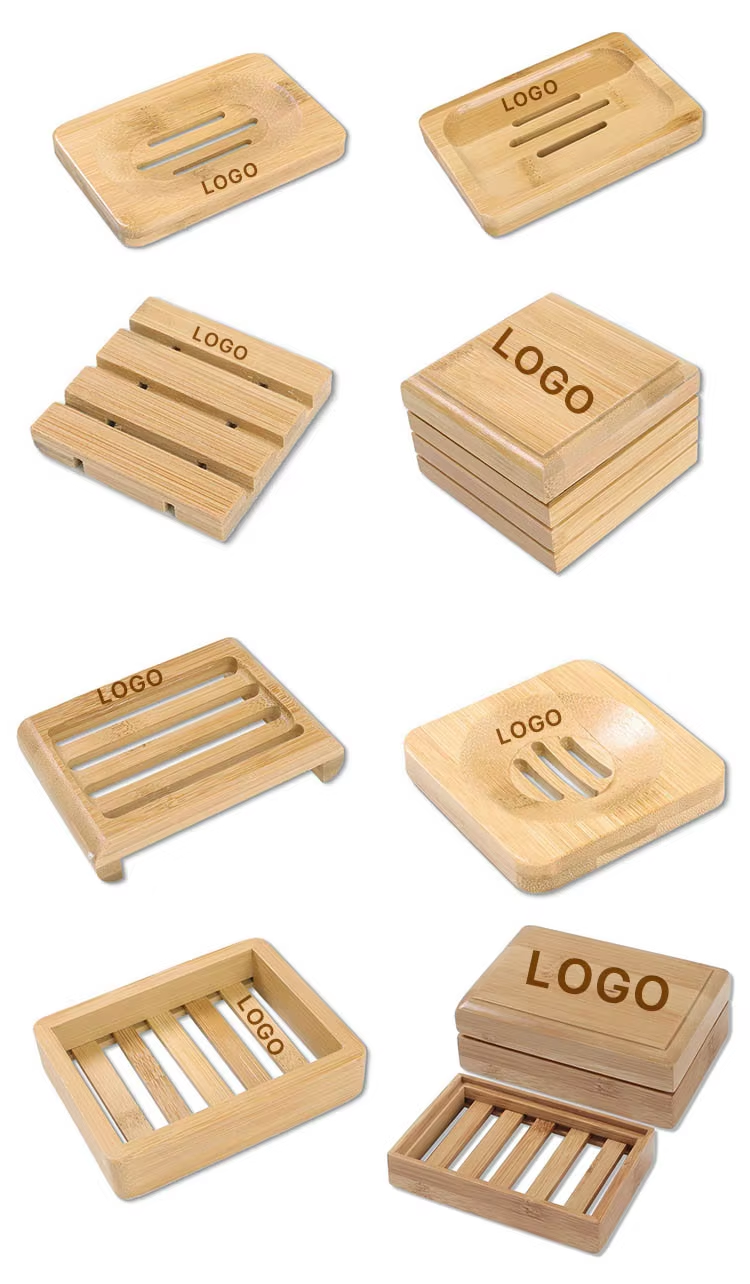
The Booming Market for Sustainable Bathroom Accessories
The global bamboo products market reached an estimated $72.1 billion in 2025 and is projected to grow at a CAGR of 5.7% through 2030, according to Grand View Research. Within this category, bathroom accessories represent one of the fastest-growing segments, driven by consumer rejection of single-use plastics and a broader shift toward conscious consumption.
For wholesale buyers and brand builders, this growth translates into a clear mandate: partner with a reliable biodegradable bathroom accessories bulk supplier and capture market share before saturation occurs.
Consumer Demand Signals: What the Data Tells Us
Search volume for terms like "sustainable bathroom accessories" and "eco-friendly soap dish" has grown 34% year-over-year across major English-speaking markets. Google Trends data confirms sustained, non-seasonal interest — indicating structural demand rather than a passing fad.
Millennial and Gen-Z consumers, who now represent over 60% of household purchasing decisions, demonstrate a documented willingness to pay 15–25% premiums for products with verified sustainability credentials. This behavioral shift creates exceptional margin potential for brands positioned correctly.
Retail markup analysis reveals that bamboo bathroom accessories wholesale purchases at $2–$4 per unit can support retail prices of $12–$22, delivering gross margins that outperform most consumer goods categories. The economics are particularly attractive for direct-to-consumer brands operating through Shopify or Amazon.
Why Bamboo Outperforms Other Sustainable Materials
When evaluating material options for soap dish holders, bamboo consistently outperforms alternatives across three critical dimensions: durability, cost, and environmental footprint.
| Criteria | Bamboo | Hardwood | Recycled Plastic |
|---|---|---|---|
| Harvest Cycle | 3–5 years | 20–60 years | N/A (reprocessed) |
| Water Resistance | High (natural silica content) | Moderate | High |
| Antimicrobial Properties | Natural (bamboo kun) | None | None |
| Biodegradability | Full (1–3 years) | Full (5–10 years) | Partial/None |
| Unit Cost (FOB) | $1.50–$3.50 | $3–$6.00 | $2.00–$4.00 |
| Consumer Perception | Premium & Eco-friendly | Premium but unsustainable | Low perceived value |
Bamboo's natural antimicrobial agent — known as "bamboo kun" — makes it inherently resistant to bacterial and fungal growth in wet environments. This is a critical selling point for bathroom products that competitors using recycled plastic simply cannot match.
The rapid renewability of bamboo (harvestable every 3–5 years without replanting) gives brands an authentic sustainability story that resonates deeply with environmentally conscious consumers and withstands regulatory scrutiny.
The Private Label Opportunity — Building a Brand Without a Factory
Private labeling allows entrepreneurs to build branded product lines without investing in manufacturing infrastructure. The model is straightforward: you design, brand, and market the product while a manufacturing partner handles production. For eco-friendly bathroom accessories, this approach dramatically lowers barriers to entry.
The soap dish holder category is uniquely suited to first-time private label entrepreneurs due to its simplicity, low capital requirements, and high perceived consumer value.
Why Soap Dish Holders Are a Perfect First SKU
Unlike complex consumer electronics or regulated consumables, bamboo soap dish holders carry minimal compliance burden and require no specialized certifications beyond basic material safety testing. This simplicity translates into faster time-to-market.
Key advantages for startups include:
- Low MOQ accessibility: Many manufacturers accept initial orders of 500–1,000 units, requiring just $1,500–$3,500 in inventory investment.
- Lightweight shipping: A typical bamboo soap dish weighs 80–150 grams, dramatically reducing per-unit logistics costs compared to ceramic or stone alternatives.
- High perceived value: Custom branding (laser engraving, branded packaging) transforms a $2 product into a $15–$20 retail item.
- Cross-sell potential: Soap dishes naturally pair with artisan soap bars, bamboo toothbrush holders, and complete bathroom accessory sets — enabling rapid catalog expansion.
OEM vs. ODM: Choosing the Right Manufacturing Partnership
Understanding the distinction between OEM and ODM models is essential for making informed sourcing decisions.
OEM (Original Equipment Manufacturing) means applying your logo, branding, and packaging to an existing product design. This approach is faster, cheaper, and ideal for brands testing market demand before investing in custom tooling.
ODM (Original Design Manufacturing) involves collaborating with your manufacturer to develop unique product designs from scratch. This creates differentiation and defensible intellectual property but requires higher upfront investment and longer lead times.
Poleview Biotech Co., Ltd., a professional soap manufacturer based in China, supports both OEM and ODM orders. What makes Poleview particularly valuable as a partner is their integrated capability: alongside their core soap production line, they provide custom soap dish holder services. This dual expertise means entrepreneurs can source complementary products — handcrafted soap bars and bamboo soap dishes — from a single supplier, simplifying logistics and strengthening negotiating leverage.
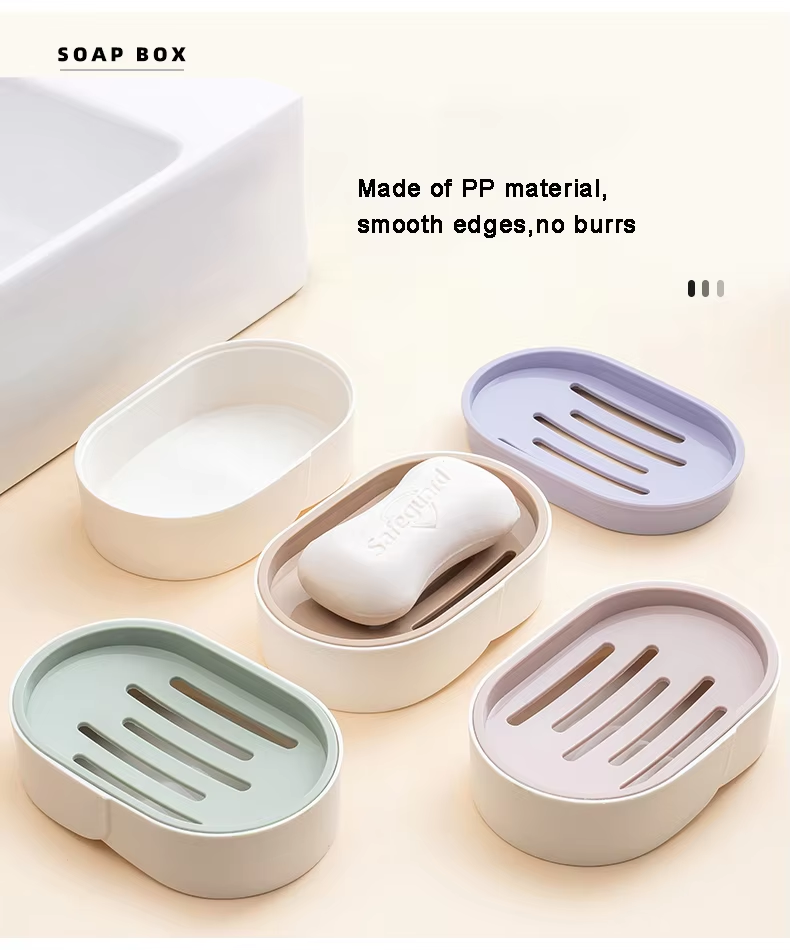
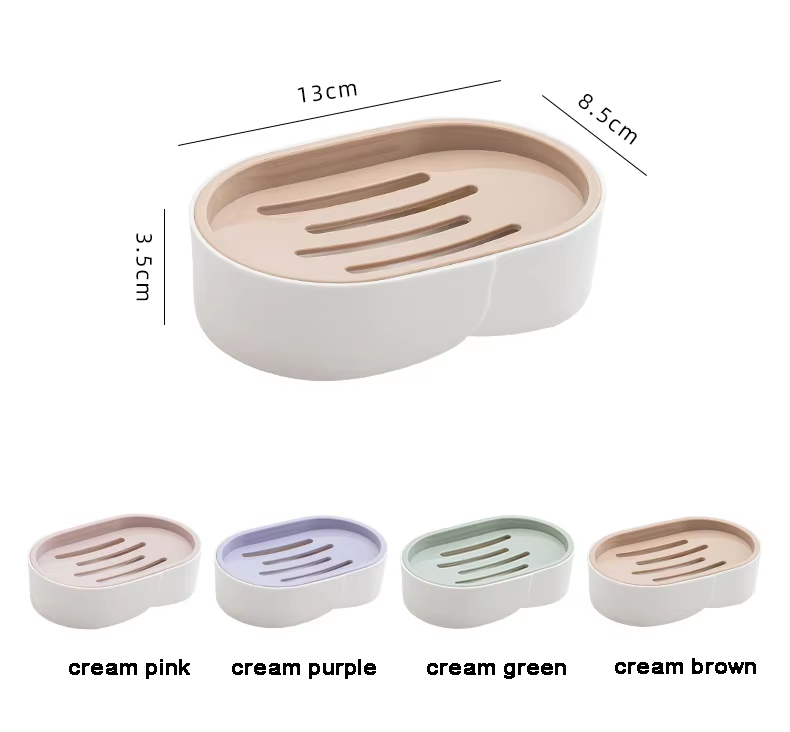
Custom Logo Bamboo Soap Tray — Branding That Sells
Branding transforms a commodity into a premium product. For custom logo bamboo soap tray orders, manufacturers typically offer three primary customization methods:
- Laser engraving: Produces a permanent, elegant mark with no ink or chemicals. Best for minimalist luxury positioning. Adds $0.15–$0.40 per unit.
- Screen printing: Allows multi-color logos and detailed graphics. Cost-effective at scale. Adds $0.10–$0.30 per unit.
- Heat stamping: Creates a debossed effect with metallic or natural finish. Premium feel at moderate cost. Adds $0.20–$0.50 per unit.
Packaging customization is equally important. Retail-ready packaging with branded kraft paper sleeves, recycled cardboard boxes, or cotton drawstring bags can elevate perceived value by 30–50% with minimal cost increase. For subscription box formats, manufacturers can provide flat-pack packaging optimized for mailer box dimensions.
Typical minimum order quantities for fully customized products (logo + packaging) range from 500 to 1,000 units, with lead times of 25–45 days from design approval to shipment.
What to Look for in a Soap Dish Holder Manufacturer
Selecting the right manufacturing partner is the single most consequential decision in your private label journey. The difference between a reliable Soap Dish Holder manufacturer and an unreliable middleman can mean the difference between a thriving brand and costly inventory write-offs.
Quality Certifications and Compliance Standards
Non-negotiable certifications for any serious bamboo product supplier include:
- FSC (Forest Stewardship Council) certification: Verifies that bamboo is sourced from responsibly managed forests. Essential for making credible sustainability claims.
- FDA/EU compliance: While soap dishes aren't food-contact items, FDA-compliant finishes and EU REACH compliance demonstrate material safety standards that protect your brand.
- ISO 9001: Confirms the manufacturer operates a documented quality management system with consistent production processes.
Request copies of these certifications during supplier evaluation. Legitimate manufacturers provide them readily; hesitation is a red flag.
Production Capability and Scalability
Your ideal manufacturer should accommodate your current volume while supporting future growth. Evaluate whether the factory can handle orders ranging from 500 units (initial test batch) to 500,000+ units (mature brand scaling).
Key production indicators to assess include in-house quality control processes (dedicated QC team, not outsourced), vertical integration from raw bamboo processing through finishing and packaging, and documented defect rate targets (industry standard: less than 2% for bamboo accessories).
The China Manufacturing Advantage for Bamboo Products
China produces over 60% of the world's bamboo products, and this dominance isn't accidental. The country's competitive advantages are structural and difficult to replicate:
- Proximity to raw materials: Major bamboo forests in Fujian, Zhejiang, and Sichuan provinces ensure short supply chains and low raw material costs.
- Established export infrastructure: Decades of international trade experience means reliable shipping, customs documentation, and trade compliance expertise.
- Skilled labor force: Generations of bamboo craftsmanship combined with modern manufacturing technology deliver quality at scale.
Companies like Poleview Biotech leverage China's bamboo supply chain to deliver competitive pricing on eco-friendly bamboo products OEM orders. Their location within China's manufacturing heartland provides direct access to premium raw bamboo without intermediary markups.
Red Flags to Avoid When Selecting a Wholesale Supplier
Protect your investment by watching for these warning signs during supplier evaluation:
- Sample quality inconsistency: If the sample looks perfect but bulk production shows visible defects, the supplier likely uses different processes for samples versus production runs.
- Communication opacity: Suppliers who avoid video calls, refuse factory tours or audits, or take days to respond to basic questions are often trading companies — not actual manufacturers.
- No product development team: A legitimate sustainable soap holder manufacturer will have dedicated designers and engineers who can discuss material specifications, finishing options, and structural modifications in technical detail.
- Unrealistically low pricing: If a quote seems too good to be true, the supplier may be cutting corners on material quality, using non-FSC bamboo, or applying toxic finishes.
Product Design Trends Shaping the Bamboo Soap Dish Market
Staying ahead of design trends ensures your private label product resonates with current consumer aesthetics and commands premium pricing. Here are the dominant directions shaping buyer preferences in the bamboo bathroom accessories category.
Minimalist Scandinavian-Inspired Designs
The "Scandi" aesthetic continues to dominate bathroom décor: clean lines, natural wood tones, and unadorned surfaces. Bamboo soap dishes with smooth rounded edges, light natural finishes, and geometric simplicity align perfectly with this trend.
This design philosophy appeals to the home décor and lifestyle market segment — consumers who view bathroom accessories as interior design elements, not utilitarian afterthoughts. Products in this category command higher price points ($15–$22 retail) and attract brand-loyal customers.
Multi-Functional Designs Gaining Traction
Consumers increasingly favor products that solve multiple problems. The most successful bamboo soap dish designs incorporate functional innovations:
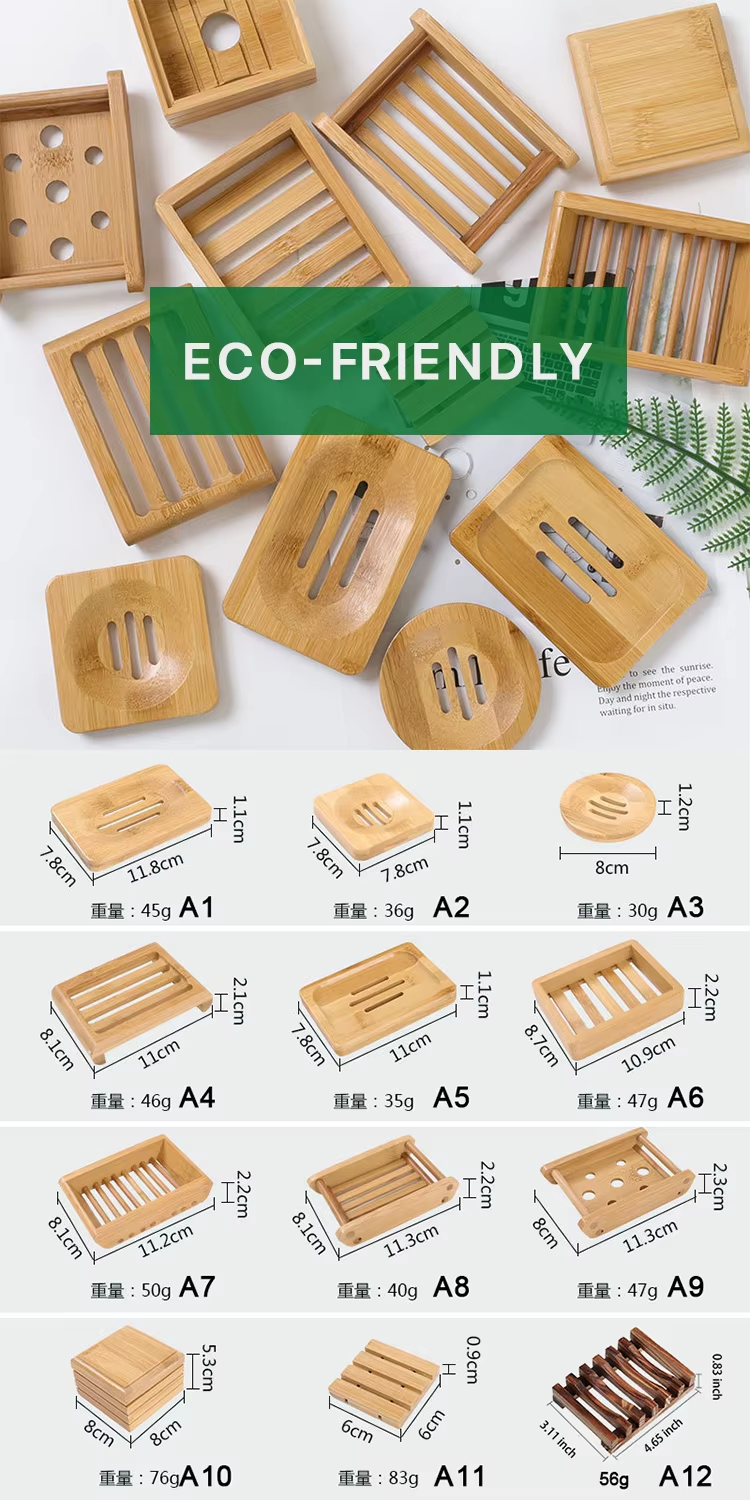
- Drainage channels: Slotted or angled designs that allow water to drain away from the soap bar, extending soap life by 30–50%. This functional benefit is a powerful marketing message.
- Stackable and travel-friendly formats: Compact designs with lids or nesting capability appeal to travelers and gym-goers.
- Combo units: Soap dish + tray combinations that organize bathroom countertops, providing a soap resting area alongside space for rings, hair ties, or other small items.
Sustainable Packaging as Part of the Product Experience
For DTC and subscription brands, packaging is the product's first impression. Leading brands in this space have eliminated plastic entirely from their packaging chain, using kraft paper wraps, recycled cardboard boxes with soy-based inks, and compostable cellophane windows.
The unboxing experience matters. Brands selling through Instagram and TikTok-driven channels should invest in packaging that photographs well and communicates sustainability values at first glance. Your manufacturing partner should offer packaging customization as a standard service.
Pricing Strategy and Profit Margins for Wholesale Buyers
Understanding the complete cost structure is essential for building a profitable business model. Below is a transparent breakdown based on current market conditions for bamboo bathroom accessories wholesale sourcing from China.
Cost Structure Breakdown (FOB China)
| Cost Component | Per Unit (500 units) | Per Unit (5,000 units) | Per Unit (50,000 units) |
|---|---|---|---|
| Raw bamboo material | $0.60 | $0.45 | $0.35 |
| Manufacturing & finishing | $1.20 | $0.85 | $0.60 |
| Custom branding (laser engrave) | $0.35 | $0.20 | $0.15 |
Custom packaging $0.50 $0.30 $0.20 Quality inspection $0.15 $0.10 $0.05 Total FOB Cost $2.80 $1.90 $1.35
These figures represent FOB (Free on Board) pricing — meaning the cost at the port of origin before international shipping. Landed costs will include ocean freight, customs duties, and last-mile logistics, typically adding $0.40–$1.20 per unit depending on destination country and shipping method.
Retail Pricing Tiers and Margin Analysis
Successful private label brands in this category operate across three distinct pricing tiers, each targeting different consumer segments and distribution channels:
| Pricing Tier | Retail Price | Target Channel | Gross Margin |
|---|---|---|---|
| Value | $8–$12 | Amazon, marketplace bundles | 55–65% |
| Premium | $14–$18 | Shopify DTC, boutique retail | 70–78% |
| Luxury | $20–$28 | Gift sets, hotel amenities, subscription boxes | 78–85% |
The luxury tier is particularly attractive for brands that pair bamboo soap dishes with artisan soap bars in curated gift sets. A $3.50 soap dish combined with a $2.00 handcrafted soap bar can retail for $35–$45 as a branded gift package — delivering margins that justify the effort of building a premium brand identity.
Volume Discounts and Negotiation Leverage
Pricing in manufacturing relationships is rarely fixed. Experienced buyers understand that negotiation leverage increases with commitment. Here are proven strategies for securing better terms from your wholesale supplier:
- Annual volume commitments: Rather than negotiating per-order pricing, present an annual forecast. A commitment to 20,000 units over 12 months (even spread across quarterly orders) typically unlocks pricing 15–25% below spot order rates.
- Multi-SKU bundling: Ordering soap dishes alongside complementary products (toothbrush holders, bath trays, soap bars) from the same manufacturer increases your total order value and strengthens your negotiating position.
- Payment term flexibility: Offering faster payment (full prepayment or 50/50 split rather than standard 30/70) gives manufacturers improved cash flow — and they'll often pass savings back to you.
- Long-term partnership framing: Suppliers invest more in relationships they believe will grow. Share your business plan, marketing strategy, and growth projections to signal that you're building a lasting partnership rather than placing a one-time order.
Step-by-Step Launch Roadmap: From Concept to First Sale
Translating market opportunity into revenue requires disciplined execution. The following roadmap outlines a proven sequence for launching a private label bamboo soap dish brand, optimized for entrepreneurs working with limited capital and lean teams.
Phase 1: Market Validation (Weeks 1–3)
Before committing capital to inventory, validate demand with minimal investment. Start by analyzing competitor listings on Amazon, Etsy, and specialty retailers. Document their pricing, review volume, photography style, and customer complaints. Negative reviews are goldmines — they reveal product gaps your design can address.
Create a simple landing page or social media presence showcasing your product concept. Run low-budget paid ads ($5–$10/day) to gauge click-through rates and email signups. A conversion rate above 2% on cold traffic signals genuine market interest worth pursuing.
Phase 2: Supplier Selection and Sampling (Weeks 3–7)
Contact 5–8 potential manufacturers simultaneously. Request product catalogs, certifications, and pricing sheets. Narrow your shortlist to 2–3 suppliers based on responsiveness, pricing transparency, and willingness to accommodate your volume requirements.
Order samples from each finalist — expect to pay $30–$80 including express shipping for 2–3 sample units. Evaluate samples rigorously: check for consistent bamboo grain quality, smooth finishing without splinters, precise drainage slot dimensions, and overall structural integrity when wet. Submerge samples in water for 48 hours to test warping resistance and finish durability.
Poleview Biotech offers sample programs specifically designed for brand evaluation, allowing buyers to assess both soap dish quality and complementary soap products before committing to production orders. This integrated sampling approach saves time when building curated product bundles.
Phase 3: Design Finalization and Production (Weeks 7–12)
Once you've selected your manufacturing partner, finalize all specifications in a written product brief. This document should include exact dimensions (in millimeters), bamboo grade requirements, finish type (natural oil, food-grade lacquer, or raw), branding placement coordinates, and packaging specifications with dieline files.
Request a pre-production sample — a final prototype incorporating all your customizations — before authorizing the full production run. This step costs an additional $20–$50 but eliminates the risk of expensive bulk production errors. Approve the pre-production sample in writing, and confirm delivery timelines, payment milestones, and quality acceptance criteria.
Standard production timelines for orders of 1,000–5,000 units run 25–35 days from approval. Factor in 15–25 days for ocean freight (China to North America or Europe) and 5–10 days for customs clearance and domestic delivery.
Phase 4: Brand Building and Channel Setup (Weeks 8–12, parallel)
While production proceeds, build your sales infrastructure. This phase runs concurrently with manufacturing and should be complete before inventory arrives:
- Product photography: Invest in professional lifestyle photography showing your soap dish in styled bathroom settings. Budget $300–$800 for a photo session that yields 15–20 images suitable for web, marketplace, and social media use.
- Listing optimization: Write compelling product descriptions that lead with benefits (extends soap life, naturally antibacterial, biodegradable at end of life) rather than features. Include specific dimensions, care instructions, and sustainability credentials.
- Channel activation: Set up your primary sales channel — whether Amazon Seller Central, Shopify storefront, or wholesale accounts with boutique retailers. Each channel has different lead times for account approval and listing activation.
- Content marketing foundation: Publish 3–5 blog posts or social media pieces establishing your brand's sustainability narrative before your product goes live. This creates organic discovery pathways and builds credibility with early visitors.
Phase 5: Launch and Iteration (Weeks 12–16)
Launch with a focused promotional strategy. For Amazon sellers, early review generation through the Vine program and targeted PPC campaigns on category-specific keywords drives initial visibility. For DTC brands, influencer seeding (sending free product to 20–30 micro-influencers in the sustainable living niche) generates authentic social proof at minimal cost.
Monitor customer feedback obsessively during the first 30 days. Common complaints about bamboo soap dishes include inadequate drainage, rough edges catching on soap bars, and finish degradation after extended water exposure. Address any recurring issues with your manufacturer immediately — quality problems compound rapidly through negative reviews.
Plan your second order within 4–6 weeks of launch, incorporating design refinements based on customer feedback. This iterative approach — launch, learn, improve — builds product quality over successive production runs and creates a competitive moat that pure resellers cannot replicate.
Scaling Beyond a Single SKU: Building a Product Ecosystem
The most successful private label brands in the sustainable bathroom space don't stop at a single product. They build coherent product ecosystems that increase customer lifetime value and strengthen brand positioning.
Natural Product Line Extensions
Bamboo soap dish holders serve as an anchor SKU — the entry point that introduces customers to your brand. From this foundation, logical expansion paths include:
- Bamboo toothbrush holders: Same material, same aesthetic, same supplier. Customers who purchase a soap dish are statistically 3–4x more likely to purchase a matching accessory from the same brand.
- Artisan soap bars: Partnering with a manufacturer like Poleview that produces both soap and accessories allows you to offer complete "soap + dish" bundles. These bundles typically achieve 20–30% higher average order values than standalone items.
- Bamboo bath trays and shower caddies: Larger-format bamboo products that command $30–$60 retail prices while leveraging the same supply chain relationships.
- Seasonal gift sets: Curated holiday and occasion bundles combining multiple SKUs in premium packaging. Gift sets perform exceptionally well during Q4, Valentine's Day, and Mother's Day — accounting for up to 40% of annual revenue for some brands in this category.
Wholesale and B2B Distribution Channels
Once your brand establishes retail traction, wholesale distribution to brick-and-mortar retailers represents a significant growth vector. Independent home goods stores, zero-waste shops, spa and wellness centers, and boutique hotels actively seek sustainable bathroom accessories from reliable suppliers.
Wholesale pricing typically operates at 50% of retail (keystone markup), meaning a $16 retail soap dish sells to retailers at $8. At landed costs of $2.50–$3.50 per unit, wholesale distribution still delivers healthy 55–70% gross margins while providing predictable, high-volume order flow.
Hotels and hospitality groups represent a particularly lucrative B2B segment. Properties positioning themselves as eco-conscious increasingly replace plastic amenity trays with branded bamboo alternatives. A single hotel chain contract can represent 10,000–50,000 units annually — transforming your business economics overnight.
Sustainability Credentials: Certifications That Drive Sales
In a market where greenwashing erodes consumer trust, verifiable sustainability credentials differentiate serious brands from opportunistic sellers. The right certifications function as both marketing assets and competitive barriers.
Essential Certifications for Market Credibility
Beyond the FSC and ISO certifications discussed earlier, consider pursuing these additional credentials as your brand matures:
- B Corp Certification: Signals holistic commitment to social and environmental performance. While the certification process takes 6–12 months, B Corp status resonates powerfully with conscious consumers and opens doors to retail partnerships with values-aligned chains.
- Carbon Neutral Certification: Calculate and offset the carbon footprint of your product lifecycle — from bamboo harvesting through manufacturing, shipping, and end-of-life decomposition. Programs like Climate Neutral Certified provide frameworks for achieving and communicating this status.
- 1% for the Planet membership: Committing 1% of revenue to environmental nonprofits provides a tangible, easily communicated sustainability commitment that builds brand affinity.
Communicating Sustainability Without Greenwashing
Regulatory scrutiny of environmental claims is intensifying globally. The EU's Green Claims Directive and the FTC's updated Green Guides both require specific, substantiated language when making environmental marketing claims. Protect your brand by following these principles:
- Use precise language: "Made from FSC-certified bamboo" rather than vague claims like "eco-friendly" or "green."
- Quantify where possible: "Biodegrades within 1–3 years in composting conditions" rather than simply "biodegradable."
- Disclose limitations honestly: If your packaging includes a small plastic window or your shipping uses non-recyclable tape, acknowledge it. Transparency builds trust more effectively than perfection.
- Provide evidence on request: Maintain a public-facing sustainability page with downloadable certification documents, supply chain transparency reports, and specific environmental impact metrics.
Logistics and Shipping Considerations for International Sourcing
Efficient logistics management directly impacts profitability. For bamboo soap dish holders sourced from China, understanding shipping options, customs implications, and inventory management strategies is critical to maintaining healthy margins.
Shipping Methods Compared
| Method | Transit Time | Cost per CBM | Best For |
|---|---|---|---|
| Ocean Freight (FCL) | 18–35 days | $800–$1,500 | Large orders (5,000+ units) |
| Ocean Freight (LCL) | 25–40 days | $1,200–$2,500 | Mid-size orders (1,000–5,000 units) |
| Air Freight | 5–8 days | $4,000–$7,000 | Urgent restocks, sample shipments |
| Rail Freight (China–Europe) | 14–20 days | $2,000–$3,500 | European buyers seeking speed/cost balance |
For most private label brands starting with orders of 1,000–3,000 units, LCL (Less than Container Load) ocean shipping offers the best balance of cost and transit time. As volumes grow beyond 5,000 units per order, full container loads (FCL) become economically viable and significantly reduce per-unit shipping costs.
Bamboo soap dishes pack efficiently due to their flat profile and light weight. A standard 20-foot container can accommodate approximately 15,000–25,000 units depending on packaging dimensions — meaning even modest orders represent a fraction of container capacity and qualify for LCL consolidation services.
Customs Duties and Import Regulations
Bamboo household items generally attract favorable tariff treatment in most importing countries. In the United States, bamboo kitchenware and tableware (HTS code 4419) typically faces duties of 3.2–5.0%. The European Union classifies similar products under CN code 4419, with duty rates of 0–3% depending on specific product classification.
Work with a licensed customs broker for your first shipment to ensure correct classification. Misclassification can result in unexpected duty assessments, shipment holds, or penalties. Once you've established the correct HTS/CN code for your specific product, subsequent shipments become routine.
Inventory Management for Seasonal Demand
While bamboo soap dishes enjoy relatively stable year-round demand, significant volume spikes occur during gift-giving seasons. Historical sales data across the category shows Q4 volumes (October–December) running 40–60% above quarterly averages, with secondary peaks around Mother's Day and Valentine's Day.
Plan production orders 8–12 weeks ahead of anticipated demand peaks. This means placing Q4 holiday orders by mid-July at the latest to account for production time, ocean transit, and warehousing setup. Brands that fail to plan for seasonal surges face stockouts during their highest-revenue periods — a costly mistake that also damages marketplace algorithm rankings.
Building Long-Term Competitive Advantage
In a category with low barriers to entry, sustainable competitive advantage comes from compounding small advantages across multiple dimensions. Here's how successful brands in the bamboo accessories space build defensible market positions over time.
Customer Experience as a Moat
Products can be copied. Customer experiences cannot. Brands that invest in exceptional post-purchase experiences — handwritten thank-you notes, care instruction cards with QR codes linking
to video tutorials, surprise seed paper inserts that customers can plant — generate organic word-of-mouth and repeat purchases that no amount of advertising can replicate.
The lifetime value differential is substantial. Brands with deliberate retention strategies report repeat purchase rates of 35–45% within 12 months, compared to 8–12% for brands that treat each transaction as isolated. When your bamboo soap dish customer returns to buy a matching toothbrush holder, bath tray, and holiday gift set, your customer acquisition cost effectively drops to zero on those subsequent orders.
Implement a post-purchase email sequence that delivers genuine value: care tips for extending bamboo product life (oil treatment every 3–6 months), sustainability impact metrics ("by choosing bamboo, you've prevented X grams of plastic from entering landfills"), and early access to new product launches. This communication cadence keeps your brand top-of-mind without feeling transactional.
Intellectual Property and Design Protection
While basic bamboo soap dish designs are difficult to patent, unique functional innovations and distinctive aesthetic elements can be protected. Consider filing design patents for novel drainage systems, proprietary interlocking mechanisms, or distinctive silhouettes that define your brand's visual identity.
Trademark your brand name, logo, and any distinctive product line names early — before competitors can claim similar marks in your category. In the United States, trademark registration through the USPTO costs $250–$350 per class and provides nationwide protection. International brands should consider Madrid Protocol filings for multi-country coverage.
Even without formal IP protection, first-mover advantage in design innovation creates practical barriers. By the time competitors reverse-engineer your unique drainage channel geometry or stackable travel format, you've already captured reviews, built brand recognition, and moved to your next iteration.
Supply Chain Relationships as Strategic Assets
Deep manufacturer relationships compound in value over time in ways that competitors cannot easily replicate. A supplier who has worked with you through multiple production cycles understands your quality standards implicitly, prioritizes your orders during peak season capacity crunches, and proactively suggests material innovations or cost-saving opportunities.
Invest in these relationships deliberately. Visit your manufacturing partner annually if possible. Celebrate production milestones together. Share customer feedback — both positive and constructive — so your supplier understands how their work impacts end consumers. These human connections translate into tangible business advantages: faster turnaround times, preferential pricing during raw material cost fluctuations, and priority allocation when capacity is constrained.
Partners like Poleview Biotech, who operate across multiple product categories (soap manufacturing and bamboo accessories), offer an additional strategic advantage: as your relationship deepens, you gain access to their broader R&D capabilities and can co-develop innovative products that wouldn't be possible with a single-category supplier.
Common Mistakes to Avoid in the Private Label Bamboo Products Space
Learning from others' failures accelerates your path to profitability. These are the most frequent — and most costly — mistakes observed among new entrants to the bamboo bathroom accessories market.
Over-Ordering on First Production Run
Enthusiasm is valuable; overcommitment is dangerous. First-time brand builders frequently order 5,000–10,000 units before validating market response, tying up capital in inventory that may require design modifications based on customer feedback. Start with the minimum viable order (typically 500–1,000 units), prove product-market fit, refine based on real-world feedback, then scale aggressively with confidence.
Neglecting Moisture Testing in Product Evaluation
A bamboo soap dish that looks beautiful on a shelf may warp, crack, or develop mold after weeks of daily bathroom use. Rigorous moisture testing during the sampling phase — including prolonged submersion tests, humidity chamber exposure, and repeated wet-dry cycling — separates products that endure from those that generate returns and negative reviews. Insist that your manufacturer provides test data on dimensional stability under humid conditions, and conduct your own independent testing before approving production.
Underinvesting in Photography and Listing Quality
In e-commerce, your product photography IS your product. Consumers cannot touch, smell, or hold your bamboo soap dish before purchasing — they make decisions based entirely on visual presentation and copywriting. Brands that allocate less than 5% of their launch budget to professional photography and listing optimization consistently underperform competitors who invest 10–15%. A single professional photo session costing $500 can generate imagery that drives hundreds of thousands in revenue over its useful life.
Ignoring Regulatory Evolution
Environmental marketing regulations are tightening globally. Claims that were acceptable three years ago may now trigger regulatory action. Stay current with FTC Green Guides updates, EU Green Claims Directive requirements, and marketplace-specific policies (Amazon's Climate Pledge Friendly program criteria, for example). Build compliance into your brand DNA from day one rather than retrofitting it after receiving a warning letter.
Final Perspective: Timing, Execution, and the Path Forward
The bamboo soap dish holder market sits at an inflection point. Consumer demand is established and growing, manufacturing infrastructure is mature and accessible, and the economics reward brands that execute with discipline. Yet the window for differentiation narrows as more entrants recognize this opportunity.
Success in this space doesn't require revolutionary innovation. It requires consistent execution across fundamentals: selecting a manufacturing partner with genuine production capability and quality systems, investing in branding that communicates authentic sustainability values, building customer relationships that generate repeat purchases and referrals, and iterating relentlessly based on market feedback.
The entrepreneurs who will dominate this category over the coming years are those who begin today — not with perfection, but with decisive action. Order samples this week. Evaluate suppliers next week. Launch within 90 days. The market rewards speed combined with quality, and the compounding advantages of early entry — reviews, supplier relationships, brand recognition, operational expertise — become increasingly difficult for latecomers to overcome.
Your bamboo soap dish isn't just a bathroom accessory. It's the foundation of a sustainable brand that can grow into a multi-SKU product ecosystem, serving conscious consumers who are actively seeking alternatives to the disposable status quo. The opportunity is real, the economics are proven, and the infrastructure to support your launch already exists. What remains is your decision to act.