Making soap from scratch is one of the most rewarding DIY skills you can learn. You control every ingredient, save money over time, and create bars tailored to your skin. This guide walks you through the entire process — from gathering supplies to cutting your first batch.
Why Make Your Own Soap at Home?
Commercial "soap" is often not soap at all. Many bars on store shelves are synthetic detergent bars loaded with fillers, artificial fragrances, and preservatives. When you make soap at home, you choose every ingredient that touches your skin.
The growing interest in homemade soap recipes reflects a broader self-sufficiency movement. People want fewer chemicals, more transparency, and the satisfaction of creating something useful with their own hands. Plus, once you have basic equipment, each batch costs a fraction of what you'd pay at a boutique.
Homemade vs. Store-Bought Soap — Key Differences
| Factor | Homemade Soap | Store-Bought Soap |
|---|---|---|
| Ingredients | Natural soap ingredients you choose | Often synthetic detergents & fillers |
| Cost per Bar (after setup) | $0.50–$1.50 | $3.00–$8.00+ |
| Customization | Unlimited scents, colors, shapes | Limited options |
| Glycerin Content | Naturally retained | Often stripped out |
| Shelf Life | 6–12 months | 2–3 years |
| Skin Sensitivity | Gentle, adjustable | May contain irritants |
Understanding the Soap-Making Process (The Science Made Simple)
Soap is the result of a chemical reaction called saponification. In plain terms: fats and oils combine with lye (sodium hydroxide) to produce soap and glycerin. That's it. Every bar of real soap — handmade or commercial — starts this way.
Lye is essential. There is no way around it. But don't let that scare you. When handled with basic safety precautions, lye is perfectly manageable. And once saponification is complete, no free lye remains in your finished bar.
Cold Process Soap Making vs. Hot Process — Which Should You Choose?
| Feature | Cold Process | Hot Process |
|---|---|---|
| Difficulty Level | Beginner-friendly | Moderate |
| Cure Time | 4–6 weeks | 1–2 weeks |
| Texture | Smooth, polished finish | Rustic, textured look |
| Creative Control | Excellent for swirls & layers | Limited design options |
| Cooking Required? | No (saponifies over weeks) | Yes (cooked in crockpot) |
This guide focuses on cold process soap making because it's the most beginner-accessible method and gives you the most creative control over your final bars.
Essential Tools and Natural Soap Ingredients You'll Need
Gather everything before you start. Soap making moves quickly once you begin, and you don't want to scramble for a missing tool mid-batch.
Equipment Checklist
- Digital kitchen scale (precision to 0.1 oz / 1 g)
- Immersion (stick) blender
- Heat-safe stainless steel or heavy-duty plastic mixing bowls
- Silicone soap molds or lined wooden soap mold
- Thermometer (infrared recommended)
- Rubber or silicone spatulas
- Safety goggles, long rubber gloves, and long-sleeved clothing
- Vinegar (for lye spill neutralization)
Basic Homemade Soap Recipe — Ingredient Breakdown
| Ingredient | Amount | Purpose |
|---|---|---|
| Olive Oil | 16 oz (454 g) | Moisturizing base oil |
| Coconut Oil | 8 oz (227 g) | Hardness & lather |
| Shea Butter | 4 oz (113 g) | Creaminess & conditioning |
| Sodium Hydroxide (Lye) | 3.95 oz (112 g)* | Triggers saponification |
| Distilled Water | 9.5 oz (269 g) | Dissolves lye |
| Essential Oil (optional) | 1–1.5 oz (28–42 g) | Fragrance (lavender, tea tree, etc.) |
*Always verify lye amounts using a soap calculator like SoapCalc — never guess. Even small measurement errors can produce a harsh or ineffective bar.
Lye Solution Preparation — The Most Critical Step
This is the step that intimidates most beginners. Follow these instructions carefully and you'll handle it with confidence.
Step-by-Step Lye Solution Preparation
Step 1 — Set Up Your Workspace
Work in a well-ventilated area — near an open window or under a range hood. Put on safety goggles, rubber gloves, and a long-sleeved shirt. Keep children and pets out of the room. Place vinegar within arm's reach.
Step 2 — Weigh Lye and Water Precisely
Use your digital scale. Measure distilled water into a heat-safe container first (a sturdy plastic pitcher or stainless steel bowl). Then weigh your lye into a separate dry container.
Step 3 — Add Lye to Water (Never Water to Lye)
Slowly pour the lye into the water while stirring gently with a silicone spatula. The solution will produce fumes and heat rapidly — temperatures can reach 200°F (93°C). Do not lean over the container or inhale the fumes.
Stir until the lye is fully dissolved and the solution turns clear. Set it aside in a safe spot to cool to 100–110°F (38–43°C).
Critical Lye Safety Rules
- Always add lye TO water, never the reverse (water to lye can cause a violent reaction)
- Never use aluminum containers — lye reacts with aluminum and releases toxic gas
- Label all lye containers clearly
- Store lye locked away from children and pets
- If lye contacts skin, flush immediately with cool running water for 15+ minutes — do not apply vinegar to skin burns
Cold Process Soap Making — Full Step-by-Step Instructions
Step 1 — Melt and Combine Your Oils
Melt coconut oil and shea butter in a stainless steel pot over low heat. Once liquid, remove from heat and stir in the olive oil. Allow the oil mixture to cool to 100–110°F (38–43°C) so it matches your lye solution temperature.
Step 2 — Combine Lye Solution with Oils
Slowly pour the cooled lye solution into the oil mixture. You can pour through a fine mesh strainer to catch any undissolved lye particles. Begin blending immediately.
Step 3 — Blend to "Trace"
Use your immersion blender in short bursts — 3 to 5 seconds of blending, then stir manually, then blend again. You're looking for "trace": the point where the mixture thickens to a pudding-like consistency and drizzled soap leaves a visible trail on the surface.
Light trace (thin pudding) is ideal for adding colors and creating swirl designs. Medium trace (thick pudding) is better for simple pours. This step typically takes 2–5 minutes.
Step 4 — Add Fragrance, Color, and Extras
At light trace, stir in your essential oils and any additives. Popular options include natural colorants (clays, activated charcoal, turmeric), exfoliants (oatmeal, coffee grounds), or dried botanicals like lavender buds. Stir gently but thoroughly.
Step 5 — Pour into Soap Molds
Pour the batter into your prepared mold. Tap the mold firmly on the counter several times to release trapped air bubbles. Use a spatula to smooth the top — or create textured peaks for a decorative finish.
Cover the mold with a piece of cardboard, then wrap with a towel for insulation. This helps the soap go through "gel phase," which produces brighter colors and a harder bar.
Step 6 — Unmold and Cut
Leave the soap in the mold for 24–48 hours. When the bar is firm enough to hold its shape, carefully unmold it. Cut into bars using a sharp non-serrated knife or a dedicated soap cutter. Aim for bars about 1–1.25 inches thick.
Step 7 — Cure Your Soap (The Patience Phase)
Place bars on a drying rack with good airflow between them. Cure for 4–6 weeks, flipping the bars once a week for even drying.
Curing matters more than most beginners realize. During this time, excess water evaporates, the bar hardens, pH levels drop to a skin-friendly range, and lather quality improves dramatically. Don't skip this step.
Soap Mold Techniques and Creative Design Ideas
Best Soap Mold Options for Beginners
| Mold Type | Pros | Cons | Best For |
|---|---|---|---|
| Silicone Loaf Mold | Easy release, reusable, affordable | Floppy — needs support | Standard bar batches |
| Individual Cavity Silicone | No cutting needed, fun shapes | Smaller batch size | Gifts & decorative bars |
| Lined Wooden Mold | Professional results, sturdy | Requires freezer paper lining | Serious hobbyists |
| Repurposed Containers | Free (milk cartons, Pringles cans) | Inconsistent results | First-time experiments |
Simple Design Techniques
- Layering: Pour at medium trace in stages with different colors, letting each layer set slightly before adding the next
- Swirling: Drizzle a contrasting color on top and drag a skewer or chopstick through in an S-pattern
- Embedding: Place small soap shapes or dried flowers inside the mold before pouring
- Top Texturing: Use a spoon or fork to create peaks and patterns on the surface
Troubleshooting Common Soap-Making Problems
| Problem | Likely Cause | Solution |
|---|---|---|
| Soap won't reach trace | Temperatures too low; weak blending | Reheat slightly; blend longer |
| White powdery film (soda ash) | Exposure to air during saponification | Spritz top with 91% isopropyl alcohol after pouring |
| Soap is soft after 48 hours | Too much soft oil; excess water | Let it sit longer; adjust recipe next time |
| Crumbly or cracking bars | Too much lye (lye-heavy) | Always run recipe through a lye calculator |
| Orange spots (DOS) | Rancid oils or old fats | Use fresh oils; store soap in a cool, dry place |
| Partial gel phase (dark ring) | Uneven insulation | Insulate fully or force full gel with a low oven method |
Frequently Asked Questions
Is it safe to make soap with lye at home?
Yes, when proper safety precautions are followed — goggles, gloves, ventilation, and careful handling. Once saponification is complete, no free lye remains in the finished bar. Millions of people safely make soap at home every year.
Can I make soap without lye?
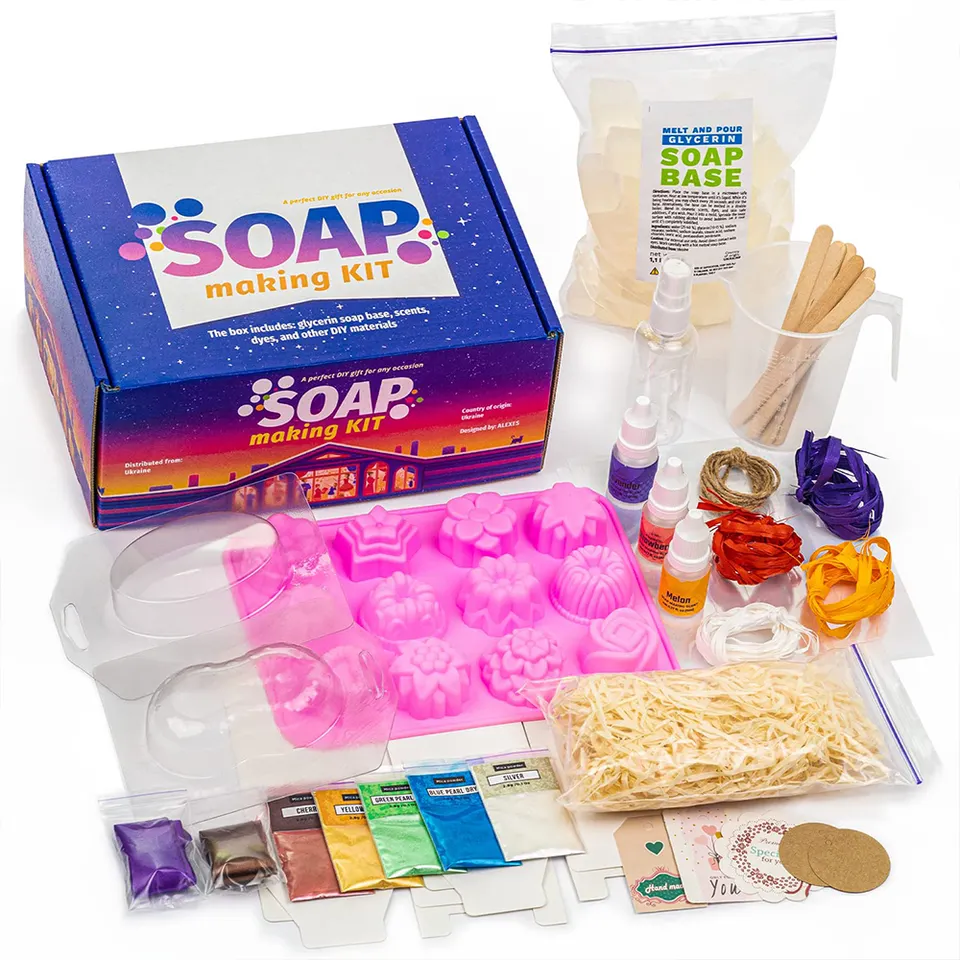
True soap requires lye (sodium hydroxide) to trigger saponification. If you want to skip lye handling entirely, you can use a pre-made "melt and pour" soap base. However, this offers far less customization than cold process soap making and limits your control over the natural soap ingredients in your bar.
How long does homemade soap last?
Properly cured and stored homemade soap typically lasts 6–12 months. Bars made with highly stable oils like olive and coconut can last even longer when kept in a cool, dry environment away from direct sunlight.
What are the best natural soap ingredients for sensitive skin?
Olive oil, shea butter, oat milk, colloidal oatmeal, and gentle essential oils like chamomile or lavender work well. Avoid coconut oil–heavy recipes (above 30% of your total oils) as higher concentrations can be drying for sensitive skin.
How much does it cost to start making soap at home?
Initial equipment and ingredient investment runs approximately $50–$80. After setup, each batch of 8–10 bars costs roughly $5–$12 depending on ingredients. That brings your per-bar cost well below premium store-bought soap.
Can I sell homemade soap?
Yes, but regulations vary by region. In the U.S., the FDA regulates soap labeling and cosmetic claims. Research your local requirements, maintain detailed batch records, and carry liability insurance if you plan to sell commercially.
Next Steps — Keep Experimenting
You now have everything you need to make your first batch. Master this basic homemade soap recipe before branching into advanced techniques like milk soaps, salt bars, or whipped soap. Each variation builds on the same core principles you've learned here.
Consider keeping a soap journal to track every batch — record your recipe, temperatures, cure dates, and results. This becomes invaluable as you refine your process and develop signature recipes.
Joining online soap-making communities is one of the fastest ways to improve. You'll find recipe inspiration, troubleshooting help, and encouragement from experienced makers who started exactly where you are now. Your first batch won't be perfect — and that's completely fine. The second one will be better.