You just sat through hours in the chair, invested good money, and walked out with a piece of art on your skin. The last thing you want is to ruin it with the wrong soap. But here's the thing — most people grab whatever bottle is sitting in their shower without a second thought. That casual choice can lead to fading, irritation, or even infection.
This guide breaks down exactly what soap not to use on a new tattoo, which ingredients to avoid, and what to reach for instead. Consider this your cheat sheet for keeping that fresh ink looking sharp while it heals.
Why Your Soap Choice Matters During Tattoo Healing
A fresh tattoo isn't just a cool design — it's an open wound. Your tattoo artist used needles to deposit ink into the dermis, the second layer of your skin. That process leaves your skin barrier completely compromised, and it stays that way for roughly two to four weeks.
During this vulnerable window, everything that touches your tattoo matters. The wrong tattoo aftercare soap ingredients can strip away the natural moisture your skin desperately needs to heal. Harsh chemicals can kill the beneficial bacteria that actually support recovery, while irritants can trigger inflammation that pushes ink out of the skin.
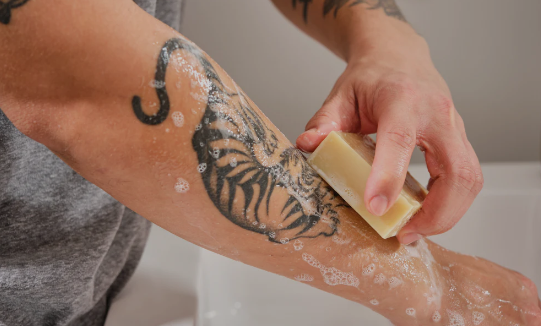
Think of it this way: you wouldn't pour scented body wash on a scrape or a burn. Your tattoo deserves the same careful consideration. The right cleanser supports healing. The wrong one actively works against it.
Soaps You Should Never Use on a New Tattoo
Let's get specific. Here are the categories of soaps and cleansers that have no business touching your fresh tattoo.
Heavily Fragranced Soaps
That tropical-scented body wash might smell amazing, but synthetic fragrances are one of the worst things you can put on healing skin. These formulas typically contain alcohol-based fragrance compounds and chemical irritants that cause burning, redness, and even allergic contact dermatitis on broken skin.
Most commercial bar soaps and scented body washes fall into this category. If you can smell it from across the bathroom, keep it far away from your tattoo. What you need instead is a fragrance-free tattoo cleanser that cleans without introducing unnecessary irritants.
Even soaps marketed as "lightly scented" or "naturally fragranced" can be problematic. The fragrance industry uses hundreds of undisclosed chemicals under the single word "fragrance" on labels, making it impossible to know exactly what you're putting on your wound.
Harsh Antibacterial Soaps (Triclosan-Based or Strong Formulas)
Here's where things get confusing. For years, tattoo artists told clients to use strong antibacterial soap for tattoos during healing. That advice is outdated. The FDA banned triclosan from consumer antiseptic washes back in 2016, and dermatologists now agree that overly harsh antibacterial formulas do more harm than good.
These aggressive soaps strip your skin of its natural oils and disrupt the skin microbiome — the community of helpful microorganisms that actually protect against infection. The result? Excessive dryness, cracking, and slower healing overall.
A gentle, pH-balanced cleanser removes dirt and bacteria effectively without nuking everything on your skin's surface. You don't need industrial-strength antibacterial power for a healing tattoo.
Exfoliating or Scrub-Based Cleansers
This should be obvious, but it's worth stating clearly: anything with scrubbing particles or chemical exfoliants is off-limits. Physical exfoliants like microbeads, walnut shell fragments, or sugar granules will literally tear at your healing skin and pull ink right out of the dermis.
Chemical exfoliants are equally dangerous. Products containing AHAs (glycolic acid, lactic acid), BHAs (salicylic acid), or other active acids are designed to dissolve dead skin cells. On a healing tattoo, they dissolve the protective scabbing layer your body is building, exposing raw tissue and fresh ink to the elements.
Save your exfoliating routine for fully healed skin — typically six weeks or more after getting inked.
Soaps with Petroleum-Based or Pore-Clogging Ingredients
Some soaps go heavy on moisturizing agents, which sounds helpful but can actually backfire. Soaps containing petroleum derivatives and heavy occlusive ingredients create a suffocating layer over your healing tattoo. This traps bacteria underneath, creating a warm, moist environment where infection thrives.
Comedogenic ingredients — those that clog pores — increase your risk of developing tattoo bumps, breakouts, and raised irritation around the design. Your healing skin needs to breathe. It needs moisture, yes, but from a separate, appropriate moisturizer applied after washing, not from a heavy soap that leaves residue behind.
Dish Soap, Hand Sanitizer, and Household Cleaners
You'd be surprised how often this happens. Someone gets home from the tattoo shop, realizes they don't have the right soap, and reaches for dish soap or hand sanitizer as a "just this once" solution. Please don't.
Dish soap has an extremely high pH and contains harsh surfactants designed to cut through grease on cookware — not cleanse delicate healing skin. Hand sanitizer is essentially concentrated alcohol that will cause intense burning and severe drying. The harsh chemicals in these products can set your tattoo healing back significantly.
Household cleaners, even "gentle" ones, are formulated for surfaces, not skin. If it's not designed for use on the human body, it doesn't go near your tattoo. Period.
Ingredients to Watch Out For on Soap Labels
Not sure if your current soap is safe? Flip the bottle over and scan for these red-flag ingredients:
Sodium Lauryl Sulfate (SLS) — An aggressive surfactant that creates lots of foam but strips skin of protective oils. Common in cheap body washes and shampoos.
Artificial Dyes (FD&C Colors) — Completely unnecessary chemical colorants that serve no cleansing purpose and can irritate open wounds.
Denatured Alcohol / SD Alcohol — A potent drying agent that dehydrates healing skin and can cause cracking and peeling.
Parabens (methylparaben, propylparaben) — Preservatives that can act as sensitizers on compromised skin, potentially triggering reactions.
Essential Oils in High Concentrations — Tea tree, lavender, and peppermint oils are "natural," but natural doesn't mean gentle. Concentrated essential oils can burn and irritate broken skin.
Formaldehyde-Releasing Preservatives — Found in some liquid soaps, these slowly release formaldehyde and can cause contact dermatitis.
Understanding these tattoo aftercare soap ingredients empowers you to evaluate any product yourself, rather than relying solely on marketing claims like "gentle" or "sensitive skin" on the front label.
What to Use Instead — Safe Soap Characteristics for Fresh Tattoos
Now that you know what to avoid, here's what to look for in gentle tattoo washing products that actually support healing:
Fragrance-free and dye-free liquid cleansers are your safest bet. Liquid formulas are more hygienic than bar soaps because they don't sit in standing water collecting bacteria between uses.
Look for gentle surfactants like cocamidopropyl betaine or decyl glucoside. These clean effectively without stripping your skin bare. A pH-balanced formula — ideally slightly acidic around 5.5, which matches your skin's natural pH — helps maintain your skin's protective acid mantle during healing.

Popular options that tattoo artists and dermatologists commonly recommend include unscented liquid castile soaps (diluted), fragrance-free baby washes, and purpose-made tattoo cleansers. The key qualities are always the same: no fragrance, no dyes, no harsh surfactants, and a gentle formulation that respects your skin's healing process.
When in doubt, a fragrance-free tattoo cleanser marketed for sensitive skin is almost always a safe choice.
How to Properly Wash a New Tattoo (Quick Guide)
Having the right soap is only half the equation. Technique matters too. Here's the correct process:
Wash your hands thoroughly first. You're about to touch an open wound — start with clean hands every single time.
Use lukewarm water only. Hot water increases blood flow and can push ink out. Cold water won't effectively remove plasma and buildup. Lukewarm is the sweet spot.
Apply a small amount of soap to your fingertips. Gently lather over the tattoo using light, circular motions. Never use washcloths, loofahs, or sponges — your clean fingertips are the only tool you need.
Rinse thoroughly. Make sure no soap residue remains on the tattoo, as leftover product can cause irritation.
Pat dry with a clean paper towel. Regular towels harbor bacteria and their texture can snag on healing skin. Disposable paper towels are more hygienic.
Aim to wash your tattoo two to three times daily for the first two weeks. Over-washing is just as harmful as under-washing — it strips moisture and delays healing.
Signs Your Soap Is Causing a Problem
Already been using a questionable soap? Watch for these warning signs that your cleanser is doing damage:
Excessive redness or rash that extends beyond the tattooed area or worsens after washing
Intense itching or burning sensation immediately after cleansing
Unusual oozing, yellow or green pus, or prolonged heavy scabbing
Ink looking patchy, faded, or uneven before the tattoo has fully healed
Raised bumps or hives appearing around or on the tattoo
If you notice any of these symptoms, switch to a gentler soap immediately. If symptoms persist or worsen — especially signs of infection like pus, fever, or spreading redness — contact a dermatologist or your tattoo artist right away. Early intervention prevents permanent damage to your tattoo and your skin.
Frequently Asked Questions
Can I use Dial soap on a new tattoo?
Dial's original gold bar soap was once a go-to recommendation for tattoo aftercare, but most dermatologists and tattoo artists have moved away from it. Standard Dial contains fragrance and relatively harsh antibacterial agents that can dry out and irritate healing skin. If you must use Dial, their fragrance-free liquid option is a better choice, though purpose-made gentle cleansers are still preferable.
Is Dove soap safe for a fresh tattoo?
Regular Dove beauty bars contain fragrance and moisturizing creams that can leave residue on a healing tattoo. Dove's Sensitive Skin Unscented bar is a better option since it skips the fragrance, but it's still a bar soap that sits in moisture between uses. A fragrance-free liquid cleanser is generally the safer route for fresh ink.
Can I use Dr. Bronner's on my new tattoo?
Dr. Bronner's Pure Castile Soap in the unscented "Baby Mild" version can work for tattoo aftercare when properly diluted. However, the scented varieties contain essential oils that can irritate open wounds. The undiluted formula is also quite concentrated and alkaline, so always dilute it significantly — a few drops in water — before applying to a fresh tattoo.
How long should I use special soap on my tattoo?
Most tattoo artists recommend using a gentle, fragrance-free cleanser for the entire healing period, which typically lasts three to four weeks. The outer layers of skin may look healed after two weeks, but deeper layers are still repairing. Continue with your gentle soap routine until all peeling and flaking has completely stopped and the skin feels smooth and normal to the touch.
What happens if I accidentally used scented soap on my tattoo?
Don't panic. A single wash with scented soap probably won't ruin your tattoo. Rinse the area gently with lukewarm water to remove any residue, then switch to an appropriate fragrance-free cleanser going forward. Watch for signs of irritation over the next 24 hours. If you notice increased redness or itching, apply a thin layer of your recommended aftercare moisturizer and monitor closely.
Is antibacterial soap better than regular soap for tattoo aftercare?
Not necessarily. A gentle, fragrance-free regular soap is typically better than a harsh antibacterial formula. The mechanical action of washing — lathering and rinsing — removes most surface bacteria effectively without needing aggressive antibacterial chemicals. Mild antibacterial options can be fine, but the emphasis should always be on "mild" first and "antibacterial" second.
The bottom line: Your fresh tattoo is an investment worth protecting. Take thirty seconds to check your soap's ingredient list before your next wash. When in doubt, keep it simple — fragrance-free, dye-free, and gentle. Your healed tattoo will thank you with vibrant, crisp lines for years to come.