Shaving soap transforms a daily chore into a ritual that delivers measurably better results for your skin. Yet many people never learn the proper technique, leaving them stuck with mediocre lather and subpar shaves. This guide walks you through every step of the shaving soap lather technique — from loading your brush to applying a flawless, protective coat.
What Is Shaving Soap and Why Choose It Over Canned Foam
Shaving soap is a dense, concentrated cleansing product formulated specifically for razor shaving. Its base typically includes saponified fats — tallow (rendered beef fat), coconut oil, or shea butter — combined with glycerin for moisture retention and essential oils for skin conditioning.
The case for traditional wet shaving is backed by practical results. Shaving soap creates a denser, more lubricating lather than aerosol foams, which are approximately 90% air and water by volume. This density translates to better blade glide, reduced friction, and fewer passes needed to achieve a close shave.
Dermatological research consistently shows that products with fewer synthetic additives cause less contact irritation. Shaving soaps typically contain 5–10 ingredients compared to 15–25 in canned alternatives, many of which include drying alcohols and propellants. Over a 12-month period, a quality soap puck also costs roughly 60–70% less than an equivalent supply of canned foam.
Key Differences Between Shaving Soap, Cream, and Canned Foam
| Factor | Shaving Soap | Shaving Cream | Canned Foam |
|---|---|---|---|
| Lather Quality | Dense, slick, highly protective | Rich, quick to build | Thin, airy, minimal cushion |
| Skin Protection | Excellent — glycerin and natural fats | Good | Poor — dries skin |
| Ingredient Transparency | Simple, recognizable ingredients | Moderate | Complex chemical formulations |
| Cost Per Shave | ~$0.05–$0.10 | ~$0.15–$0.25 | ~$0.20–$0.35 |
| Longevity | 4–6 months per puck | 2–3 months per tube | 4–6 weeks per can |
| Requires Brush | Yes | Optional | No |
Shaving soap stands as the professional-grade choice for anyone serious about skin health and shave quality. The learning curve is modest, and the payoff is immediate once you master the basics.
Essential Tools You Need Before Getting Started
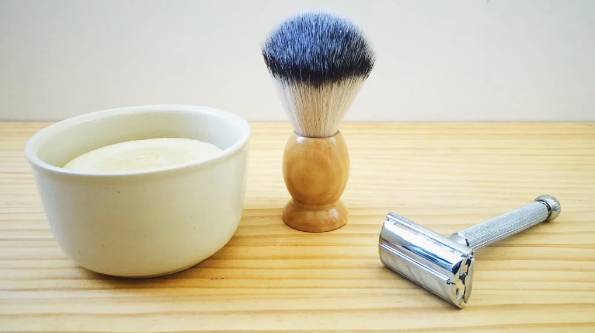
Your minimal starter kit requires just three items: a shaving soap puck or jar, a shaving brush, and warm water. A bowl or scuttle is optional but helpful for beginners who want more control over their lather consistency.
For your first soap, choose a mid-range artisan puck in the $12–$20 range. These typically outperform both budget and luxury options in lather production and skin feel. Look for tallow-based or dual-fat formulas, which are the most forgiving for newcomers learning the shaving soap bowl method.
How to Choose the Right Shaving Brush for Soap Application
The brush is your most important tool for shaving brush application. Three main fiber types exist: badger hair, boar bristle, and synthetic filaments. Each interacts with soap differently.
Badger brushes absorb water into the hair shaft, releasing it gradually during lathering. They produce luxurious lather but require a break-in period of 10–15 uses and cost $30–$150+.
Boar brushes are stiffer, providing excellent exfoliation and soap loading. They need 15–20 uses to split at the tips and soften. Budget-friendly at $10–$30.
Synthetic brushes require zero break-in, dry quickly, and perform consistently from day one. Modern synthetics rival natural hair in lather quality. At $15–$40, they represent the best starting point for beginners learning proper shaving brush application technique.
Knot density matters as well. A denser knot holds more lather but requires slightly more soap loading. For general use, a 22–24mm knot offers the ideal balance between coverage and control.
Bowl Lathering vs. Face Lathering — Which Method Suits You
The shaving soap bowl method involves building lather in a separate container before applying it to your face. This gives you clear visual feedback on consistency and lets you dial in water ratios precisely. Use any ceramic bowl, coffee mug, or purpose-built scuttle with a textured interior.
Face lathering skips the bowl entirely — you build lather directly on your skin using circular brush motions. This saves time, provides mild exfoliation, and helps lift facial hair before the blade touches it. However, it offers less visual control over lather quality.
Recommendation: Start with bowl lathering for your first two weeks. Once you can consistently produce quality lather by sight, transition to face lathering for efficiency. Many experienced shavers alternate between both depending on available time.
How to Use Shaving Soap — Step-by-Step Technique
This is the core process. Follow these five steps precisely, and you will produce professional-quality lather within your first few attempts.
Step 1 — Prepare Your Brush and Soap
Fill a sink or mug with warm water (not hot — approximately 40°C/105°F). Submerge your brush completely. Boar and badger brushes need 30–60 seconds of soaking to absorb water into the fibers. Synthetic brushes only need a brief 5–10 second dunk since they do not absorb water internally.
While the brush soaks, optionally "bloom" your soap. Pour a thin layer of warm water — just enough to cover the surface — onto the puck. Let it sit for 1–2 minutes. This softens the top layer, making loading easier. Pour off the bloom water before loading (save it to add during lathering if desired).
Blooming benefits harder triple-milled soaps the most. Softer artisan soaps and croaps (cream-soap hybrids) rarely need this step.
Step 2 — Load the Brush With Soap
Remove the brush from the water and give it one firm shake. You want the bristles damp but not dripping — think of a wrung-out sponge. Excess water at this stage dilutes the soap prematurely.
Press the brush tips against the soap surface and begin swirling in firm, circular motions. Maintain moderate pressure — enough to splay the bristles slightly. Continue for 20–30 seconds minimum.
Visual cues that loading is complete: the bristle tips appear opaque and creamy rather than translucent. The brush should feel slightly heavier. If you pull the brush away and see only a thin, watery film on the bristles, continue loading for another 10–15 seconds. More soap is rarely a problem; insufficient soap is the most common beginner failure point.
Step 3 — Build a Rich, Protective Lather
Transfer the loaded brush to your bowl or directly to your dampened face. Begin working the soap with brisk circular motions. This is where the shaving soap lather technique truly matters.
After 15–20 seconds of working, the proto-lather will appear thick and pasty. This means it needs water. Add 3–5 drops at a time — literally flick wet fingers over the brush — and continue working. Repeat this process of adding small water increments and swirling.
Building rich lather takes approximately 60–90 seconds of active work. The ideal consistency resembles thick Greek yogurt: glossy, slightly peaked, with no visible bubbles larger than a pinhead. When you pull the brush away, the lather should form soft peaks that slowly fold over, not run or drip.
If you overshoot with water and the lather turns thin and runny, reload a small amount of soap on the brush tips and work it back in. This is recoverable.
Step 4 — Apply Lather to Your Face
Wet your face with warm water first. Using your loaded brush, apply lather with a combination of painting strokes (long, even passes) and brief circular motions. The circular motion lifts hair away from the skin, while the painting stroke deposits an even layer.
Proper shaving brush application creates three simultaneous benefits: it hydrates the hair shaft (reducing its tensile strength by up to 70%), deposits a slick protective layer between blade and skin, and gently exfoliates dead skin cells. Aim for a lather layer approximately 2–3mm thick — enough that you cannot see skin through it.
Cover all areas you intend to shave. Pay special attention to the neck and jawline where hair grows in multiple directions and irritation is most common.
Step 5 — Re-Lather Between Passes
A proper shave typically involves two or three passes: with the grain (WTG), across the grain (XTG), and optionally against the grain (ATG) for maximum closeness. Between each pass, you need fresh lather.
You do not need to fully reload from the soap puck each time. Your brush retains enough soap residue for 2–3 applications. Simply add a few drops of water to the brush, work it briefly in your bowl or palm for 10–15 seconds, and reapply.
Rinse your face with warm water between passes to remove cut hair and spent lather. Then apply the fresh layer before your next pass. This ensures the blade always contacts lubricated, protected skin.
Common Mistakes That Ruin Your Shaving Soap Lather
If your lather is not performing well, one of these three errors is almost certainly responsible.
Using Too Much or Too Little Water
Water ratio is the single most critical variable. Too little water produces a thick, chalky paste that creates drag and offers poor blade glide. Too much water yields an airy, bubbly foam resembling canned products — thin on protection and slickness.
The solution is incremental addition. Always start drier than you think necessary and add water in drops, not splashes. You can always add more water; you cannot remove it without reloading soap. Five drops of water, then ten seconds of working — repeat until you hit the yogurt-like sweet spot.
Not Loading Enough Soap on the Brush
Underloading is the number-one beginner mistake by a wide margin. New users often swirl for 5–10 seconds and assume they have enough product. They do not.
Commit to a full 20–30 seconds of firm swirling on the puck surface. The soap is concentrated and inexpensive per shave — even generous loading uses only a tiny fraction of the puck. If your lather disappears quickly during building or cannot achieve opacity, insufficient soap is almost always the cause.
Skipping the Prep — Why Warm Water Matters
Facial hair is remarkably strong when dry — comparable to copper wire of the same diameter. Warm water reduces hair tensile strength by softening the keratin protein structure, making it far easier for a blade to cut cleanly.
Warm water also opens pores, relaxes skin, and activates the surfactants in your soap for better lather performance. Spending 30 seconds washing your face with warm water before lathering — or shaving after a shower — produces noticeably better results than applying soap to a dry face.
Pro Tips for Getting the Best Results From Shaving Soap
How Water Hardness Affects Lather Quality
If you follow every step correctly and still struggle with thin, scummy lather, your water is likely the culprit. Hard water contains dissolved calcium and magnesium ions that react with soap molecules, forming insoluble residue instead of lather.
Three proven solutions exist. First, use distilled or filtered water for lathering — keep a gallon jug near your sink. Second, add a pinch of citric acid to your lathering water to chelate (bind) mineral ions. Third, select soap formulas marketed as "chelated" or "hard water friendly," which include ingredients like EDTA or citric acid in the base.
Matching Soap Formulas to Your Skin Type
Dry or sensitive skin: Choose tallow-based soaps with lanolin or shea butter. These deposit a moisturizing film that protects against post-shave tightness. Unscented options eliminate fragrance-related irritation.
Oily or acne-prone skin: Vegan formulas based on coconut oil and castor oil cleanse effectively without heavy residue. Look for soaps containing tea tree oil or activated charcoal for mild antibacterial action.
Normal skin: You have the widest selection. Experiment freely with artisan formulas, prioritizing scents and post-shave feel that match your preferences.
Frequently Asked Questions About Using Shaving Soap
How long does a puck of shaving soap last?
A standard 4-ounce (113g) puck lasts most users 4–6 months with daily shaving. Factors that reduce longevity include extended loading times, using splayed boar brushes (which scoop more product), and storing the puck in humid environments where it slowly dissolves. With moderate use and proper storage, some harder triple-milled pucks last 8–12 months.
Can you use shaving soap without a brush?
It is technically possible to rub a wet hand over a soap puck and transfer the slick film to your face. However, this produces minimal lather and eliminates the key benefits of brush application — exfoliation, hair lifting, and even distribution. A brush improves lather volume and quality by a factor of five or more. Even an inexpensive $10 synthetic brush is strongly recommended.
Do you need to soak shaving soap before use?
Blooming (soaking the soap surface with warm water) is optional and depends on soap hardness. Hard triple-milled pucks and aged soaps benefit most from 1–2 minutes of blooming. Softer artisan soaps and croaps load easily without any soaking. If your brush picks up product readily when you swirl, blooming is unnecessary.
What is the difference between shaving soap and shaving cream?
Shaving soap is a solid or semi-solid product that requires a brush and deliberate lathering technique. It lasts longer per unit, costs less per shave, and generally contains fewer additives. Shaving cream is a softer, paste-like product that lathers faster and can be applied by hand or brush. Both outperform canned aerosol foam in protection and slickness. Soap offers better long-term value; cream offers faster preparation.
How do you store shaving soap to make it last longer?
After each use, leave the container open for 2–3 hours to allow the soap surface to air-dry completely. Then close the lid and store in a cool, dry location outside the shower spray zone. Never seal a wet puck in an airtight container — trapped moisture accelerates soap degradation and can promote mold growth. Proper storage adds months to your puck's lifespan.