Dawn dish soap sits beside nearly every kitchen sink in America. It cuts grease, rescues oil-soaked wildlife, and costs a few dollars per bottle. But a growing number of consumers are asking a reasonable question: is the product actually safe?
This guide breaks down Dawn's ingredient list, examines regulatory classifications, and separates genuine health concerns from internet-fueled panic. Every claim here references publicly available safety data, toxicology standards, and independent rating systems.
What's Really Inside Dawn Dish Soap?
Full Ingredient Breakdown
Procter & Gamble discloses Dawn's ingredients on their product safety page. The core formula relies on several chemical categories working together:
Anionic surfactants (sodium lauryl sulfate, sodium laureth sulfate) — these are the primary grease-cutting agents that break the bond between oil and water.
Nonionic surfactants (lauramine oxide) — boost cleaning power and help the formula rinse cleanly.
Preservatives (methylisothiazolinone, phenoxyethanol) — prevent microbial growth inside the bottle during shelf life.
Fragrance blends — proprietary mixtures that create Dawn's recognizable scent.
Colorants (FD&C Blue 1) — purely cosmetic; they serve no cleaning function.
pH adjusters and stabilizers — maintain formula consistency over time.
None of these categories are unusual for liquid dish detergents. The question isn't whether these chemicals exist in the formula — it's whether their concentrations pose meaningful risk during normal use.
Ingredients That Raise Safety Concerns
When consumers research dawn dish soap ingredients safety, four compounds consistently generate questions:
Methylisothiazolinone (MI) is a preservative linked to contact dermatitis in sensitized individuals. The European Commission restricted its use in leave-on cosmetics, though rinse-off products like dish soap still permit it at regulated concentrations.
Sodium lauryl sulfate (SLS) is an effective surfactant that can strip natural oils from skin with prolonged exposure. It is not a carcinogen — that claim has been debunked repeatedly by toxicology reviews — but it is a known skin irritant at high concentrations.
Fragrance blends remain the least transparent component. Manufacturers are not required to disclose individual fragrance chemicals, which may number in the dozens per formula. Some fragrance compounds are associated with allergic reactions and endocrine disruption, though specific exposure levels from dish soap use remain very low.
1,4-Dioxane is not an added ingredient but a potential contaminant generated during the ethoxylation process used to manufacture certain surfactants. It appears at trace levels and is a dawn dish soap chemical concern that deserves honest context — which the regulatory section below provides.
Is Dawn Dish Soap Harmful to Humans?
Skin Contact and Irritation Risks
Dawn is formulated to dissolve grease. Skin produces natural oils. The logical consequence: extended contact strips moisture from your hands.
For most people, brief exposure during normal dishwashing causes no adverse effects. However, repeated daily use without gloves can lead to contact dermatitis — dry, cracked, or inflamed skin. This is a mechanical irritation issue, not a toxicity issue. Dawn is not classified as corrosive or as an acute toxin under any major regulatory framework.
Individuals with eczema, psoriasis, or pre-existing skin sensitivities face higher irritation risk from any surfactant-based detergent, not just Dawn specifically.
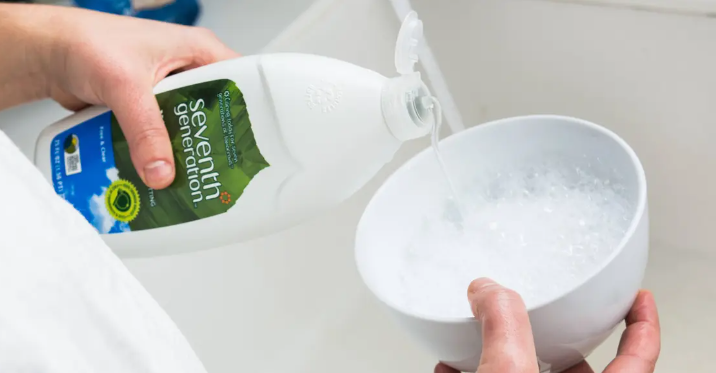
Ingestion Risks — What Happens If You Swallow It?
Accidental ingestion of small amounts — the scenario where a child licks a soapy dish or swallows a mouthful of suds — is classified as a mild irritant exposure, not a poisoning event. The American Association of Poison Control Centers categorizes most liquid dish soap ingestions as minimally toxic.
Symptoms from small amounts typically include nausea, mild vomiting, or diarrhea. These resolve without medical intervention in most cases. Large-volume intentional ingestion is a different scenario requiring immediate Poison Control contact (1-800-222-1222).
The critical distinction: "irritant" and "toxic" are not synonyms. Dawn can cause gastrointestinal discomfort without causing systemic poisoning. Understanding dawn dish soap health risks requires this nuance.
Inhalation and Eye Exposure
Dawn does not produce significant fumes under normal use. However, using it in very hot water in poorly ventilated spaces can release fragrance volatiles that trigger sensitivity in people with asthma or chemical sensitivities.
Eye contact causes immediate stinging and redness due to the surfactant content. Standard first aid applies: flush with lukewarm water for 15-20 minutes. Persistent pain or vision changes warrant medical evaluation, though permanent damage from brief dish soap exposure is extremely rare.
How Regulatory Agencies Classify Dawn's Safety
EPA and FDA Oversight of Dish Soaps
A common misconception: the FDA does not regulate dish soap. Liquid dish detergents fall under the Consumer Product Safety Commission (CPSC) for labeling requirements and the EPA for environmental impact of their ingredients.
This means dish soaps do not undergo pre-market approval the way drugs or food additives do. Manufacturers must ensure their products meet CPSC labeling standards — including appropriate hazard warnings — but the formula itself is not reviewed by a federal agency before sale. Safety testing is conducted internally by the manufacturer.
Safety Data Sheet (SDS) Summary
Dawn's Safety Data Sheet — the standardized document required for chemical products — classifies the formula as follows in plain language:
GHS hazard classification: Eye irritant (Category 2A). Not classified as toxic, carcinogenic, mutagenic, or reproductively harmful.
Oral LD50: Greater than 5,000 mg/kg in animal studies — placing it in the lowest toxicity category. For context, table salt has an LD50 of approximately 3,000 mg/kg.
Skin classification: Not classified as a skin sensitizer under GHS criteria at intended use concentrations.
When someone asks "is dawn dish soap harmful," the SDS provides the most objective answer available: it is an eye irritant that poses minimal systemic toxicity risk during normal household use.
Dawn Dish Soap and Environmental Toxicity
Aquatic Life and Waterway Impact
Dawn's surfactants are biodegradable under aerobic conditions, meaning they break down in standard water treatment processes. However, "biodegradable" does not mean "harmless to aquatic life." Surfactants at sufficient concentrations damage fish gill membranes and disrupt aquatic organisms' protective mucous layers.
The wildlife rescue connection deserves honest framing. Dawn is used to clean oil-soaked birds because it effectively removes petroleum without requiring solvents. This demonstrates grease-cutting efficacy — not inherent environmental safety. The International Bird Rescue organization uses Dawn in controlled, rinsed applications, not as an aquatic-safe product.
Septic Systems and Water Treatment
Standard dish soap use (a few teaspoons per sink load) does not harm properly functioning septic systems. The surfactant volume is too small to disrupt bacterial colonies responsible for waste breakdown.
Problems arise when Dawn is used in excessive quantities — for example, pouring it directly into drains as a degreaser or using it as a septic treatment. Municipal water treatment facilities handle normal residential dish soap loads without issue, as their biological treatment stages are designed to process surfactant-containing wastewater.
Non-Toxic Dish Soap Alternatives Worth Considering
What "Non-Toxic" Actually Means on Labels
There is no legal definition of "non-toxic" for cleaning products in the United States. Any manufacturer can print it on a label without meeting specific criteria. This makes the term functionally meaningless as a safety indicator.
Third-party certifications carry substantially more weight:
EPA Safer Choice — verifies every ingredient meets strict human and environmental safety criteria.
EWG Verified — screened against the Environmental Working Group's database for health concerns.
Made Safe — certified free from known toxic substances including carcinogens, endocrine disruptors, and behavioral toxins.
Top Alternatives Rated by Independent Safety Databases
For consumers seeking non-toxic dish soap alternatives with verified safety profiles, these options score well on independent databases:
ECOS Dish Soap (Hypoallergenic) — EPA Safer Choice certified, plant-derived surfactants, fragrance-free option available. Moderate grease-cutting power; widely available.
Branch Basics Concentrate — Made Safe certified, single concentrate for multiple uses. Excellent safety profile but premium pricing.
Attitude Dishwashing Liquid — EWG Verified, plant and mineral-based. Strong cleaning performance; limited retail availability in some regions.
Cleancult Liquid Dish Soap — EPA Safer Choice certified, coconut-derived surfactants. Refillable packaging reduces waste; comparable grease-cutting to conventional options.
Dr. Bronner's Sal Suds — EWG rated "A," highly concentrated, biodegradable. Requires proper dilution; not technically a soap but a detergent.
DIY Dish Soap — Does It Work?
The popular castile soap plus vinegar recipe circulates widely online, but it has real limitations. Castile soap reacts with vinegar (an acid neutralizing a base), reducing the cleaning power of both. Castile soap alone struggles with heavy grease compared to synthetic surfactants.
Additionally, DIY formulas lack preservatives, meaning bacterial growth becomes a concern within days if stored at room temperature. For light cleaning of non-greasy dishes, DIY options function adequately. For actual grease removal and food-safety-level cleaning, they underperform commercial formulas significantly.
How to Use Dawn Dish Soap More Safely
Dilution and Protective Measures
If you choose to continue using Dawn, these evidence-based practices reduce any irritation risk:
Dilute properly — a few drops per sink basin of water is sufficient. More soap does not mean cleaner dishes.
Wear gloves for sessions longer than 5 minutes, especially if you wash dishes multiple times daily.
Rinse thoroughly — surfactant residue on dishes is the primary route of incidental ingestion.
Ventilate — run a kitchen fan or open a window when using hot water, particularly if you are sensitive to fragrance compounds.
Moisturize after washing — replenish stripped skin oils to prevent cumulative dryness.
When to Avoid Using Dawn Entirely
Certain common uses of Dawn are genuinely inappropriate:
Washing produce — surfactant residues absorb into porous fruit and vegetable surfaces and cannot be fully rinsed away.
Bathing pets with skin conditions — Dawn strips natural oils that compromised skin needs for healing. Use veterinarian-recommended shampoos instead.
Dishwashers — liquid dish soap creates excessive suds that overflow the machine and can damage components.
Pressure washers — Dawn is not formulated for high-pressure systems and may damage seals or leave residue on surfaces.
Frequently Asked Questions
Is Dawn dish soap safe to wash fruits and vegetables?
No. The FDA explicitly advises against using dish soap on produce. Surfactants can penetrate the porous skin of fruits and vegetables, leaving residues that plain water cannot remove. For produce cleaning, use plain running water, a dedicated produce wash, or a diluted vinegar solution (1 part vinegar to 3 parts water).
Can Dawn dish soap cause cancer?
The 1,4-dioxane concern is the most common basis for this question. IARC classifies 1,4-dioxane as a Group 2B possible carcinogen based on animal studies at high doses. However, trace contamination levels in dish soap (typically below 10 parts per million) result in exposure levels orders of magnitude below those that produced effects in animal research. No epidemiological evidence links dish soap use to cancer in humans.
Is Dawn dish soap safe for pets?
For one-time use in emergencies — such as removing a toxic substance from fur — Dawn is generally considered safe by veterinarians. For routine bathing, it is not recommended. Dawn strips the natural oils that maintain skin and coat health, potentially causing dryness, itching, and irritation with repeated use. Use a pH-balanced pet shampoo for regular grooming.
Is Dawn Ultra more toxic than original Dawn?
No. "Ultra" refers to a more concentrated surfactant formula — meaning you need less product per use. The ingredient categories remain the same. A smaller volume of Dawn Ultra delivers equivalent cleaning power to a larger volume of original Dawn. Concentration does not equal increased toxicity when used at proper dilution ratios.
What is the safest dish soap available?
"Safest" depends on your specific concerns — skin sensitivity, environmental impact, ingredient transparency, or avoiding specific chemical classes. Products carrying EPA Safer Choice or Made Safe certifications have undergone the most rigorous independent ingredient review. The alternatives listed above represent the strongest options verified by third-party safety databases as of current formulations.
The bottom line: Dawn dish soap is not toxic by any standard regulatory definition. It is a mild irritant that poses minimal health risk during normal use. Consumers with chemical sensitivities, skin conditions, or environmental priorities have legitimate reasons to choose alternatives — but the decision should be based on accurate data, not fear-based marketing from competing brands.