You've probably wondered this while lathering up in the shower or reading the back of a soap label. Is soap acidic? Is it basic? Does it even matter? The answer is straightforward, and once you understand the chemistry behind it, a lot of other things about soap start making sense too.
Let's break it all down in plain language — no chemistry degree required.
The Quick Answer — Soap Is a Base
Soap is a basic (alkaline) substance. This isn't a gray area or a matter of opinion — it's a fundamental fact of chemistry. Traditional soap typically registers a pH between 9 and 11 on the pH scale, placing it firmly in alkaline territory.
The reason comes down to what soap actually is at a molecular level. Soap is made from fatty acid salts, which are inherently alkaline when dissolved in water. Every bar of true soap you've ever used has been a base. That's just how the chemistry works.
What "Acid" and "Base" Actually Mean in Simple Terms
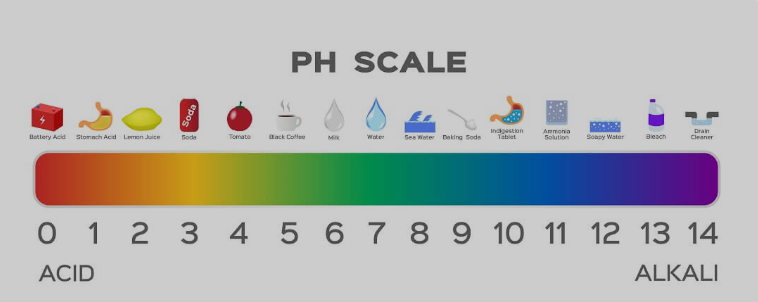
The pH scale runs from 0 to 14. Anything below 7 is acidic, 7 is neutral, and anything above 7 is basic (alkaline). Think of it like a spectrum with pure water sitting right in the middle.
Here are some everyday examples to give you a feel for the scale. Lemon juice is highly acidic at around pH 2. Coffee is mildly acidic at about pH 5. Baking soda dissolved in water is basic at around pH 8.5. Bleach is very basic at roughly pH 12.
When we say soap is a base, we're saying it falls on the same side of the spectrum as baking soda — just a bit further along. Nothing exotic or dangerous, just alkaline.
Where Soap Falls on the pH Scale
Not all soaps have the exact same pH, but they all land on the alkaline side. The pH level of soap depends on the oils used, the manufacturing process, and any additives. Here's how different types compare:
| Soap Type | Typical pH Range | Classification |
|---|---|---|
| Traditional bar soap | 9.0 – 10.5 | Base (alkaline) |
| Castile soap | 8.5 – 9.5 | Base (alkaline) |
| Liquid hand soap | 9.0 – 10.0 | Base (alkaline) |
| "pH-balanced" syndet bars | 5.5 – 7.0 | Slightly acidic to neutral |
| Dish soap | 7.0 – 8.0 | Neutral to mildly alkaline |
Notice that the only products approaching neutral or acidic territory are syndet bars — and those aren't technically soap at all. They're synthetic detergents formulated to mimic soap. True soap, made through traditional methods, is always alkaline.
Why Soap Is a Base — The Saponification Process Explained
Soap doesn't just happen to be alkaline. Its basic nature is baked into the very reaction that creates it. The saponification process is the chemical reaction that turns fats and oils into soap, and it requires a strong base as a key ingredient.
Think of it this way: soap's alkaline character isn't a side effect. It's a defining feature of what makes soap, well, soap.
Fat + Lye = Soap (The Chemistry Made Simple)
Here's the recipe in its simplest form: you take a fat or oil (like olive oil, coconut oil, or tallow), mix it with a strong base called lye, and a chemical reaction happens. The fat molecules break apart and recombine with the lye to form two new things — soap and glycerin.
It's a bit like baking a cake. You start with flour, eggs, and sugar, but what comes out of the oven is something entirely different from any of those individual ingredients. The saponification process transforms the starting materials into a completely new substance.
The lye used is either sodium hydroxide (NaOH) for bar soap or potassium hydroxide (KOH) for liquid soap. The resulting fatty acid salts — the actual soap molecules — retain alkaline properties because of their chemical structure. When these salts dissolve in water, they create a mildly basic solution.
Why the Base Doesn't "Wash Out" During Production
A common worry people have is that lye — a caustic, dangerous chemical — remains lurking in their finished soap. This is a misconception. In properly made soap, all the lye is completely consumed during the saponification process. It's been chemically transformed, just like how the raw eggs in a baked cake no longer pose a salmonella risk.
So why is the finished soap still alkaline if all the lye is gone? Because the fatty acid salts themselves are basic when dissolved in water. It's not leftover lye making your soap alkaline — it's the very nature of the soap molecules themselves. They undergo a process called hydrolysis in water, releasing hydroxide ions that push the pH above 7.
This means you can't make a true soap that's pH neutral. The chemistry simply doesn't allow it.
How Soap Actually Cleans — The Science of Surfactant Molecules
Now that we know what soap is, let's talk about what it does. The cleaning power of soap comes from the unique structure of surfactant molecules — and it's genuinely clever chemistry.
The Two-Ended Molecule That Does All the Work
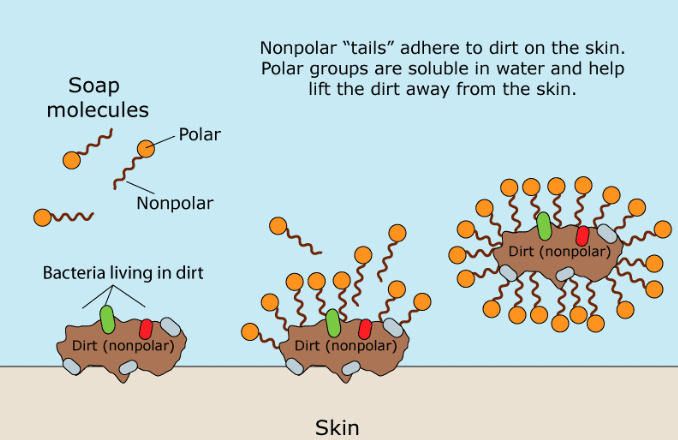
Every soap molecule has a split personality. One end is hydrophilic, meaning it loves water and wants to be surrounded by it. The other end is hydrophobic — it hates water and is attracted to oils and grease instead.
Imagine each soap molecule as a tiny bridge. One side anchors in water, the other side reaches out to grab onto oil and dirt. This dual nature is what makes surfactant molecules so effective at cleaning. They can interact with both the water you're rinsing with and the greasy grime you're trying to remove.
Micelles — How Soap Traps Dirt and Washes It Away
Here's where the magic happens. When you work soap into a lather on dirty skin or a greasy dish, the hydrophobic tails of the surfactant molecules all crowd around the oil or dirt particles, pointing inward. The hydrophilic heads face outward toward the water.
This creates tiny spherical structures called micelles — essentially little cages with grease trapped inside and water-friendly exteriors. Because the outside of the micelle is compatible with water, the whole thing rinses away easily, carrying the trapped dirt with it.
It's like wrapping a piece of chocolate in a waterproof bag. The chocolate (grease) is now encased in something that water can carry away, even though chocolate itself doesn't dissolve in water.
Why Alkaline pH Helps Soap Clean Better
Soap's basic nature isn't just a chemical curiosity — it actually boosts cleaning performance. The alkaline environment helps break down oils and organic matter, making them easier for the surfactant molecules to capture.
This is why alkaline cleaning agents have been used for thousands of years. The combination of high pH and surfactant action creates a one-two punch: the alkalinity weakens the bonds holding grease to surfaces, and the surfactant molecules sweep it all away. It's the same reason heavy-duty degreasers tend to be alkaline rather than acidic.
Soap vs. Detergent — They're Not the Same Thing
Walk down the cleaning aisle and you'll see products labeled "soap," "cleanser," "wash," and more. But in chemical terms, there's a clear dividing line between true soap and synthetic detergents — and most of what we use daily is actually detergent.
How Detergents Differ Chemically
True soap is made through saponification — fat plus lye. Synthetic detergents (often called syndets) are manufactured through entirely different chemical processes, typically derived from petroleum-based or plant-based chemicals that never go through a saponification reaction.
The big practical difference? Detergents can be formulated at virtually any pH. Manufacturers can dial in a specific acidity or alkalinity depending on the product's purpose. True soap doesn't have that flexibility — it's always going to be alkaline.
Why "Soap-Free" Products Exist
You've probably seen cleansers marketed as "soap-free." These aren't just using a gimmicky label — they're genuinely different products. They use synthetic surfactants instead of fatty acid salts, allowing them to achieve a lower pH closer to skin's natural acid mantle of around 5.5.
This matters for certain skin types and conditions, which we'll get into shortly. For now, just know that "soap-free" is a meaningful chemical distinction, not just marketing fluff.
| Feature | True Soap | Synthetic Detergent |
|---|---|---|
| Made via | Saponification process | Chemical synthesis |
| pH range | 9 – 11 | Adjustable (4 – 10) |
| Base ingredient | Fatty acid salts | Synthetic surfactants |
| Hard water performance | Can leave residue (soap scum) | Performs well |
| Biodegradability | Generally high | Varies by formula |
Does Soap's Alkaline pH Harm Your Skin?
This is the question most people actually care about. If soap is alkaline and your skin is acidic, is washing with soap damaging your skin every single day? The answer is nuanced.
Your Skin's Natural pH and the Acid Mantle
Healthy skin maintains a pH of roughly 4.5 to 5.5. This slightly acidic environment is called the acid mantle, and it serves as a protective barrier. It helps fight off harmful bacteria, supports beneficial skin microbes, and helps retain moisture.
The acid mantle is maintained by a combination of sebum (skin oils), sweat, and natural skin flora. It's a self-repairing system that your body actively maintains.
What Happens When Alkaline Soap Meets Your Skin
When you wash with traditional soap (pH 9–10), you temporarily disrupt your skin's acid mantle. The surface pH of your skin shifts toward alkaline for a short period. Studies show that healthy skin typically restores its natural pH within one to two hours after washing.
For most people with normal, healthy skin, this temporary disruption is completely harmless. Your acid mantle bounces back quickly, and no lasting damage occurs. Humans have been washing with alkaline soap for centuries without widespread skin problems.
However, for people with already compromised skin barriers — due to conditions like eczema, psoriasis, or extreme dryness — that recovery period can be problematic. The temporary alkaline shift may worsen irritation or slow barrier recovery.
When to Choose pH-Balanced Alternatives
If you have eczema, contact dermatitis, very dry skin, or a condition that compromises your skin barrier, a pH-balanced syndet cleanser (around pH 5.5) may genuinely help reduce irritation. Dermatologists often recommend these for patients with chronic skin conditions.
For everyone else? Standard soap used in normal amounts — washing hands a few times a day, showering once daily — is perfectly fine. You don't need to fear the pH of your soap unless you have a specific reason to. The key is not to over-wash, regardless of what product you use.
Common Myths About Soap Chemistry
There's a lot of misinformation floating around about soap, pH, and cleaning. Let's clear up the most persistent myths.
Myth — "Natural Soap Is pH Neutral"
This one is everywhere in natural beauty marketing, and it's simply wrong. All true soap is alkaline. It doesn't matter if it's handmade, organic, vegan, or crafted by artisans in a small village — if it went through the saponification process, it's a base.
"Natural" refers to the source of ingredients, not the pH of the final product. A soap made with organic olive oil is still going to have a pH around 9. That's not a flaw; that's chemistry.
Myth — "Antibacterial Soap Works Because of Its pH"
The antibacterial action of antibacterial soap has nothing to do with its alkaline pH. It comes from added chemical agents — historically triclosan (now largely banned) or currently benzalkonium chloride and similar compounds.
Regular soap at the same pH actually removes just as many germs through the mechanical action of surfactant molecules trapping and rinsing away bacteria. The CDC has long noted that regular soap is equally effective as antibacterial soap for routine handwashing.
Myth — "Acidic Cleansers Clean Better Than Soap"
Neither acidic nor alkaline cleaners are universally "better." They excel at different tasks. Alkaline cleaning agents (including soap) are excellent at cutting through grease, oils, and organic matter — which is what you typically encounter on skin and dishes.
Acidic cleaners shine when tackling mineral deposits, limescale, rust stains, and hard water buildup. Matching the cleaner to the type of grime is what matters, not claiming one end of the pH scale is superior.
Frequently Asked Questions
Is liquid soap also a base?
Yes. Most true liquid soaps are alkaline, typically with a pH of 9 to 10. They're made using potassium hydroxide instead of sodium hydroxide, but the saponification process still produces alkaline fatty acid salts. However, many products labeled "liquid soap" are actually synthetic detergents with lower pH values. Check the ingredient list — if you see names like "potassium cocoate" or "potassium olivate," it's true soap. If you see "sodium laureth sulfate" or similar, it's a detergent.
Can you make soap without a base?
No. The saponification process absolutely requires a strong base — either sodium hydroxide or potassium hydroxide — to convert fats into soap. Without lye, you simply have oil sitting in a container. There's no alternative reaction that produces true soap without an alkaline reagent. The reassuring part is that the lye is fully consumed during the reaction. None remains in the finished product.
Is dish soap acidic or basic?
Most dish soaps are technically synthetic detergents, not true soaps made via saponification. They typically range from neutral to mildly alkaline, around pH 7 to 8. This is deliberately milder than traditional soap to reduce skin irritation during prolonged exposure while washing dishes, while still being alkaline enough to help cut grease.
Why does soap feel slippery?
That characteristic slippery feeling comes from two things happening at once. First, the alkaline solution interacts with the natural oils on your skin surface, partially saponifying them (yes, soap briefly makes more soap from your skin oils). Second, the surfactant molecules reduce the surface tension and friction between your skin and the water. Both effects combine to create that distinctive slick sensation.
Is soap bad for the environment because it's a base?
Soap's alkalinity is quickly neutralized when it enters waterways and mixes with naturally buffered water systems. True soap made from fatty acid salts is generally highly biodegradable — soil bacteria break it down readily. Environmental concerns about personal care products tend to center on synthetic additives, microplastics, non-biodegradable surfactants, fragrances, and excessive packaging rather than the alkaline pH of the soap itself.
What pH is best for hand soap?
For general handwashing, standard soap with a pH of 9 to 10 works perfectly well for most people. It effectively removes dirt, grease, and microorganisms without causing problems for healthy skin. If you wash your hands very frequently (healthcare workers, food service staff) or have sensitive skin, a pH-balanced cleanser in the 5.5 to 7 range can reduce cumulative dryness and irritation over the course of a day.
The Bottom Line — Soap Is a Base, and That's What Makes It Work
Soap is a base. Always has been, always will be. This isn't a design flaw or something manufacturers should fix — it's the fundamental chemistry that makes soap effective at what it does.
The saponification process guarantees an alkaline product because fatty acid salts are inherently basic in solution. That alkaline pH works alongside the dual-nature surfactant molecules to break down grease, form micelles around dirt particles, and rinse everything cleanly away. It's an elegant system that humans figured out thousands of years ago, and the basic chemistry hasn't changed.
For most people, traditional soap is perfectly safe and effective for daily use. If you have specific skin concerns that make alkaline products problematic, pH-balanced synthetic alternatives exist. But there's no need to fear the pH of your soap — it's doing exactly what it's supposed to do.